
 First I want to say a thank you to Gary Kayye and Scott Walker for asking me to take over Scott’s EcoSystems spot as a sustainability contributor to the newly indoctrinated rAVe GHGav eNewsletter. They both have provided tireless years of contribution to our industry on all things related to green AV. Scott, I hope to live up to your 44,000+ words of insight and carry the torch. Gary, I look forward to collaborating with you on many articles on what to me is a very important topic — sustainable technology. (So important to me in fact that my company is named after it.) To the readers of this I hope to bring my own perspective on news and events and where we should be not only within our industry but in others as well. We are an interconnected Web and even if you don’t see the connection right away, you have to trust it is there.
In the December 27th edition of rAVe GHGav (Vol. 3, Iss. 2), I found it fitting that Scott discussed an interesting question: “Have we (the AV/IT industry) proven that there is a market for sustainable technology?” Scott’s conclusion was that we should focus on our ability to make buildings smarter with what we do while keeping our eye on sustainability. Owners may ultimately be more receptive to this than the green fatigue they are experiencing now with LEED and other rating systems. After all, they have smart cars and smart phones — why not smart technology systems in their buildings?
Following this submission in the same publication was another connected article by Midori Connolly (brAVe New World’s Big Data, Smart AV). This was a great piece on how we can create smart AV systems that are data driven. After all, isn’t the intelligence in a building all about data? We are a data-driven society. Just look at the New York Stock Exchange, fantasy sports, retail and marketing or Google anything – all data-driven. Smart building systems pump out reams of data that need to be culled and collated for a facilities operator and other end users to be able to be efficient with their building.
Both of these articles have a great theme: being smart with data. I want to take it one step further and ask what do we do with all this data and where do we keep it? As we collect more and more data on everything, there needs to be a strategy for who stores it, how is it stored and where is it stored. Problem one: Who stores it? Is it locally stored, in the cloud or by another division off site? Problem two: How is it stored? RAID 5 Server system? Virtual Server? Something else? Problem 3: Is it local servers, desktop, or server farm? Any way you look at it, this is a problem that is difficult to manage in itself now throw sustainability on top of it and you have a headache the size of Texas.
One of the biggest disconnects in our quest for sustainable technology is that the IT department in four out of every five companies surveyed by the Uptime Institute, a private consortium that tracks data center industry trends, is not directly responsible for the cost of the heating and cooling or power use of the data centers for their company. It is lumped in with everything else. If you take into consideration my three questions and the normal day-to-day data transactions of a company then add the data driven smart building systems from HVAC, electrical/lighting or plumbing plus now smart technology from AV, security/life safety and other plug load intelligent devices, you can start to see how quickly the power and cooling demand of the IT system can rapidly escalate.
In September of 2012, the New York Times ran a front page story about the intensive use of power and heating and cooling in the data world. “A yearlong examination by the New York Times has revealed that the foundation of the information industry is sharply at odds with its image of sleek efficiency and environmental friendliness,” the article said. The article goes on to implicate data centers as using up to 2 percent of the nation’s power in the US (1.5 percent globally) and up to 90 percent of the energy used in some of these data centers is wasted as a result of full tilt operation with little demand. That is 30 billion watts of electricity annually, or roughly 30 nuclear power plants. This number would be larger except that it only accounts for the fact that data centers on average only use 6-12 percent of their power at any one time for actual computations. The rest is idle power use in case of a surge. To add insult to injury, many data centers use heavily polluting diesel generators to guard against power failures to the point where they can be labeled a major polluters, appearing on the government’s naughty list. Why so much? We are just generating that much more data and we don’t really give it much thought. This is especially true when we go into “the cloud.”  Source: Info-tech Research Group, 2010
The cloud is a bit of a misnomer. Quite often when people think about storing their data on the cloud, they picture a happy place in the Internet where data is held in suspended animation until such time as we call it down out of the heavens. This has been perpetuated with such great opportunities such as Dropbox, Google Drive and iCloud, where thousands of music tracks and video clips are sent from homes across the world and the user just expects the data to appear at the click of a mouse instantaneously with no glitches. The thinking is, “Well, I don’t have it on my network anymore, so I have smaller servers using less energy and I can get to it from anywhere, so look how efficient I am being!” Locally, yes you are, but your data is not in Never Never Land. It simply resides on a server farm somewhere else churning away with everyone else’s data until you call it back. And the farm is using a whole lot of energy.
The main culprit is the way the IT industry practice has developed. Instead of location, location, location, it is redundancy, redundancy, redundancy. Even a millisecond of delay in a server can cause catastrophic crashes or provide an unfair advantage to the competition (think stock trades). This tends to make the IT industry a bit risk-adverse to say the least.
To create all of this redundancy and prevent a global nuclear meltdown for businesses, IT managers and data farm designers build in a crazy amount of safeguards, causing huge amounts of power use and cooling needs. These include lead acid battery farms that are constantly being charged, diesel generators and moment springs that store energy. This is not to say that IT guys are the Lex Luther of the technology world hell bent on creating a giant hole in the ozone. Quite often the cause of this, beyond financial, is smaller data farms that are using outdated technology and methods. They are getting better. A decade ago data companies spent more than 1.5 times the amount of money on energy to cool their servers as they did just to power them. Now they are at 80 to 90 percent, which, although a huge improvement, is still outrageously wasteful.
Not all data centers are evil. Large companies such as Google, Apple, Facebook and others are taking extreme measures to reduce operating costs and provide a lower footprint. This is mainly fueled by having the capital on hand to do so, as well as the desire to provide a positive outlook to shareholders. Google, for instance, uses just 12 percent as much power on cooling as they do to power their systems. They do this by employing both physical and technological solutions. A huge one is keeping hot and cool air separate. The more they mix, the more energy is needed to compensate. Data centers do this by creating “hot aisles” behind servers and “cool aisles” in front. If you notice I said cool, not cold. Doing this allows the data centers to run at warmer temperatures (80° instead of 60-65°). In addition to this, moving all the serviceable connections into the cool aisle allows data centers to maintain the separation between the two temperatures so technicians don’t have to go between them to do maintenance. Switching temperatures also has allowed data companies to rely less on power hungry chillers and more on “free cooling” evaporative systems using outside air. Now the chillers are a back up or not even included in the design depending on the location of the data center. Building in colder climates is another strategy employed by data centers like Yahoo and Google. They are able to take advantage of the colder climate to cool their servers with outside air rather than chillers.
A less massive data company, whose pockets may not be as deep as some of the large players, can also clean up their act with a little leg work. Google actually started publishing papers on how to minimize energy use in data centers using low cost methods and Facebook made its entire data center design available for free online, offering people the chance to learn from and offer improvements to the system.
A simple way to have efficiency, which I believe we already know in the AV world, is to replace outdated equipment, especially servers, with more efficient ones. Even with all of these strategies available, it is often counter to the behavior of IT professionals because of the lack of incentive beyond bragging rights. In other words, the people with the power to save the energy have no direct benefit to doing so.
So where does that leave us — the AV industry? Well with our devices creating more and more data and our smart technology relying on even more data, we will need to have an open conversation with the IT guys on how to manage this in a responsible way. Otherwise we are just trading horses and getting nowhere. Work with the IT guys to investigate how they can make their own systems more efficient or move their data to a cloud that is run efficiently (most companies will gladly provide this information). By doing this you are truly helping your client be better informed about their new smart building and helping them to make smart decisions. A good example is found in LEED where credit is giving to a building owner for sourcing their power from renewable energy generation. Help the client source there data from an efficient farm or help improve it locally.
Raymond Kent is the managing principal of Sustainable Technologies Group, LLC specializing in technology systems for the performing and cultural arts, healthcare, Government, higher education and corporate markets. He is a co-author of the STEP rating system and serves as the chair of the Technology Task Force for the STEP Foundation. Raymond received the 2012 InfoComm Sustainable Technology Award and is involved with the Center for Sustainable Practice in the Arts. Reach him at [email protected]
Leave a Comment    Share Article
 Disclaimer: These represent the opinion and experience of me personally and do not represent any specific policy, law or official guidance. Knowing the practices of each entity you are dealing with for any given situation is a critical part of how you will be successful working with the government. You will learn this through my column.
Have you had experience with selling or installing A/V services or equipment to the government? I suppose the simple answer is yes. Everyone in the A/V industry has stories to tell about their own experience with government procurements. Most often these stories can be depressing and discouraging to you and your business. In this inaugural column, two very similar, but different points of view will be shared to hopefully assist you better understand, “It’s the government …” really isn’t such a big bad animal after all. Always consider planning for the unexpected while participating in any procurement process, stick to the deadlines but anticipate anything could happen, and if your messenger gets lost or stuck in traffic trying to deliver your bid package – well, there is really nothing that can be done.
Federal Rule #1: One of the most basic principles of doing any procurement involving the government is completing the all the forms. If forms are provided, fill them out, COMPLETELY. It should never be assumed that your business will make it through various stages of a procurement process due to performance or references from other projects or any other qualifying factor, if your forms are not complete. Each submitted bid package is reviewed on individual merit, and depending on the evaluation criteria, it is scored appropriately.
Your business wouldn’t want its bid to be discarded for something as simple as forgetting your references. In order to make sure the forms are completely filled out prior to submitting a proposal for review, someone in your company must READ the entire procurement solicitation, as well as understand the entire terms and conditions that the procurement is associated with.
Federal Rule #2: What kind of procurement is it? Another critical component to understanding government procurements is what type of contract is being utilized. There are General Services Administration (GSA) Federal Supply Schedule contract, Solutions for Enterprise Wide Procurement (SEWP)contract and Blank Purchase Agreements (BPA), just to name a few. It would take up the rest of this column to cover the various types of contracting options that exist in the government. However, it is essential your business recognizes what type of contract it’s bidding on.
Federal Rule #3: Pay close attention on the differences between service contracts and equipment contracts. Service-based contracts can include both labor and products when the scope of work clearly defines how the products are integrated together to form one system. However, product-only scopes may include the complete system and not include any service related items. This is why the first two rules are so critical to the procurement process.
Federal Rule #4: Remember in grade school, when our teacher would remind us, “There is no such thing as a stupid question!”? It applies here. If you don’t ask, you won’t know. HOWEVER, remember sometimes answers take time. If after the initial review of a solicitation, you realize there might be a number of questions, nominate someone to handle managing your questions and submit all your questions at once. As noted, there is a deadline for you to submit all your questions, and no exceptions can be made.
Federal Rule #5: Be patient. Have you heard the phrase “the Legs of Government are turtle length”? Or seen a turtle that is 6’3”? Heck, No! But, you’ve probably seen a government procurement process that’s taken more than three months to complete. The type of procurement can largely affect the resources assigned within the government or the number of divisions and authority that need to sign off on the use of funding, let alone whether the technical solution meets the performance requirements and specifications. More important is whether the government employee assigned has multiple procurement solicitations he or she is managing.
What I have briefly shared with you is the tip of the iceberg about federal procurement and what I will help you navigate in the future through this column. The process and requirements at a state level are specific and different for each state. I know we have 50 here in the U.S. and we all wish there was one easy way. Here to share with you some information on procurement in California is my fellow colleague Jennifer H. Willard, CTS.
State Rule #1: Know who the decision-maker is for each of your projects. Whether you are dealing with the Legislative, Executive or Judicial Branch projects, you have to know where it is coming from and who to submit your proposal to. Is this a state body putting out a proposal for a master agreement or is this a local jurisdiction seeking proposals for a countywide project? Knowing the hierarchy in each state and for each project is a bonus to anyone who wants to do business with the government.
State Rule #2: Know how taxes are applied for the particular project you are submitting for. Trust me, it’s a bear for me to figure this stuff out at each of the 58 counties we are working in and how the tax should apply. But I can tell you this: There are laws around what is taxable and non-taxable when it comes to services versus equipment. Similar to Don’s Rule 3, an integrator can’t charge me tax on equipment (unless it’s associated with installation) and there are only certain scenarios in which an integrator can charge me tax on labor. Knowing more about what taxes apply to any project and breaking it out in the documentation, builds my confidence that you’ve done your homework when I review it.
State Rule #3: Know the deadlines! It can’t be said enough: Deadlines are deadlines and the process is what it is. I know it seems like such a pain to do business with the government and understand that is why some people choose not to. The process is tedious and cumbersome. That said, I hope people realize that once you get in step with it, you will find yourself competing in a much bigger market.. Some of our best proposals have been received minutes after the deadline.
Government AV Rule #1: As much as any individual employee may appreciate dinner or tickets to a game, we CANNOT accept them. It is a nice gesture, however; ethically and legally it cannot be done. We will refer you to the same public information that everyone has access to to find the details about any open procurement. Jennifer and I hope everyone understands how seriously we honor the duty and challenge of being good stewards of state and federally held funds, which in the end is ALL of our tax dollars.
See you next month!
Don Palmer has 15 years in Civilian Federal service, during all of which he’s been involved with AV- and IT-related project management, including aspects of budget and procurement. Prior to joining the federal government, Don worked in telecommunications and network communications with a large outsourcing call center. Reach him at [email protected]
Leave a Comment
Share Article
|
||||||||||||





 Did anyone here read
 Tools and specialists will arrive to market. Right now, there is a contingency of experts building tools to help businesses incorporate sustainability into their audiovisual operations. Backed by international legislation,




Click above to learn more

 Yesterday, the California Judicial Council, the policy making body of the California Judicial Branch, made an unprecedented and equally controversial move on the use of videoconferencing in courts. For the first time in the history of any justice system worldwide, the Council unanimously approved:
- The use of videoconferencing in all traffic infraction trials
- Adopted a Rule of Court to authorize all 58 California counties to conduct local pilot projects implementing this use of this technology
- It can’t be used as a weapon.
- It can’t be vandalized.
- It can’t be the reason an attorney uses to say his/her client’s due process rights were violated.
Share Article

 Sony introduced this week the new S-series LCD line, which completes the company’s transition from CFL-based backlighting to LED-based backlighting for its LCD displays. The S-series is available in both 42″ (FWD-S42H2) and 46″ models (FWD-S46H2) and utilizes an edge-lit LED. They are specified at 700 cd/m2 brightness and are integrated with DICOM simulated gamma settings for medical reference use. They have both VGA and HDMI inputs as well as HD-SDI/SDI. Control is RS232 or Ethernet and the displays can be mounted in portrait or landscape orientation.
Here are the specs for the FWD-S42H2: http://pro.sony.com/bbsc/ssr/product-FWDS42H2/
Here are the specs for the FWD-S46H2 http://pro.sony.com/bbsc/ssr/product-FWDS46H2/
Leave a Comment
Share Article

 Insight Media is producing a new conference at next week’s ISE show in Amsterdam. Called the Megapixel Summit, it focuses on display with more than HD or Full HD resolution. Examples include high resolution native displays, blended projectors, tiled LCDs, cubes or LED modules, etc. The event will cover the display technology trends, image processing and management hardware/software, markets and applications, as well as case studies and system integration issues. |
Share Article

Click above to learn more
 Designed for casual learning environments, Bretford’s new MOTIV High Back Sofa includes a comfortable sitting space with integrated power accessibility to charge laptops, tablets and other mobile devices.
The Bretford MOTIV High Back Sofa is engineered for comfort, privacy and power support in any lounge environment. Bretford says it’s the only high back sofa available with a power module that includes an AC outlet as well as USB charging. The newest addition to the popular line of Bretford MOTIV soft seating, it was designed for use in casual learning environments, such as higher education libraries, lounges and cafés, but is also perfect for common areas of K-12 schools corporate offices and public buildings.
All MOTIV soft seating products, which include modular and freestanding sofas, chairs and benches, can be upholstered in a wide variety of fabrics and leathers and are available with optional power. When combined with Bretford’s occasional tables, the MOTIV line transforms casual spaces into informal learning environments.
Here are all the details: http://bretford.com/products/motiv-high-back-sofas/
Leave a Comment
Share Article
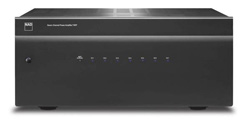 Next week, NAD Electronics will debut its new T 977, a seven–channel amplifier (replacing the NAD T 975) at a list of $2,799. The T 977 is specified to deliver 140 watts of continuous power out of each of its seven channels. NAD rates its receivers with a 4-ohm load, with all channels driven simultaneously, over the full frequency bandwidth (20 Hz – 20 kHz), and at rated distortion.
The T 977 employs NAD’s PowerDrive which claims to nearly double the effective power on transients by adding a second high-voltage rail to a well regulated, high-current power supply. The result is an “overdrive” that can nearly double the continuous power on a short-term, dynamic power basis. A soft clipping feature limits high frequency energy during clipping to protect the loudspeaker from damage. Any amplifier that is overdriven (asked to generate levels beyond its undistorted capabilities) will produce distortion (clipping). The result is not only very harsh sound but can often damage speakers, especially tweeters. The selectable “soft clipping” feature on NAD amplifiers, including the T 977, transforms the music waveform as the point of clipping approaches, resulting in much clearer reproduction and simultaneous protection of speakers, according to NAD.
The T 977 is a GreenAV receiver in that it saves energy via an automatic standby mode, during which it only draws 0.5 watts of power. It was developed with system integration in mind as it includes a programmable 12V trigger input and individual gain adjustments for each channel.
Here are all the specs: http://www.nadelectronics.com
Leave a Comment
Share Article
 Pacific Media Associates (PMA) has posted its recent results to the “Top Selling Projectors” area of the company’s website.
For more than 15 years now, Pacific Media Associates (PMA) has collected monthly sell-through data from leading North American projector dealers, retailers, web resellers and distributors. Its Tracking Service family of monthly reports offers timely sell-through data and analysis on unit sales, true volume-weighted street prices, and inventories of front projectors for these channels.
Each month, Pacific Media Associates posts the Top 5 Projector Lists for the following product categories:
New Era / Pico and Personal (sub-1000 lumens) Projectors – The November results showed that three of the Top 5 selling models, by unit volume, to be Optoma PK–Series pico projectors. Coming in number one, two and three, respectively, were the Optoma PK-320, the Optoma PK-120 and the Optoma PK-201. Rounding out the Top 5 were AAXA’s M2 Micro pico projector and Vivitek’s Qumi Q2 personal projector. In addition, DLP technology remains most popular for the New Era category, with four out of the Top 5 models being DLP based. This Top 5 list is compiled from data collected from PMA’s monthly Retail Projector Tracking Service sample, which is made up of North American retailers and web resellers.
Mainstream (1000 to 3999 lumens) Projectors – For the Mainstream category, NEC took top honors, by unit volume, with the best-selling NP-V260X. InFocus landed the number two and three spots respectively, with the IN112 and IN114. Hitachi took the fourth spot with the CP-X3015WN and NEC rounded out the Top 5 with the NP-V260. In addition, XGA resolution models were most popular for Mainstream purchasers, with three of the Top 5 having 1,024×768 resolution. This Top 5 list is compiled from data collected from PMA’s monthly Distributor Projector Tracking Service sample, which is made up of North American distributors.
High-End (4000+ lumens) Projectors – The November 2012 results showed Epson leading the pack with the top two selling models – the PowerLite 1945W and the PowerLite Pro G5750WU. NEC also made a strong showing in the High-End category with the NP-PA500U-13ZL in the number three spot, and the NP-PA550W-13ZL taking the fourth spot. Mitsubishi rounded out the Top 5 with their WL7200. In addition, WXGA units were most popular in the High-End category, with three of the Top 5 models having 1,366×768 resolutions. This Top 5 list is compiled from data collected from PMA’s monthly Pro A/V Projector Tracking Service sample, which is made up of North American dealers and integrators
Resellers, distributors, manufacturers, and the press are invited to visit PMA’s site each month at http://www.pacificmediaassociates.com to see the 5 Top Selling projectors for these categories, as well as new product blogs and information on Pacific Media’s projector market research offerings.
Leave a Comment
Share Article
 NEC Display Solutions announced today an addition to its high-end IT desktop line, the MultiSync EA Series, with the 24-inch EA244WMi. This monitor is LED-backlit and ideal for corporate environments.
This widescreen model features IPS panel technology with wide viewing angles (178° horizontal/vertical) and ergonomic adjustability. The LED backlighting of the EA244WMi allows for a slimmer profile, lighter weight and increased power savings compared to previous generation models. ControlSync technology allows users to control up to six EA244WMi displays in a multi-monitor configuration. Upon establishing one unit as the master, users are able to control many performance attributes of the multi-monitor setup in unison through the single monitor.
Smart sensing technology automatically detects user work conditions to determine the proper display brightness with ambient light and human sensors.
The MultiSync EA244WMI includes the following features:
- 24-inch, 16:10 IPS panel with LED backlighting
- Wide viewing angles of 178°H/178°V
- 1920 x 1200 full HD resolution
- 25,000:1 dynamic contrast ratio (1000:1 typical)
- Ergonomic adjustable stand with 130mm height-adjust, tilt, swivel and pivot
- DisplayPort, HDMI, DVI-D and VGA D-sub inputs
- Integrated four-port USB 2.0 hub (two rear, two side)
- Integrated speakers (1W x 2) and headphone jack
- ControlSync for multi-screen setups
- Smart sensing technology (ambient light and human sensors)
- ECO Mode, carbon footprint meter and cost meter
- ENERGY STAR 6.0 and TCO 6.0 compliant
- EPEAT Gold
 Most inexpensive 3D projectors are junk. But, the new $3,000 HC8000 from Mitsubishi is not only getting incredible reviews, it’s also one of the hottest projectors at CES. Spec’d to have 333,000:1 contrast ratio and output 2,000 lumens of brightness, it’s both a native 3D and 2D to 3D conversion projector using DLP technology. The native 1080p HC8000 includes a 1.5x zoom lens, is integrated with a six-segment 3D deep color DLP color wheel and includes both dual HDMI ports and a component video input.
Here are all the specs: http://www.mitsubishielectric.ca/en/displays/projectors/PDF/brochure_8000D.pdf
Leave a Comment
Share Article
 InfoComm International has launched a member-developed resource which will provide owners, consultants and integrators with comprehensive verification criteria to determine if the AV system achieves the client’s objectives and is performing in accordance with the system design. The Audiovisual Systems Performance Verification Checklist, which features 162 criteria, was developed in a consensus building manner over the last year, by a global panel of subject matter experts representing the entire industry.
“By creating and distributing this checklist, InfoComm has met its longstanding goal of establishing verification guidelines to help industry professionals and their clients communicate effectively about mutual expectations for system performance,” said David Labuskes, CTS, RCDD, executive director and CEO, InfoComm International. “I urge the industry to adopt this list as a basis to foster better communication between the AV industry and the people who rely on our systems.”
The new checklist is a featured requirement of InfoComm’s Certified AV Solutions Provider (CAVSP) program. Diamond CAVSPs are required to show a completed Audiovisual Systems Performance Verification Checklist for one AV installation. Emerald CAVSPs need to indicate their commitment to adopt InfoComm International’s Audiovisual Systems Performance Verification Checklist for future AV installations.
In order to continue the industry dialogue on quality, InfoComm has convened a Standards Task Group to publish an InfoComm standard based on this list that will be submitted to ANSI for consideration of adoption by the second quarter of 2013. As part of this process, in the coming months InfoComm will offer a draft standard that will be open for public review and comment.
InfoComm thanks the AV Systems Performance Verification task group for the creation of this list. The group will further refine the list in the months ahead and include it as part of an InfoComm standard, currently in development, to be submitted to ANSI for consideration of adoption. As part of this process, InfoComm will offer a draft standard that will be open for public review and comment.
Members of the task group include: Matthew Silverman, CTS, PMP, George Mason University, (Moderator), John Bailey, CTS-D, CTS-I, The Whitlock Group; Jason Brameld, BSc (Hons) ARCS, MInstSCE, Mark Johnson Consultants; Greg Bronson, CTS-D, Cornell University; Paul Depperschmidt, CTS, Cisco; Richard Derbyshire, CTS, Shen Milsom & Wilke; Dan Doolen, University of Illinois; Tristan Gfrerer, Google; Mike Izatt, CTS-D, Electronic Interiors, Inc.; Tom Kopin, CTS, ISF-C, Kramer Electronics; Richard Morrison, Prince2, CPENG, CTS, Norman, Disney & Young; and Mike Quinn, BEng, Ceng, MIET, CTS-D.
The free list can be downloaded from infocomm.org/resources
Leave a Comment
Share Article
 Both Samsung and LG claim to have brought “the world’s first curved OLED TV” to CES 2013.
The curved OLED TVs are both 55″ displays that appear concave when viewed from the front and even more bent from the sides. Apparently the shape improves on viewing angles, even if an over-enthusiastic Samsung PR describes it as “IMAX-like” (never mind IMAX screens measure around 70 feet/21 meters).
Being OLED displays, both curved TVs benefit from deeper blacks and impressively crisp colors, with the LG’s offering (EA9800) also boasting Cinema 3D support.
Neither Samsung nor LG give price points or even release dates for the curvy OLEDs, but expect more details should CES 2013 drum up enough industry interest in the technology.
Here is LG’s: http://www.lgnewsroom.com/newsroom/contents/62967
Here is Samsung’s: http://www.samsung.com/us/news/20352
Leave a Comment
Share Article
 Sharp’s two newest projectors are the PG-LW3500 and PG-LW3000 WXGA, both using BrilliantColor Technology using TI’s DLP technology. Weighing 6 pounds, the PG-LW3500 and PG-LW3000 have a brightness spec up to 3,500 lumens and 3,000 lumens, respectively. The PG-LW3500 and PG-LW3000 are the first releases in a new series (the PG-LX3500 and PG-LX3000 XGA models will be released in February 2013). Collectively, this new series replaces the PG-D3050W/3550W and PG-D3010XL/3510XL in the Sharp product lineup as the mid-range option aimed at education, government and business applications.
They both offer VGA, HDMI and content network inputs and are native 1280×800 resolution. The PG-LW3500 will list for $1,765 and the PG-LW3000 will list for only $1,515.
You can see all the specs here: http://www.sharpusa.com/ForBusiness/PresentationProducts/ProfessionalProjectors/PGLW3500.aspx
Leave a Comment
Share Article
