Volume 8, Issue 11 — June 2, 2010
|
Share
this issue
of rAVe! | | | | | | |
|
 | |  |
| | |

|
 Click above for more information |

Welcome to another issue of rAVe ProAV Edition! Well, InfoComm is finally upon us, and we're here today with our pre-show issue. After the show is over, we'll be covering everything we saw at the show as well as publishing our annual InfoComm awards, so be sure you don't miss any issues in the next month or two! As you may have seen, we're playing THE GAME at the show, and want you to play too. Check out our story below that tells you exactly how to play (hint: you have to use Twitter). Also, check out our THE GAME website for a few hints as to what we're doing: https://www.ravepubs.com/THEGAME Like last year, we'll also be shooting and posting videos from the show floor. We're even shooting a bunch on Tuesday, so check us out Tuesday night so you know a few cool things to see before the show even opens! We'll be posting them the whole show, and leave them up on our website, so follow along at home, check them out on our site when you're taking a break during the day, and go back and remind yourself of what you saw after the show. Check out our site here: https://www.ravepubs.com/infocomm10 If you're an exhibitor, watch out for us! We'll be all over the show in red shirts with our video cameras shooting product videos. We're trying to get to as many companies as possible, so have someone who is ready to go on video when we show up! Enjoy the issue, and see you in Vegas! –Gary Kayye, CTS Back to Top
|
 Click above for more information |

The Dealer Differentiation Decade?
By Gary Kayye, CTS  I recently wrote a column (The Projector Differentiation Decade) where I celebrated the few manufacturers that managed to differentiate themselves from the me-too of projector companies out there. Instead of just making smaller, brighter, lighter and higher resolution projectors, they managed to spend the past ten years or so doing things differently so they stand out from the other 40 or so manufacturers of projectors. I recently wrote a column (The Projector Differentiation Decade) where I celebrated the few manufacturers that managed to differentiate themselves from the me-too of projector companies out there. Instead of just making smaller, brighter, lighter and higher resolution projectors, they managed to spend the past ten years or so doing things differently so they stand out from the other 40 or so manufacturers of projectors.
That column received a lot of feedback and sparked many discussions with industry friends about how integrators and systems designers of commercial AV gear can differentiate themselves, too. Here’s some of the top ideas from those discussions: Green and LEED In case you haven’t noticed, green is more than a trend – it’s quickly becoming a shift in lifestyle. We, too, can be green. Everyone from Lutron to Extron has launched GreenAV stuff that’s Energy Star-compliant, can help you achieve LEED (Leadership in Energy and Environmental Design) certification in buildings, or just saves energy — and money. I’d highly recommend you leverage as much of this as you can, as quickly as you can. Instead of just installing the same old AV systems you’ve done for years, consider becoming THE EXPERT in your market for GreenAV. Put on seminars for clients on why they need to consider LEED certification, GreenAV gear and energy-saving AV stuff. In fact, you can start to design systems that save more energy than your competitions and show your potential customers the cost-savings and the so-called carbon-footprint offset. Networked AV Systems 
Believe it or not, less than 16 percent of commercial AV systems installed in 2009 were networked. This is a BIG mistake. Without being networked, you can’t even offer remote monitoring and systems management – thus, throwing away a LOT of potential service revenue (see the next section to understand the lost margin potential of this). But, even more important, networked AV drives the content side of the business. For example, the money in digital signage (a totally networked AV application) is in providing the creative content. Networked AV represents the future of our market. So, take a leadership role in steering the AV-ship by going 100 percent networked AV NOW! Service Galore By now, I’m sure you’ve realized that providing service is a lot more profitable than providing gear. The margin on all four service opportunities AV systems provides (systems design, systems integration/installation, proactive maintenance and 24/7/365 remote management) provide higher margins than selling AV gear. Are you providing them?  If not, why not? Become the service leader in your market. In fact, if you become good enough at it, offer those services to your competition! Seriously. If you’re better than your competition, then call them up and offer to be their service provider. Let’s face it, some companies are great at gear sales and some are great at gear maintenance – and I’d much rather be great at providing services than providing gear. If not, why not? Become the service leader in your market. In fact, if you become good enough at it, offer those services to your competition! Seriously. If you’re better than your competition, then call them up and offer to be their service provider. Let’s face it, some companies are great at gear sales and some are great at gear maintenance – and I’d much rather be great at providing services than providing gear.
Creativity One of the BEST services you can add to your arsenal is creativity. In fact, the fastest growing segment of the commercial AV market totally derives the majority of its profit potential for the integrator from graphics design and creativity: digital signage. Unfortunately, the AV channel isn’t the primary go-to integration firm – the IT channel is. You NEED to seriously consider adding graphics design and creative services to your repertoire. Why stop at the installation? THE Emerging Market
 Everyone in the commerical AV market does boardrooms, conference rooms, training rooms, etc. But, not everyone is focused on the emerging markets. The biggest emerging market in commercial AV right now is, no doubt, the digital signage market. I intentionally mention digital signage as the ultimate emerging market as, interestingly enough, it is also the ultimate market for your to aggregate all the aforementioned stuff, too! - It’s Green: Not only can a digital signage application be promoted as a green install (e.g., on a university campus, it eliminates the need for the school newspaper; in retail, it eliminates the need for a coupon or flyer) – don’t believe me? Just ask the 30 or so college campuses in the U.S., alone, who have opted for giant digital signage deployments rather than continuing the school paper.
- It’s Networked: All digital signage installs are 100 percent network driven. And, the best part about it – it’s the best way to understand the future of the commercial AV install, which is eventually going to totally network driven content.
- It’s A Service-Based Solution: According to their own industry stats, 91 percent of the digital signage installs include monthly 24/7/365 service contracts at an average margin of over 60 percent.
- It’s Creative: Offering your client the gear is one thing in a digital signage install, but offering them the production of the content is the ultimate in profitability and partering.
Still not convinced? Geez, then you’re probably still selling overhead projectors to 70-year old tenured professors… Reprinted with permission from Sound & Communications. Founded in 1955, Sound & Communications is the premiere magazine for AV systems integrators, contractors and consultants. To subscribe or read sample articles, go to http://www.soundandcommunications.com Back to Top
|
 Click above for more information |
The Future of the Classroom
By Bob Snyder
Editor, rAVe EUROPE  George Kembel, cofounder and executive director of Stanford University's Hasso Plattner Institute of Design, says publicly, "Our education system is not broken, but it is becoming obsolete. We're still running an educational model developed for the industrial revolution, designed to prepare workers for factory jobs." George Kembel, cofounder and executive director of Stanford University's Hasso Plattner Institute of Design, says publicly, "Our education system is not broken, but it is becoming obsolete. We're still running an educational model developed for the industrial revolution, designed to prepare workers for factory jobs."
He may be right. Today's classrooms feature professors or teachers sharing what they know by lectures. Is this really the way to produce the next generation of innovators?
In 2020, Kembel says we will see an end to the classroom as we know it. The single professor standing in front of the class will be replaced by a team… coaches from different fields that amplify subjects. Simple lectures will be replaced by "messy real-world challenges." Instead hanging in lecture halls, students will work in collaborative spaces, where future professionals learn to integrate their different approaches to problem-solving. Think of social networking as a model as then stretch it to how people will innovate together.
At Kemble's Stanford's Hasso Plattner Institute of Design, students from engineering, medicine, business, law and the arts come together to tackle real-world projects. They've worked on everything from reinventing the morning radio experience for a century-old station in New York City to helping JetBlue serve customers during massive weather delays.
Students get closer to end users who will be using their solutions and learn to collaborate with teammates with different problem-solving approaches. Maybe it seems all too vocational, but Kemble thinks they will learn a methodology that equips them to tackle complex challenges outside the classroom.
He talks about the learning experience you can't get in a traditional classroom and argues this shift toward hands-on experiences is happening far beyond universities.
His main point: Children enter school with innate creativity but rarely leave that way. He cites a British researcher, who studied 1600 children between the ages of 3 and 5 on their ability to think divergently. 98 percent scored genius level. Ten years later the same children only scored 10 percent at genius level.
Schools around the world will move aggressively to rethink their memorize-and-test approach, says Kemble. They will have to in order to produce innovators who can continually produce great ideas and turn them into reality again and again. In an era of global competition, these shifts in education will be key to developing the next generation of leaders.
Kemble doesn't go there but one part of the process that is apparent is the vested interest of governments and large corporations. Both control the money that goes into education and each wants to insure they get students who can go on to create innovation and bring in the money. Will lofty academics and their ivory towers fall soon, pulled into the real world by necessity and greed. Or maybe just "business schools" like Kemble's.
Building an educational system where the technology goes hand-in-hand with changing how students of all ages learn…in an age where internet has changed the way Digital Natives think and cooperate…is important to all stakeholders. The sellers of technology have an important role that goes beyond selling hardware and into selling educational solutions. Think of Education-as-a-Service.
Bob Snyder is the editor of rAVe Europe. Reach him at [email protected] Back to Top
|
 Click above for more information |
AMOLED Gets Ready to Scale Up
By Ken Werner
Senior Analyst and Editor, Insight Media  A major problem for active-matrix organic-light-emitting-diode (AMOLED) technology has been a stubborn lack of scalability. That is, the manufacturing processes used to fabricate the OLED array itself (often called the front plane) and the array of thin-film transistors that drive the OLEDs (often called the backplane) have worked very well on relatively small substrates (up to Gen 4 processed half a substrate at a time), but could not be scaled up to work satisfactorily on large substrates. That has made it impossible for OLED to attain the economies of scale that AMLCDs have long enjoyed, so small (cell-phone-sized) AMOLEDs have remained significantly more expensive than small AMLCDs, moderately large AMOLEDs (10 to 20 inches) have been jaw-droppingly expensive, and very large AMOLEDs have been impossible to make in any reasonable way. A major problem for active-matrix organic-light-emitting-diode (AMOLED) technology has been a stubborn lack of scalability. That is, the manufacturing processes used to fabricate the OLED array itself (often called the front plane) and the array of thin-film transistors that drive the OLEDs (often called the backplane) have worked very well on relatively small substrates (up to Gen 4 processed half a substrate at a time), but could not be scaled up to work satisfactorily on large substrates. That has made it impossible for OLED to attain the economies of scale that AMLCDs have long enjoyed, so small (cell-phone-sized) AMOLEDs have remained significantly more expensive than small AMLCDs, moderately large AMOLEDs (10 to 20 inches) have been jaw-droppingly expensive, and very large AMOLEDs have been impossible to make in any reasonable way.
Now, that’s starting to change. Early this week, Samsung Electronics announced it will increase its total 2010 investment in manufacturing facilities and R&D to 26 trillion Won, its largest annual investment to date, spread over semiconductors and LCDs. The company will hire 10,000 new employees during the year. At a ground-breaking ceremony for a new semiconductor memory plant in Hwaseong, Gyeonggi Province, Samsung Electronics Chairman Kun-Hee Lee said, "Although the global economic environment and business conditions remain changeable and uncertain, if we invest aggressively in expanding facilities and in hiring then these circumstances also present Samsung an opportunity for future growth and to stimulate the economy." That establishes Samsung’s aggressive mindset. Now, here comes the AMOLED part.
In a separate announcement, Samsung JV Samsung Mobile Display Co. (SMD) said it will invest an additional 2.5 trillion Won to develop the world’s largest AMOLED display manufacturing facility in the company’s Tangjeong Complex. SMD will build the new Gen 5.5 (1300×1500mm) AMOLED line by 2012. It will have a capacity of 70,000 panels per month. The line will be able to produce panels suitable for AMOLED-TVs.
On the same day DuPont announced it is now able to use its recently announced printable OLED materials to print a 50-inch OLED-TV in less than two minutes, using a custom-made printer from Dainippon Screen.
You may remember that the idea of fabricating OLED displays with drop-by-drop inkjet printing generated a lot of excitement a few years ago, but fizzled when it became clear how difficult it is to make a good-quality display with drop-by-drop printing. Dupont and Dainippon Ink developed an approach that exploited the common display geometry in which the R, G, and B subpixels line up in columns. That allows the red (for instance) OLED material to be sprayed in a continuous stream down the red columns. This continuous printing can be done with much greater consistency and speed than drop-by-drop, says DuPont, making the printing of OLED front planes practical.
 DuPont’s current announcement says nothing about the solving the backplane scalability problem. But, in the past, DuPont’s Bill Feehery has said that their piece of the puzzle is the front plane, not the backplane. DuPont’s current announcement says nothing about the solving the backplane scalability problem. But, in the past, DuPont’s Bill Feehery has said that their piece of the puzzle is the front plane, not the backplane.
Samsung, on the other hand, says it’s building a complete display plant, so it presumably has a solution in hand for the backplane as well as the front plane. What those manufacturing solutions actually are is something I hope to learn when I speak with Samsung.
Ken Werner is a senior editor and analyst at Insight Media. Reach him at [email protected]
Back to Top
|
 Click above for more information |
New Warranty Standards for Our Market
By Tom Peters
President, Applied Visual Communications  We in the AV industry often struggle to obtain a level of credibility that professionals in other industries seem to earn by simply holding an occupational title. For example, it is common for the average business person to assume that a licensed architect has the capacity to design work of a certain basic standard and that all accountants can perform competent accounting. However, credibility does not come with a title in the AV industry. We in the AV industry often struggle to obtain a level of credibility that professionals in other industries seem to earn by simply holding an occupational title. For example, it is common for the average business person to assume that a licensed architect has the capacity to design work of a certain basic standard and that all accountants can perform competent accounting. However, credibility does not come with a title in the AV industry.
The reputation of a company can begin with the certifications it earns and promotes to its customer base. For example, the InfoComm CTS program is among the certifications that lend credibility to individuals in the AV industry, as the RCDD does for the Structured Cable industry. Programs built on these certifications to recognize firms also serve to set companies apart. They demonstrate that firms have invested time and valuable resources to train staff and certify employees to meet high standards. AVC currently has nearly 80 percent of the Technical and Sales Teams holding the basic CTS. Out of 25 team members, we also have 4 individuals with a CTS-I, 4 with a CTS-D, and 1 with INCE Certifications. These certifications are certainly valuable but are only partial contributors to a company’s reputation and viability in the AV market. Just knowing how to do the work doesn’t mean good work will be done. Today’s environment is highly competitive and how an AV company stands behind its workmanship and tools is another driving force to earning and maintaining customer trust and maintaining long-term credibility. Consumers (both at the consumer level and business level) look to warranties for peace of mind in their investment. Strong warranties imply a high standard of quality in the materials and workmanship of the product, whether it is an air conditioner, an automobile or an AV system. Some AV firms guarantee their work for 90 days while others opt for 12 months. As practitioners, don’t we expect the systems we design and integrate to work well beyond these periods? In our minds, any solid company that believes in its product should drive a message of confidence to its customers. That is why AVC has raised the bar. We now warrant our workmanship for 3 years. We want our clients to know that we stand behind our work and systems. AVC delivers a high level of service, quality, and reliability. We offer tools that clients can depend on for their business today and into their company’s future. If we as an industry truly want a higher level of credibility with our clients, then I challenge the legitimate Systems Integration firms to step up to this longer warranty. It will enhance the image of the industry as a whole, and help distance each of you from the untrained, unprofessional competition.  About the Author: Tom Peters is president of Applied Visual Communications and a 35 year veteran of the AV industry. He is a Past President of InfoComm and is an active volunteer in efforts to innovate and improve the AV industry. About the Author: Tom Peters is president of Applied Visual Communications and a 35 year veteran of the AV industry. He is a Past President of InfoComm and is an active volunteer in efforts to innovate and improve the AV industry.
About Applied Visual Communications, Inc. Applied Visual Communications, Inc. (AVC) is a Women Owned Small Business founded in 2006 by industry veterans Carole and Tom Peters. AVC is a premier Audio-Visual Systems Integrator which designs, builds and maintains visual communications systems for conference rooms, training rooms, classrooms, network operation centers, demonstration/sales rooms, auditoriums, digital signage and meeting rooms of all types. AVC has expertise in audio conferencing, videoconferencing, video walls, digital signage, performance audio, video streaming, presentation recording, control systems and related AV technologies. Located in Herndon, Virginia, AVC primarily serves the greater Washington, DC market. Back to Top
|
 Click above for more information |

rAVe to Launch THE GAME at InfoComm 2010  Want to play THE GAME at InfoComm with us? Here's how. Want to play THE GAME at InfoComm with us? Here's how.
We're playing THE GAME entirely on Twitter, which we'll use to send you clues at the show. You don't have to have a fancy phone to get our Tweets at the show. Here's what you do: 1. Go to http://www.twitter.com and sign up for an account (unless you already have one). 2. Follow us on our Twitter feed: http://www.twitter.com/ravepubs 3. If you have a smartphone, such as a Blackberry or iPhone, you can use a Twitter application to stay in touch at the show. For iPhone users, we like Tweetie, which is now called Twitter for iPhone (Twitter bought the App). 4. If you don't have a smartphone, or don't want to use an App, you can have our Tweets sent to you via text message. To do this, log in to your Twitter account on a web browser, and go to Settings at the top. Choose the tab marked "Mobile," which is third from the left. Enter your cell phone number and go through the Verification process. Make sure in the same Mobile Settings tab, that Device Updates are set to "On." Then go back to http://www.twitter.com/rAVepubs and click the tiny phone icon next to the word "Following" at the top. It will turn green. Now you are receiving our Tweets via text message! You will only receive Tweets via text message from the Twitter users that you have clicked the phone icon on their homepages. Now that you have Twitter set up, you can play with us at the show! We'll be sending out clues of where to go, who to talk to, and what to do on the show floor in order to win AWESOME prizes. Stay tuned! Also, not going to the show, but want to play at home? Be sure you too pay attention to our Twitter feed — we'll have a couple chances for folks at home to win prizes too. To look at our Twitter feed now, go to http://twitter.com/ravepubs To look at THE GAME's website and get some clues, go to: https://www.ravepubs.com/THEGAME Back to Top
InfoComm to Launch Green Rating  At InfoComm 2010 a sustainability rating system for AV and electronic systems will be unveiled. It is the product of work done by the InfoComm Green AV Task Force and the current AV Sustainability Task Force. The current draft framework of the rating system will be unveiled for input and feedback from the AV community at a free session Friday, June 11, from 10:30 a.m. – noon at InfoComm 2010 in Las Vegas. The session will take place at Las Vegas Convention Center in room N-252. At InfoComm 2010 a sustainability rating system for AV and electronic systems will be unveiled. It is the product of work done by the InfoComm Green AV Task Force and the current AV Sustainability Task Force. The current draft framework of the rating system will be unveiled for input and feedback from the AV community at a free session Friday, June 11, from 10:30 a.m. – noon at InfoComm 2010 in Las Vegas. The session will take place at Las Vegas Convention Center in room N-252.
In 2009, the InfoComm Board of Directors authorized the creation of a Green AV Task Force. The mission of the group was to create a body of green AV knowledge and associated best practices. While a lot of good work was performed, the group was unable to meet its mandate because there was/is no generally accepted definition of what a GreenAV system and there is no clear way to measure or compare a “GreenAV” installation against a standard “non-GreenAV” system.
As a result, the InfoComm Board of Directors has decided deemphasize the association’s pursuit of LEED innovation points for GreenAV and instead create our own AV sustainability rating system. A new AV Sustainability Task Force made up of representatives from AV manufacturing, integration, consulting, software programming and the technology manager communities was formed to guide the initiative. It was charged to consider both the sustainability of energy and materials in order to be a comprehensive program.
Back to Top
Samsung to Develop Ad Networks?  What does a company with of $79 billion in sales last year (a 23 percent increase over the year before) really want? Well, Samsung is considering a plan to push interactive advertisements from other companies through Samsung's phones and flat-screen TVs. What does a company with of $79 billion in sales last year (a 23 percent increase over the year before) really want? Well, Samsung is considering a plan to push interactive advertisements from other companies through Samsung's phones and flat-screen TVs.
Samsung's new apps (similar to Apple's store for its iPhone) lets consumers stream content from the internet to — in Samsung's case — a web-connected TV. Millions of Samsung's ipTV owners now can access to 30 ad-free applications, such as Netflix and Blockbuster. By year-end, more than 100 apps are supposed to be available.
Think of it as the world's largest digital signage network… ha, now you have the real idea! Why stop at just TV screens when you have monitors out there, too? And why stop at your own TVs and monitors if incremental screens add revenue?
Vendors of electronic appliances now think they can't profit just by offering features like sharper colors or brighter sound. Pricing power, as demonstrated by Apple, comes only from unique features or control over content. And that's why Sony is jumping in with Google on Smart TV, Google's web-accessible video search play.
Analysts even think Samsung may purchase an ad network (or, like NEC, start one). This would bring in lots of ad money from marketers who appreciate a screen 25x the size of iPhone's.
Check out Forbes article about this here: http://www.forbes.com/forbes/2010/0607/marketing-consumer-electronics-apps-apple-samsung-big-spend.html
Back to Top
Pocket Projectors to Reach 142M Units by 2018  DisplaySearch says pocket projectors will grow from 0.5 million units and $117m in revenues in 2009 to 142 million units and $13.9 billion in 2018, (a CAGR of 70 percent for revenues and 88 percent for units). DisplaySearch says pocket projectors will grow from 0.5 million units and $117m in revenues in 2009 to 142 million units and $13.9 billion in 2018, (a CAGR of 70 percent for revenues and 88 percent for units).
"There were over 130 new pocket projector models released in the market in 2009, along with the first releases of embedded projectors into the market. Despite this, pocket projectors still face challenges of low brightness, short battery life and high price. Continuing progress in all the technologies surrounding pocket projectors will be needed to achieve the expected growth," notes Jennifer Colegrove, Director of Display Technologies at DisplaySearch.
Now the pocket projector market is dominated by stand-alone devices, which will reach 45m units and $8.9 billion in 2018.
But DisplaySearch says embedded/dedicated projectors shipments will surpass stand-alone units in 2014, as limitations in consumption, size, brightness and price improve. Embedded pocket projectors will reach 97m units and $5 billion in 2018.
Read the entire report here: http://www.displaysearch.com
Back to Top
Extron Power Supplies Reach the Demonstrated MTBF Mark of One Million Hours 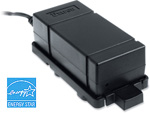 Extron announced yesterday that their own custom designed and manufactured power supplies have reached the 1,000,000-hour mark in demonstrated MTBF, Mean Time Between Failures. Extron announced yesterday that their own custom designed and manufactured power supplies have reached the 1,000,000-hour mark in demonstrated MTBF, Mean Time Between Failures.
This feat was accomplished by exposing the power supplies to extreme testing in our in-house heating chamber that supports elevated temperature as well as constant temperature conditions. While most manufacturers purchase off-the-shelf switch mode power supplies (think wall-warts and even built-in power supplies) that can be subject to variations in quality and reliability, Extron actually designed and manufactures its own power supplies. Extron says that both their PS Series of Desktop Power Supplies and their internal power supplies were tested. The energy efficient desktop power supplies are ENERGY STAR qualified, and Extron says their internal power supplies consume less energy and generate less waste heat than conventional power supplies.
Extron can be found at: http://www.extron.com/
Back to Top
InfoComm's AV Systems Design — ANSI Approved  The American National Standards Institute (ANSI) and the InfoComm International Board of Directors have released InfoComm's second standard, ANSI/INFOCOMM 2M-2010 Standard Guide for Audiovisual Systems Design and Coordination Processes. The American National Standards Institute (ANSI) and the InfoComm International Board of Directors have released InfoComm's second standard, ANSI/INFOCOMM 2M-2010 Standard Guide for Audiovisual Systems Design and Coordination Processes.
The purpose of this standard is to provide a description of the methods, procedures, tasks, and deliverables typically recommended or applied by professionals in audiovisual (AV) systems design and integration projects. The Standard enables clients and other design and construction team members to confidently assess whether the responsible parties are providing the expected services.
A successful professional audiovisual system installation depends on the clear definition and coordination of processes, resources, and responsibilities of the design and installation project teams. A properly documented audiovisual system provides the information necessary to understand and implement the system goals and project requirements in a logical and efficient manner. The documentation should complement and coordinate with related architectural, engineering, and construction documentation. The Standard Guide for Audiovisual Systems Design and Coordination Processes outlines a consistent set of the standard tasks, responsibilities, and deliverables required for professional audiovisual systems design and construction.
Here’s the entire InfoComm story: http://www.infocomm.org/cps/rde/xchg/infocomm/hs.xsl/13665.htm
Back to Top
NSCA Events @ InfoComm 2010  Here’s a list of important NSCA events during InfoComm 2010: Here’s a list of important NSCA events during InfoComm 2010:
Tuesday, June 8, 2010
- NSCA will kick off InfoComm 2010 with ExpoJam!, immediately following the Opening Night Reception in the Barron Ballroom at the Las Vegas Hilton Hotel, which is connected to the Las Vegas Convention Center (LVCC).
Wednesday, June 9, 2010 - All attendees are welcome to attend NSCA’s free keynote presentation featuring business expert Bob Prosen. A popular speaker who has appeared at two consecutive NSCA Business & Leadership Conferences, Bob will discuss “Superior Leadership: A Proven Formula for Increasing Profits” from 8-9:30 a.m. on June 9 in Rooms N232 and N234 at the LVCC. Then, be one of the first 25 people to stop by the NSCA Zone (Booth #C5859) from 10-11 a.m. to have Bob sign a free copy of his book Kiss Theory Goodbye.
- Immediately following the keynote, NSCA members are invited to stay for the association’s Annual Member Meeting from 9:30-10 a.m. in Rooms N232 and N234 of the LVCC. Come and hear the state of the association, share your thoughts on pressing issues affecting your business, and approve the slate for the NSCA Board of Directors.
Thursday, June 10, 2010 - The Women in NSCA reception will be held from 3:30-4:30 p.m. in the NSCA Zone. Join other women in the industry and gain valuable knowledge on solutions, tips and ideas on the opportunities and challenges from both veterans and newcomers.
Back to Top
|
 Click above for more information |

Crestron Ships 32×32 DM Matrix 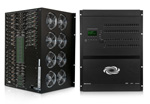 Last month, Crestron started shipping the DM-MD32X32, a matrix switcher designed for facility-wide and whole-house distribution. Crestron says, just like the DM-MD8X8 and DM-MD16X16 – the DM-MD32x32 is field-configurable and cardcage-based, including cards for VGA, HDMI, DVI, DisplayPort, 3G-SDI, Ethernet and USB keyboard/mouse control. According to Crestron, video transmission can run hundreds of feet over a single twisted pair cable or up to 1,000 feet via fiber. Last month, Crestron started shipping the DM-MD32X32, a matrix switcher designed for facility-wide and whole-house distribution. Crestron says, just like the DM-MD8X8 and DM-MD16X16 – the DM-MD32x32 is field-configurable and cardcage-based, including cards for VGA, HDMI, DVI, DisplayPort, 3G-SDI, Ethernet and USB keyboard/mouse control. According to Crestron, video transmission can run hundreds of feet over a single twisted pair cable or up to 1,000 feet via fiber.
For complete specs, go to: http://www.crestron.com/products/show_products.asp?jump=1&model=dm-md32x32
Back to Top
Extron's Universal TP Transmitter for Digital and Analog Signals Ships  Extron announced the immediate availability of the MTP/HDMI U T A D, a Decora-style, universal twisted pair transmitter for digital and analog video sources. Dedicated inputs on the MTP/HDMI U T A D accommodate digital and analog video, audio, and bidirectional RS-232 or IR signals and the signals are transmitted long distances over CAT 5-type cabling to remote receiver locations. Extron announced the immediate availability of the MTP/HDMI U T A D, a Decora-style, universal twisted pair transmitter for digital and analog video sources. Dedicated inputs on the MTP/HDMI U T A D accommodate digital and analog video, audio, and bidirectional RS-232 or IR signals and the signals are transmitted long distances over CAT 5-type cabling to remote receiver locations.
Unlike many other long-range twisted pair products, Extron’s includes an HDMI transmitter that’s HDCP compliant and enables HDMI signals to be carried over distances significantly greater than the lengths of standard HDMI cables. The HDMI input supports data rates up to 6.75 Gbps for HDMI 1.3 Deep Color, Lip Sync, and HD lossless audio. The analog inputs offer dedicated VGA, HD component video, S-video, composite video, and audio inputs for sending a wide variety of video signals along with summed mono audio signals over one Cat5 cable.
For complete specs, go to: http://www.extron.com/product/product.aspx?id=tphdutad&s=0
Back to Top 
Sony Showcases Rollable, Flexible Screen  At the Society for Information Display International Symposium in Seattle, Sony's R&D labs showed a rollable organic screen, tiny enough for cell phone or movie display. You can roll it up and slip it into your pocket. At the Society for Information Display International Symposium in Seattle, Sony's R&D labs showed a rollable organic screen, tiny enough for cell phone or movie display. You can roll it up and slip it into your pocket.
The display, made up of organic thin-film transistors, is about 4" wide and functional when flat or rolled-up. This Sony screen offers a resolution of 432×240 pixels, about what other mobile phone screens do today.
This moves display tech closer to the exploding world of mobile gadgets. We can already see prototypes of pcs/gadgets that can wrap around your wrist or reside in your clothing. But the power of flexible screens goes far beyond novelty and it seems inevitable that displays must go as mobile as the rest of technology.
'Nuff said. Let's watch the video and see if the quality is half as good as Sony says: http://www.sony.net/SonyInfo/News/Press/201005/10-070E/index.html
Back to Top 
Ultra-High Brightness Models for Sony's XGA 3LCD Range -0610.jpg) Sony adds what they call “ultra-high brightness” projectors to their XGA 3LCD range, designed for fixed installation applications such as boardrooms, show rooms, auditoriums and concert halls. Sony adds what they call “ultra-high brightness” projectors to their XGA 3LCD range, designed for fixed installation applications such as boardrooms, show rooms, auditoriums and concert halls.
The XGA resolution VPL-FX500L model delivers a 7000 lumen spec, the VPL-FX30 provides 4200 ANSI lumens (also XGA) and both are equipped with 1.6x standard zoom lens.
The VPL-FX500L's Twin Lamp System provides a second lamp built-in for automatic back up and the two lamps are used alternatively so expected lamp life totals up to approximately 8000 hours. Depending on the lens used, the VPL-FX500L can shift images approximately vertically +/-96% and horizontally +/-64%, from their original position – an impressive spec, actually.
For more info, go to: http://www.sony.co.uk/biz/view/ShowProduct.action?product=VPL-FX500L&site=biz_en_GB
Back to Top
Dukane Intros Short-Throw Projector  Following up last month’s launch of the world’s ugliest (but impressively spec'd) document camera, Dukane’s showing one of the world’s ugliest projectors in the new 8103H – a 3000 lumen, 1024×726, LCD-based short-throw lens projector. Designed for classroom installs, the 8103 actually has nice specs (sans the 7-watt speaker), but in a circa 1993 designed cabinet. Following up last month’s launch of the world’s ugliest (but impressively spec'd) document camera, Dukane’s showing one of the world’s ugliest projectors in the new 8103H – a 3000 lumen, 1024×726, LCD-based short-throw lens projector. Designed for classroom installs, the 8103 actually has nice specs (sans the 7-watt speaker), but in a circa 1993 designed cabinet.
To see the specs for yourself, go to: http://www.dukane.com/av/products/Item_dvProjectors.asp?Model=8103H
Back to Top 
News from Premier Mounts, Atlona Technologies, NSCA… Premier Mounts' new product catalog is now available, which can be ordered here… Atlona Technologies has announced a relationship with a new distributor, Electronic Stockroom, as its west coast U.S. distributor… SurgeX is sponsoring NSCA's Drunk Unkles charity concert that will take place on Thursday, June 10th at 9 pm at the Vanity Night Club in the Hard Rock Hotel and Casino. The Drunk Unkles is made up of industry members, including Steve Emspak of Shen Milsom & Wilke and Felix Robinson of AVI-SPL… NSCA is hosting several events at InfoComm, including a President's Reception at 6 pm on Thursday, June 10 in Pavilion 1 at the Las Vegas Hilton. RSVP to [email protected]… Almo Pro A/V has been named as AMX's first distribution partner and will offer AMX's subscription-free Inspired Xpress digital signage software and hardware line, among other products… Premier Mounts has named RGB Communications as its exclusive distributor partner in the UK and Ireland. Back to Top 
For all you REGULAR readers of rAVe ProAV Edition out there, hopefully you enjoyed another opinion-packed issue! For those of you NEW to rAVe, you just read how we are — we are 100% opinionated. We not only report the news and new product stories of the ProAV industry, but we stuff the articles full of our opinions. That may include (but is not limited to) whether or not the product is even worth looking at, challenging the manufacturers on their specifications, calling a marketing-spec bluff and suggesting ways integrators market their products better. But, one thing is for sure, we are NOT a trade publication that gets paid for running editorial or product stories. Traditional trade publications get paid to run product stories — that's why you see what you see in most of the pubs out there. We are different: we run what we want to run and NO ONE is going to pay us to write anything good (or bad). Don't like us, then go away — unsubscribe! Just use the link below. To send me feedback, don't reply to this newsletter – instead, write directly to me at [email protected] or for editorial ideas: Editor-in-Chief Sara Abrons at [email protected] A little about me: I graduated from Journalism School at the University of North Carolina at Chapel Hill (where I am adjunct faculty). I've been in the AV-industry since 1987 where I started with Extron and eventually moved to AMX. So, I guess I am an industry veteran (although I don't think I am that old). I have been an opinionated columnist for a number of industry publications and in the late 1990s I started the widely read KNews eNewsletter (the first in the AV market) and also created the model for and was co-founder of AV Avenue – which is now known as InfoComm IQ. rAVe Publications has been around since 2003, when we launched our original newsletter, rAVe ProAV Edition. Everything we publish is Opt-in — we spam NO ONE! rAVe ProAV Edition is our flagship ePublication with what we believe is a reach of virtually everyone in the ProAV market. rAVe HomeAV Edition, co-published with CEDIA and launched in February 2004, is, by far, the largest ePub in the HomeAV market (we blow away ANY other Publication in the high-end home AV market. We added rAVe Rental [and Staging] in November 2007, rAVe ED [Education] in May 2008 and then rAVe DS [Digital Signage] in January 2009. You can subscribe to any of those publication or see ALL our archives by going to: https://www.ravepubs.com To read more about my background, our team, and what we do, go to https://www.ravepubs.com Back to Top
Copyright 2010 – rAVe [Publications] – All rights reserved – All rights reserved. For reprint policies, contact rAVe [Publications], 210 Old Barn Ln. – Chapel Hill, NC 27517 – (919) 969-7501. Email:[email protected]
rAVe contains the opinions of the author only and does not necessarily reflect the opinions of other persons or companies or its sponsors. |
|