

The Demo Is Not Dead
By Lee Distad
rAVe Columnist  After years of low-price-point Home-Theater-In-a-Boxes and el-cheapo video displays, signs point to a return to quality in the CE channel, with specialty stores and even regional chains seeking to take back margins by presenting customers with better quality products.
The video category is still hugely challenged, make no mistake, but on the audio side, there’s a clear return to better performing audio equipment. The reasons for that, and the prevailing trends, are a subject for another column. In the meantime, let’s face the fact that if you, the dealer, are going to sell high quality gear, you need to demonstrate them effectively.
There was certainly a moment when it seemed like the Art of the Demo was facing extinction. Declining price points, declining margins, and a focus on selling high volumes of mediocre gear instead of stuff that sounds good made putting on an effective demo redundant. I mean, really — speakers, AVR, and Blu-ray all in one box for $899? The only germane question was “How long an extended warranty do you want with that?”
But with good gear, you need to demo, and you need to demo effectively.
There are plenty of reasons why. People buy when the salesman has created both trust and value. Effective demonstrations establish the dealer as trusted experts, but most importantly, they cement in the client’s mind why the experience they’re paying for is well worth all that money.
Years go by, movies and music may change, but how great demos are presented hasn’t changed. There are five key steps to putting on a winning demo.
Stay current, but remember the classics. While it’s important to keep up with new releases, it’s also important to keep your all-time favorite demo materials on file.
For a start, if customers have been shopping for any length of time, they may be verging on “demo fatigue,” and have seen the same scene from Transformers: Dark Of The Moon over and over again.
Bringing out older, but effective demo materials, especially if they haven’t been beaten to death recently, is one good way of differentiating yourself from every other salesman. Some classics demo scenes that I still have a soft spot for include the charging war elephants in Lord of the Rings: Return of the King, and the opening of the bombing scene in Pearl Harbor.
Keep it simple. The whole point of a demonstration is to impress. Be organized and to the point. Have the demo materials ready to go. With DVD or Blu-ray discs, pick demos that start right at a scene marker, and don’t require tedious fast forwarding to find. Delays will cause customers to tune out.
If possible, use a video server to demo, and create a playlist of specific scenes from its collection that can be selected instantly via the remote control.
Tell them. In addition to impressing, another important part of demonstrating is to educate. It should be pointed out ahead of time what they’re going to experience, see, hear and what they should look for. Set the client’s expectations. Otherwise, after the clip has been run, and you ask what they thought, there’s the risk that they’ll shrug and say, “It was OK, I guess.”
Show them. Now it’s showtime. Run the clip, or play the song passage. Most importantly, shut up, and don’t distract them from the show. Look for clues in their body language to determine how they feel; are they enjoying themselves? It’s important to know if you’re getting to “Yes.”
Reaffirm. After the demo ends, ask questions whose answers are hopefully already known; whether the client heard what he was told to expect, or saw what was pointed out in advance. Securing that agreement on what an amazing experience that was is crucial to building the rapport and trust that will lead to a signed contract.
Effective demonstrations aren’t complicated. But stick to the steps, remember that the end goal is turning a prospect into a client and they’ll work like a charm.
Lee Distad is a rAVe columnist and freelance writer covering topics from CE to global business and finance in both print and online. Reach him at [email protected] Leave a Comment  
Share Article
Back to Top
|
Where We're Going, We Don't Need Codes
By Johnny Mota
rAVe Blogger Are you one of the lucky individuals who scored a Kinect on Black Friday or maybe you already had one? Either way, if you have the XBOX 360 + Kinect, go turn it on and update to the new dashboard. Go ahead; I’ll wait.
Last night the new dashboard update went live to all users and, well, it’s awesome.
Last month I talked about gesture and voice controls, and now, aside from the Kinect hacks already out there, Microsoft has done its own tweaks and incorporated a lot of that into its new dashboard.
Last night I was at a friend’s house, turned on the old box, and behold — a new update was ready. So, naturally, without reading of course, update we did. I remember hearing about the update earlier during my morning caffeination session (where I tend to read and research) and I was wondering why it didn't happen earlier in the a.m. For whatever reason it was delayed.
 Anyway, first thing I did was ask it to make me a sandwich, but sadly, no sandwich was to be had. Then, my buddy told me to shut up as he waved his hand towards the Kinect motion bar. It recognized him, and after he activated the voice controls, he was able to dig down into the menus via voice and change pages with a flick of the wrist and a swipe of the hand. As I sat there in awe, I wondered how long until we will be controlling other devices in the home with motion and voice.
Recently Microsoft announced what it is referring to as Code Space, “a system that contributes touch and air gesture hybrid interactions to support co-located, small group developer meetings by democratizing access, control and sharing of information across multiple personal devices and public displays.”
After reading about this awesome new tech, I figured that it’s still pretty far out and away from ever becoming a reality. The latest rumors about Microsoft’s new XBOX say that it will have a new Kinect that will be able to read lips and track fingers. Well if you just watch this video, you'll have already seen it in action. The future is here, now. Let’s get this b*%$! up to 88 MPH and go back to the, um, you know.
I can see Code Space being a big deal on the commercial side of AV and automation and then eventually in residential, but not anytime soon (by the time we get this in homes, we will all be like the humans in WALL-E, floating around aimlessly, with snorkels on so we can breathe as we are molar deep in are double wide popcorns at the 5D Theater). I mean, really, how many of you are going to take the class just so you can get this week’s fix of Dr. Oz? Although, in his defense, he is a genius (pretty sure Dr. House would beat him down, emotionally and physically). Boardrooms and educational facilities are where Code Space is going to thrive. The ability to share content from around the room and being able to multitask with others on a collaboration level is extremely useful, not to mention cool beans and the cat’s meow.
Side note: I would take that class, just so I could see a Dr. Oz/House showdown.
Honestly though, I don’t think it would be that tough to learn how to use Kinect (yourself) as a “Universal Remote.” Just using the gesture and voice controls last night was easy and required no thought at all to navigate to my desired functions. But that was only one specific device, not several devices working together to create a seamless user experience. I, for one, am excited to see where we’re going.
OK, now think, when was the last time you saw a TV without a remote? When was the last time you had to actually get up and turn everything on manually? When you find yourself changing channels with voice commands and gestures controls as you accidently break a lamp and slap your buddy on the couch next to you because you were too lazy to get off the sofa and do it yourself, go outside and hug a tree. Then, carry on living back in the future. I’ll be there waiting. Johnny Mota is an integrator at http://vsys.us/, tech geek, artist and tech blogger at rAVe [Publications]. Reach him at [email protected] or on Twitter at http://www.twitter.com/jmota3 Back to Top Leave a Comment
|

This Week from rAVe NOW's BlogSquad  Joel Rollins: Quiet Revolution
Jennifer Willard: WOW — What a WAVE!
Dawn Meade: A WAVE of Good Cheer in DC
Lee Distad: Bigger Boat Syndrom is Alive and Well
Johnny Mota: Logitech's Revue Gets Android 3.1 (Honeycomb) Update, and It's Sweet!
Dustin Baerg: Troubleshooting Wireless Networks
Johnny Mota: How to Steal the ROKU 2 HD Right Now!
Gina Sansivero: Standards — What Are Those?
Back to Top 
Utz Baldwin Leaves CEDIA  Utz Baldwin, CEDIA's chief executive officer since December of 2008, has left the organization, which CEDIA is describing as a mutual agreement. No new CEO is being announced right now, and the organization says CEDIA's Board of Directors will continue to "provide strategic leadership for the organization as it continues to build strength as the dominant global association in residential technologies." Prior to being CEO, Utz was the president of integration company AD Systems.
Randy Stearns, CEDIA’s Chairman, said, “CEDIA would like to thank Utz for his contributions as CEO, president, and volunteer in addition to his strategic vision of the Association’s future. CEDIA wishes Utz the greatest success in his future endeavors.”
Don Gilpin will assume a more active role as CEDIA's Chief Operating Officer under the direction of the Board of Directors. Randy Stearns also said, “As we continue to grow we will be calling on more members to volunteer and help us be the best trade association in the world.”
rAVe spoke with Baldwin, who said he was excited for CEDIA, since it had just ratified a new strategic plan that would help lead the industry. He said he would continue to advocate for the industry, just in new ways.
Leave a Comment
Share Article Back to Top
LCD Price-Fixing Suit Settled  After the $585-million government fine for price-fixing, Sharp, Samsung, Chimei Innolux, LG and four other LCD manufacturers now must pay $388 million to settle the class-action suit from end users. The companies won’t admit to the crime, but they agreed on the settlement in a price fixing case from a 2007 class action lawsuit.
That suit specifically cites LCD panels sold between 1999 and 2006 — the companies were alleged to have driven the price up. For that, the group will pay a total of $388 to settle the claims, with Sharp paying out the largest single amount of $105 million, Samsung with $82.7 million, followed by Chimei Innolux with $78 million and LG with $70 million.
The government gets its big dollar lawsuit… the end-users get to cash-in on a class action… but what do the integrators and installers get? Nothing! And that presumably means the law sees integrators as working neither on the side of the defendants, nor working for the victims.
Here are the details: http://news.cnet.com/8301-13506_3-57338749-17/lcd-makers-fined-$388-million-for-alleged-price-fixing/
Leave a Comment
Share Article Back to Top
CEDIA Announces New Board  CEDIA has announced the 2012 volunteer executive committee and board of directors. The volunteer leadership will be responsible for guiding the association’s strategic initiatives for the 2012 – 2013 term. Two directors were voted in by CEDIA members and one director was appointed by the current board of directors. The term will run from Jan. 1, 2012 to Dec. 31, 2013.
Executive Committee
Chairman
Federico Bausone
Multisistemas BVC Sa de Cv
San Pedro Garza García, Nuevo León, Mexico
Vice Chairman
Larry Pexton
Triad Speakers
Portland, OR
Secretary
Buzz Delano
Delano Associates
San Clemente, CA
Treasurer
Gordon van Zuiden
cyberManor
Los Gatos, CA
Immediate Past Chairman
Randy Stearns
Engineered Environments
Alameda, CA | Directors
Michael Creeden
M&R Digital Innovations, Inc.
Spring Grove, IL
Dennis Erskine
Epic Home Cinema
Marietta, GA
Mark Hoffenberg *NEW
AudioVisions
Ladera Ranch, CA
Richard Millson *NEW
Millson Technologies, Inc.
Vancouver, BC
Seth Rubenstein *NEW
Ihiji, inc.
Symrna,GA
Peter Shipp
ZIO Group, LLC
Winter Park, FL
Bill Skaer
Eric Grundelman's Cool AV
Mesquite, TX
John Stiernberg
Stiernberg Consulting
Sherman Oaks, CA |
Leave a Comment
Share Article Back to Top
Appliances That Talk to You are Coming Sooner than You Think  So far, the custom integration channel owns the smart-home market, but you may have some competition if a small start-up from a couple of MIT Media Lab graduates have their way with a new product called TWINE. Using crowd-sourced funding from Kickstarter and having raised over $300,000 for the project already, David Carr and John Kestner see a day where one of these devices will be connected to everything in your house. Using Wi-Fi, each appliance Tweets (internally to you through a closed Twitter account or externally via your own Twitter handle) information such as when your home's temperature or humidity change abnormally quickly or when the dryer is done. It can even keep track of your pets as they move around your home or neighborhood.
TWINE is scheduled to ship by the end of Q1 2012 for a list price of $99. You can understand it better by going here: http://supermechanical.com/
Or, watch this video: http://kck.st/ruJgAV
Leave a Comment
Share Article Back to Top
Pacific Media Associates Releases Findings on 3D Penetration for Consumers, K-12  Pacific Media Associates (PMA) has released its findings on the penetration of 3D-capable projectors and their actual usage. These are the first results from its sixth biennial survey of US end users of front projectors.
“Overall, our survey showed quite strong interest in 3D, especially considering the limitations of the current state of the offerings — particularly content — and the myriad budgetary pressures on consumers, K-12 education, and other organizations," said Dr. William Coggshall, president of Pacific Media Associates. “The penetration of 3D-capable projectors into both consumers’ homes and organizations has increased substantially from the levels we found in our 2009 survey. But their actual use to show 3D content still has a long way to go.”
Current consumer users of 3D-capable products told PMA that they were already using their TVs and projectors in 3D mode a large portion of the time they were turned on. But perhaps more importantly, their increased interest in watching 3D movies, coupled with the increase in the number of movies available in 3D, has led to non-owning consumers' increased interest in acquiring a 3D-capable projector or TV.
3D has been heavily touted for use in K-12 classrooms, but PMA’s survey results strongly suggest that it will be some time yet before 3D-capable projectors achieve widespread penetration of this market… and perhaps even longer before these projectors are actually used in 3D mode to any meaningful extent. Some early test installations have shown promising results, so there is considerable potential in education for 3D, but manufacturers, dealers, content providers, and the entire 3D ecosystem will need to redouble their efforts to realize that potential.
On the other hand, 3D-capable models have already penetrated organizations (businesses, government, universities, etc.) considerably more than K-12 schools, and these projectors are also actually used in 3D mode a lot more often too. And twice as many non-K-12 organizations as K-12 ones said that 3D capability was an absolute must or very important on the next projector they purchase.
“We also probed the current and intended purchases of 3D glasses and content in our survey,” said Coggshall. “Given how different the penetration of 3D-capable projectors was among our three groups of respondents, we were surprised to find that all groups were willing to pay relatively high prices for content. This willingness should, sooner or later, stimulate content producers to generate more content, which in turn should lead to increased penetration and use of 3D-capable projectors.”
Go here for more info: http://www.pacificmediaassociates.com/
Leave a Comment
Share Article Back to Top 
TE Intros HDMI Conditioner/Splitter  The new HDS-12 add HDS-14 from Transformative Engineering are one-input and two-output or four-output splitters that also act as an HDMI signal conditioner, solving many of the HDMI handshaking issues found in HDMI devices. Using what TE calls "HDCP Stabilization" circuitry to provide a solution for troublesome HDCP reliability issues when used with certain audio/video components, displays and cable boxes, the conditioner function of these devices works to “clean up” unstable HDCP identifier markers to allow for consistent display of HD signals and compliance with all the HDMI specifications.
Powered by an included 5-volt supply, both splitters provide for ARC (Audio Return Channel), CEC and HEC (Home Ethernet Connection), as well as all current HDMI features such as 3D, High Speed, 2Kx4K, and XV Color. The larger HDS-14 also incorporates unique EDID selection circuitry to allow for resolution assignment and sharing, IR routing and firmware updates via USB port.
For complete specs, you'll have to wait as they're not on the TE website, yet. But, when they are, they will be here: http://www.transformativeengineering.com/index.html
Leave a Comment
Share Article Back to Top
Key Digital Announces Tiny Analog-to-Digital and Digital-to-Analog Audio Converters  Key Digital is introducing two new audio format converters, the KD-DAXAA and KD-AAXDA HD Spider series models. Basically the KD-DAXAA converts two-channel PCM Digital Audio or Toslink Digital Audio to analog L/R audio (RCA connectors), while the KD-DAXAA converts Analog L/R Audio to PCM Digital Audio and Toslink Digital Audio.
Both adapters support 32, 44.1, 48, and 96 KHz sampling rates, have auto selection of input source and weighs only 2.75 ounces.
Find complete specs here: http://www.keydigital.com/items.asp?ItemCode=KDDAXAA&Company=KEY and here: http://www.keydigital.com/items.asp?ItemCode=KDAAXDA&Company=KEY
Leave a Comment
Share Article Back to Top 
BenQ to License Out New Green Lamp Technology  In addition to using the company's new so-called SmartEco lamp technology in its own new projectors, BenQ hopes to license it to others. BenQ says the new SmartEco technology combines energy efficiency for longer lamp life with optimized image contrast, greatly enhancing imaging performance while reducing projector operating and maintenance costs.
According to BenQ, SmartEco technology saves energy and increases lamp life by dynamically adjusting the lamp power to different brightness settings based on the projected content. SmartEco lets the projector compensate for this process with an internal software solution that maintains the ideal color spectrum and also provides  an improved contrast ratio. When the projected content contains dark elements, SmartEco dims the lamp accordingly for those scenes without any loss of visible brightness for the viewer (according to BenQ). This provides many benefits to users, including prolonging lamp life by up to 70 percent and reducing energy consumption by up to 50 percent.
BenQ also provides online tools to help users calculate their yearly energy savings by projector model. By visiting the company's "SmartEco Savings Calculator" page and entering information on their current consumption levels, users can find out how much energy and money they can save with SmartEco technology.
Leave a Comment
Share Article Back to Top
Runco Increases Lens Options for "Flex Theaters"  Runco has announced the availability of Ultra versions of several of its projectors: the 3Dimension D-73d Ultra, LightStyle LS-HB Ultra, QuantumColor Q-750d Ultra and QuantumColor Q-1500d Ultra. Runco says these projectors are designed for higher sharpness and lower color distortion at longer distances from the screen, expanding installation possibilities and giving integrators even more tools to sell projection. Lenses include throw distances range from 2.40 to 4.00, depending on the projector and lens.
With the announcement of these Ultra projectors, Runco continues its focus of expanding applications for projection beyond dedicated theaters. Only a fraction of homes today have dedicated home theaters, as the trend continues towards more “flex-theaters,” or other non-dedicated entertainment rooms such as family rooms, media rooms or even outdoors.
Attention all members of the press who use us to decide what stories are important to run: please use the following URL (not the URL included in the Runco press release since it directs you into the PLANAR Outlook Web Access personal email login).
For more details, go here: http://www.runco.com/
Leave a Comment
Share Article Back to Top
JVC's CEDIA Attention-Grabbing 4K Projectors Already Shipping  New JVC home theater projectors that display 2D HD content with full 4K Procision (scaling) are now shipping. Announced at CEDIA Expo in September, the new models feature JVC’s new so-called e-Shift technology, capable of projecting images with 3840×2160 pixel resolution, four times that of full HD. The upconverting technology is available in four of seven new 3D-enabled projectors.
The new projectors are the Procision Series DLA-X90R, DLA-X70R and DLA-X30, marketed by JVC’s Consumer Electronics Group, and the Reference Series DLA-RS65, DLA-RS55, DLA-RS4800 and DLA-RS45, available through JVC Professional Products Company. JVC’s 4K e-Shift technology is featured in the top four models, which are also THX 3D Certified.
All seven projectors are 3D-enabled and offer features including a built-in 2D-to-3D Converter, a 3D anamorphic feature combined with an optional anamorphic lens that makes it possible to watch 3D movies in the popular 2:35 scope format, compatibility with a wider range of 3D broadcasts, including 1080p/24 and 720p side-by-side formats and ISF certification. They offer a cross talk canceler that further reduces cross talk through analysis of the left eye and right eye signals and applying appropriate correction, as well a parallax adjustment that allows the user to tailor the 3D image effect.
The new JVC D-ILA home theater projectors are now available at the following prices:
DLA-X90R/DLA-RS65 $11,999
DLA-X70R/DLA-RS55 $7,999
DLA-RS4800 $4,995
DLA-X30/DLA-RS45 $3,499
Check out all of the projectors here: http://procision.jvc.com/index.jsp
Leave a Comment
Share Article Back to Top 
LifeVibes CineXPlayer: First iOS Video App to Output Dolby Digital Plus  NXP Software announced this week a new release of its highly popular LifeVibes CineXPlayer at Apps World Europe. CineXPlayer 2.5 is the first video player for iPad, iPhone and iPod devices to support Dolby Digital Plus.
Dolby Digital Plus improves the quality of sound from content creation to playback. It delivers an optimal audio experience across a range of portable devices, whether listening through headphones or built-in speakers, or sending an HD entertainment experience with discrete multichannel audio to the home theater from the smartphone in your pocket.
Here are the details: http://itunes.apple.com/app/cinexplayer-the-best-way-to/id391790896?mt=8
Leave a Comment
Share Article Back to Top
Marantz Debuts Killer New AV Preamp Integrated with Apple AirPlay  Dubbed the AV7005, Marantz's newest preamp is a six-HDMI (1.4a) input, two-HDMI output, 7.1-channel processing, Dolby integrated preamp that's less than $1,600. Perfect for home theater, as well as boardroom and classroom installs, the pre-amp processes all analog (four component, five composite and seven analog audio inputs) sources and converts it all to HDMI (up to 1080p), so all signal switching and processing is handled via the internal video switcher. And, to ensure commercial AV applications will work, the two HDMI outputs are one with ARC and one without ARC. This is so you can connect the ARC output if you're using an LCD flat screen as the display and using its built-in audio, or use the non-ARC output when connecting it to surround-sound speakers. And, of course, you can also turn off the video processing (for straight pass-through if you want to use an external scaler).
Integrated with RS232, IR or IP control, the AV7005 is also integrated with Apple's new AirPlay system that allows for wireless streaming of video and audio from iOS devices (such as the iPhone and iPad) as well as the ability to wirelessly present anything from an iPad 2 to the preamp, and thus to the projector. Front panel inputs include USB, HDMI, digital optical, video and analog L/R. Audio processing includes a signal-to-noise ratio specification of 105dB (IHF-A weighted, Direct Mode) for analog, 102dB for digital and a frequency response of 10Hz – 100kHz (+1/-3dB, Direct Mode).
In normal operation, it uses 60 watts of power, in standby mode, only 0.2 watts of power and in CEC mode, 0.4 watts of power. It weighs 22 pounds. Complete specs are here: http://us.marantz.com/us/products/pages/ProductDetails.aspx?CatId=AVSeparates&ProductId=AV7005
Leave a Comment
Share Article Back to Top
DVDO Ships Wireless HDMI Adapter  DVDO is now shipping its DVDO Air Wireless HDMI mobile solution that allows users to wirelessly connect a wide range of HDMI devices to their HDTVs – and not just Blu-ray Discs, cable or game consoles, but also smart phones, tablets and computers – all in what DVDO claims is full 1080p and in 7.1 channel sound.
DVDO Air is a wireless hardware solution that enables customers to easily wall-mount or place HDTVs anywhere in the room without visible HDMI cables. Mount the HDTV and wireless receiver on the wall, connect DVDO Mobile or any other HDMI source component to the wireless transmitter, and with plug-and-play simplicity the wireless link is ready to go. DVDO Mobile utilizes Mobile High-Definition Link (MHL) technology to connect to the latest MHL-enabled smartphones, tablets and mobile devices. DVDO claims that the DVDO Air + Mobile combo delivers uncompressed picture and sound from the mobile device to the big screen HDTV wirelessly and keeps your device fully powered at the same time.
The company is aiming it to "do it yourselfers" in their press release – aka end-users, but this product has application for integrators doing digital signage or residential custom install work.
To see all the specs, go here: http://www.dvdo.com/ Leave a Comment
Share Article Back to Top
RTI Ships New iPod Dock  Remote Technologies (RTI) is now shipping its RTiDock iPod dock that has an integrated ability to sync with iTunes over the network and full navigation support through a TV. With a slim design and the flexibility of rack-mount or desktop options, the RTiDock utilizes something called Virtual Sync technology to sync with iTunes over the network (although if you're using iOS 5 software, you can auto-sync via Wi-Fi now already, so this may not be valuable to you any longer) using an on-screen GUI and component video output to the TV (but this also complicates things as the TV now has a dedicated iPod input and will need to be controlled for simplification).
The RTiDock integrates with RTI control devices, offering bidirectional control via RS-232 or IP and providing access to all transport functions of the iPod, including navigation of artists, songs, albums and playlists.
For complete specs on the $599 iPod dock, go here: http://www.rticorp.com/products/rtidock.html
Leave a Comment
Share Article Back to Top 
Aurora Multimedia Intros 13" In-Wall Touch Panels  Dubbed the NXT-1330, Aurora Multimedia's newest in-wall controller is a 13.3" touch screen (1280×800 resolution) that's rated at over 500 nits. Integrated with a front panel IR receiver, the NXT-1330 is housed in an aluminum enclosure and has both RS232 and RS485 control capabilities. It includes two IR outputs (TX serial), two relays, two I/O ports, two Ethernet ports and has a built-in IR learner.
Audio is handled through a front-panel mic and speaker, as well as through audio TRCA line in and out connections.
Here are all the specs: http://www.auroramultimedia.com/?section=products&id=224
Leave a Comment
Share Article Back to Top 
 Tom Galganis Joins ADI
ADI has hired Tom Galganis as a senior product marketing manager for residential and commerical AV in the U.S. and Puerto Rico. Prior to joining ADI, Galanis was vice president of operations at Sixth Avenue Electronics, where he helped expand the company from a single store to 19 retail locations. To read the complete press release online, click here. |
Back to Top
D-Tools and SnapAV Renew Partnership  D-Tools and SnapAV recently renewed their partnership, with SnapAV continuing its membership in D-Tools' Manufacturer Vantage Point (MVP) program. The product data available within the D-Tools database to better enable Systems Integrator users to spec SnapAV's products.
To read the complete press release online, click here. Back to Top
Sapphire Marketing Launches New Website  Sapphire Marketing has announced the release of its new website.
To see the new website, go to http://www.sapphiremarketing.com To read the complete press release online, click here. Back to Top
 Len Dozier Returns to Premier Mounts
Premier Mounts has announced the return of CEO Len Dozier to the company. Lee Dodson, who has been president of Premier for the past two years, will leave the company. Premier says Dozier will "steer the company into its next phase of creating positive customer experiences in the AV industry." To read the complete press release online, click here. |
Back to Top
Chief Sponsors 3rd Annual Women in CE Legacy Awards at CES 2012  Chief is set to sponsor the 3rd Annual Women in CE Legacy Awards, which will be held at the 2012 Consumer Electronics Show in Las Vegas next month, on Jan. 10 at the Paris Hotel. The awards are also sponsored in part by Sanus and Da-Lite Screen Company, which, along with Chief, are brands of Milestone AV Technologies.
To read the complete press release online, click here. Back to Top 
For all you REGULAR readers of rAVe HomeAV Edition out there, hopefully you enjoyed another opinion-packed issue!
For those of you NEW to rAVe, you just read how we are — we are 100% opinionated. We not only report the news and new product stories of the high-end HomeAV industry, but we stuff the articles full of our opinions. That may include (but is not limited to) whether or not the product is even worth looking at, challenging the manufacturers on their specifications, calling a marketing-spec bluff and suggesting ways integrators market their products better. But, one thing is for sure, we are NOT a trade publication that gets paid for running editorial or product stories. Traditional trade publications get paid to run product stories — that’s why you see what you see in most of the pubs out there. We are different: we run what we want to run and NO ONE is going to pay us to write anything good (or bad).
Don’t like us, then go away — unsubscribe! Just use the link below.
To send me feedback, don't reply to this newsletter – instead, write directly to me at [email protected] or for editorial ideas: Editor-in-Chief Sara Abrons at [email protected]
A little about me: I graduated from Journalism School at the University of North Carolina at Chapel Hill (where I am adjunct faculty). I’ve been in the AV-industry since 1987 where I started with Extron and eventually moved to AMX. So, I guess I am an industry veteran (although I don’t think I am that old). I have been an opinionated columnist for a number of industry publications and in the late 1990s I started the widely read KNews eNewsletter (the first in the AV market) and also created the model for and was co-founder of AV Avenue – which is now known as InfoComm IQ. rAVe Publications has been around since 2003, when we launched our original newsletter, rAVe ProAV Edition.
rAVe HomeAV Edition, co-published with CEDIA, launched in February, 2004.
To read more about my background, our team, and what we do, go to https://www.ravepubs.com Back to Top
Copyright 2011 – rAVe [Publications] – All rights reserved. For reprint policies, contact rAVe [Publications], 210 Old Barn Ln. – Chapel Hill, NC 27517 – 919/969-7501. Email: [email protected]
rAVe HomeAV Edition contains the opinions of the author only and does not necessarily reflect the opinions of other persons or companies or its sponsors. |


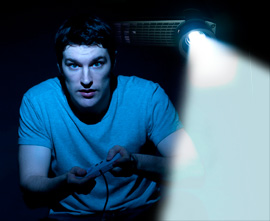 The year 2012 will be forever remembered as the year that the HomeAV market transitioned from a market that leads with Home Theaters to one that leads with Immersive Gaming Environments.


