Volume 8, Issue 6 — March 18, 2010
|
Share
this issue
of rAVe! | | | | | | |
|
 | |  |
| | |

|
 Click above for more information |

Welcome to another issue of rAVe ProAV Edition! Ahh, spring is finally here in North Carolina and it is lovely. Unfortunately, this year's March Madness, about which all us UNC grads and fans here at rAVe are usually very excited… is actually March Sadness since we have been relegated to the NIT. So, um, go Syracuse? Anyway, today we have several contributed articles, including one on Building Information Modeling (BIM) by industry expert Jon Melchin. He talks about this technology and how it can benefit AV manufacturers and integrators to understand how it's used. We also have a column from our own Linda Seid Frembes about upcoming virtual tradeshows that may help you get some good information and education without spending a ton on travel. Enjoy the issue! –Gary Kayye, CTS Back to Top
|
 Click above for more information |

Different Shades of Green
By Bob Snyder
Editor, rAVe EUROPE 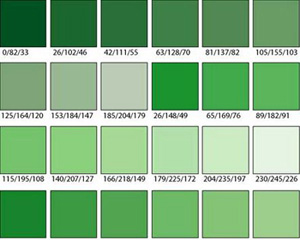 It's time to expose Green for what it is. Like in real life, "green" comes in many shades. It's time to expose Green for what it is. Like in real life, "green" comes in many shades.
You've probably noticed these days how your hotel plays a Green card to trump its guests. A placard placed strategically in your hotel bathroom might read: "We join the hotels of the world that want to help our environment. If you leave your towel on the rack, you can help save the world. If you need it washed each day, then throw it in the tub, you selfish SOB."
Part of you wants to help the world (and it really needs help.) And part of you knows the hotel (despite its high rates) wants you to help it save money and enhance hotel profits. What do you do? If you are a Libra like me, you probably throw it in the washtub on some days and save the world on other days. Others, unshackled by their birth signs, may decisively commit to one choice or the other.
The Green movement in AV spawns from similar schizophrenic motives. Save the world, help our customers, save others… and ourselves money. We have at least three shades of green in our industry:
- Green manufacturing
- Green disposal
- Green use of electronics
- Green manufacturing
RoHS and other laws strive to enforce the restriction of the use of certain hazardous substances in electrical and electronic equipment. Legislated in 2003 and adopted in 2006, it is mind boggling that the EU (European Union) had to make a law for us in the first place. Some technology makers knowingly insisted upon using hazardous substances: how crazy is that?
A friend of mine, an environmental scientist, told me stories about RoHS implementation just after the EU started enforcing the directive. He was in China trying, like many, to sell RoHS education and certification and found many Chinese companies who believed it was easier to ignore the legislation when you could simply print the logo and stick it on their equipment.
Hopefully most of this stuff gets stopped at the border but if the system runs as tight as airport security (supposedly Western society's most visible defensive system), then you know, you just know, that the "defense" in Frankfurt and the "defense" in Gdansk or Rome is not equal in protection.
Green Disposal The Waste Electrical and Electronic Equipment Directive (WEEE) 2002/96/EC sets collection, recycling and recovery targets for electrical goods and is part of legislative initiative to solve huge amounts of toxic waste.
In speech, it is often spelled out to avoid the sound a young girl makes on a roller coaster ride. But am I the only one who contemplates that by dropping the "D" in the WEEE Directive, our clever EU ministers sought to avoid the correct acronym: WEEED? That acronym sounds like those miserable but tough plants that plague gardens or a kindergarten description of what the puppy did on Daddy's newspaper.
WEEE in Europe is a law that assigns the responsibility of disposal to the maker. And those vendors graciously tie in their channel (as vendors habitually prefer to share responsibilities rather than profit). This is definitely a good mandate although we still haven't figured out how to stop all the disposable from ending up back in China where child labor sorts through chip boards looking for usable components and valuable minerals.
But if one looks at WEEE from a distance, once again the government had to step in and dictate a solution (instead of those cash-rich industry associations in Brussels, getting all the big makers to agree to a voluntary standard. Think of how the Hollywood and the videogame industry avoided legislation for so long by setting guidelines and policing its own industry.)
Green Use of Electronics
Green use may be the one Green category that our industry will embrace willingly without government intervention. Green use is all about cutting energy costs. For example, the technology that turns a physical hotel room key into a card with digital control over lights in the room. A beneficial example of technology saving energy costs as power goes out when you leave the room.
Look at the new legislation that mandates energy-savings in AV and IT hardware as governments try to reduce carbon footprints. Saving the world is no joke.
Now (on a larger scale) imagine by 2010, to handle all the video that will be shooting around the world, we will have 41 million servers in the world but 20 to 30 percent will be unused or old. That excess capacity guzzles energy. In fact, for each euro spent on server acquisition, the energy cost is about fifty euro cents. The estimated cost to run the world's servers is $29 billion (for actual energy plus energy for air conditioning). Today's servers are more powerful. In 1996, we spent 70 percent on equipment and 30 percent on maintenance. By 2008, it's the opposite. If the Internet expands 100x by 2011 as suggested, the black hole of server energy requirements could swallow us all.
As an industry and as users, we all want to find solutions for Green Use. No government has to legislate this (although some still want to) because it saves us money whereas the other two shades of Green represented more cost to manufacturers and industry.
We will happily sell Green Use to customers, both business and consumer. We will build better hardware and try to sell it by showing lower power usage.
On all sides, from business to home, we will sell Green Use. You can count on it.
Conclusion
You'll see Green touted everywhere.
In some cases (think Japan), it will be a more sincere effort to save the world. For example, it is hard not to appreciate the effort that Panasonic is making. In many other cases, Green will be a sales ploy.
When the commercial department's paintbrushes come out and the color Green is washed on, look to distinguish which shade of Green it is, and act accordingly. Bob Snyder is the editor of rAVe Europe. Reach him at [email protected] Back to Top
|
 Click above for more information |
The New Face of Design: BIM and What It Means for the AV Industry
By Jon Melchin, CSI  What is BIM? What is BIM?
Building Information Modeling, (BIM), is a 3D design, modeling and simulation technology for the architectural, engineering and construction industries. While not exactly new — elements of BIM have been around for several years, and it is an important initiative that is changing what is considered standard practice in architecture today. In fact, Charles Eastman, the director of the College of Architecture Ph.D. program at the Georgia Institute of Technology has called BIM “the most massive upheaval of design practice in the history of the construction industry.” Pretty heady stuff. The building industry has embraced this evolution of 2-D drawings and analog text to digital electronic imagery and information. However, BIM is more than just a 3D representation of physical (products) and functional characteristics of a structure. More importantly, BIM is a shared knowledge resource between everybody involved in the design process — architects, engineers, interiors people, GCs and other contractors — for information about a facility and the building materials incorporated into it. Other beneficiaries of BIM include facility owners, planners, appraisers, estimators, environmentalists, realtors, lawyers, code officials and ultimately, the building occupants who will utilize the completed space as it has been conceptualized. Used throughout the various design phases, BIM is drastically changing the way in which structures are designed because it provides a much better interpretation of what the building is going to look like and how the building will perform over its life cycle.
BIM is Information.
While the definition of BIM begins with the three-dimensional modeling of an entire building, each design phase includes not only the architecture, but also every other aspect of the structure, including mechanical, electrical, plumbing and ultimately every component of the project that requires physical coordination. But it’s the “I” in BIM that is the most beneficial – the building elements are represented in both graphical and data-rich text so that the information or data imbedded behind each object is available; features such as size, shape, colors, fire ratings, warranty, raw materials, manufacturers specifications and other documentation can be included for each product in the building model. The 3-D renderings are generic, but the object remains dynamic – change the size of the object, for example, a bathroom stall, and the amount of stalls required to fill the space will automatically change as well. Today’s projects are larger and more complex than ever and they’re being built on tighter schedules and budgets as well, requiring a greater degree of communication and coordination. BIM fosters collaboration by allowing simultaneous coordination of multiple team members working on the project.
With all of this information included with the 3-D rendering at the fingertips of everyone involved in the design process, conflicts reveal themselves as they’re created and projects are delivered on time, on budget and often at a tremendous cost savings.
The Letterman Digital Arts Center in San Francisco was completely designed with BIM. During the various design phases and despite numerous changes, over 200 design and construction conflicts were identified, most before construction even began. The project was delivered on time and below budget, resulting in an estimated savings of $10 million in change orders.
 More and more high profile projects are utilizing BIM. The New York Yankee’s new stadium was designed with BIM. Renowned architectural firm Skidmore, Owings and Merrill designed The Freedom Tower at Manhattan’s Ground Zero using BIM. More and more high profile projects are utilizing BIM. The New York Yankee’s new stadium was designed with BIM. Renowned architectural firm Skidmore, Owings and Merrill designed The Freedom Tower at Manhattan’s Ground Zero using BIM.
Other major global design firms such as Gensler, HOK, HKS, Perkins & Will and Leo A. Daly have all adopted BIM as a standard practice. Organizations such as the National Institute of Building Sciences and the Construction Specification Institute have also embraced BIM. And even a greater factor for the AV industry, the General Service Administration (GSA) has recently mandated that all new public service projects will be designed with BIM. Large construction companies such as Turner Construction are using BIM to identify building design conflicts and collision points during the construction phase.
BIM in AV
AV products are considered building components, and in the eyes of a construction professional, manufacturers of AV products are building product manufacturers, not AV companies. The information in the building model can be very helpful to AV providers. First of all, the ability to visualize the physical aspects of the AV products incorporated into the space such as video display size and location, loudspeaker configurations, projector mounting locations, equipment rack layouts and head-end equipment locales is very valuable. Then to be able to share all of that information in collaboration and coordination with architects, interior designers and other construction professionals is beneficial in several ways. Space and system routing conflicts can be identified, and clear cable pathways, projector and camera sightlines can be ascertained. Visual simulation can also detect potential problems, such as natural daylight designs that compromise video display clarity. Control system software can be coordinated within the model so that the control system can be effectively demonstrated for multi-media, volume, lighting, projection screen and HVAC applications. Again, the data imbedded behind each AV product could also include environmental information such as recycled content or low volatile organic compounds (VOCs). This could help determine implications of “green” initiatives for Leadership in Energy and Environmental Design (LEED) certification requirements. BIM tools offer analysis of the performance of energy efficiency elements and sustainable materials.
The benefits of BIM go beyond the construction phase. Once the building is completed, facility management professionals can rely on BIM’s potential for lifecycle analysis, performance assessment and routine maintenance. The model stays with the building for its entire life. AV products in the model can be accessed for product information, warranty, operational and trouble-shooting procedures as well as establishing additional components needed for future upgrades should application requirements need change.
AV professionals will soon see that BIM will impact their world. At the least, BIM projects will require that AV is involved earlier in the design process. That can be a real advantage for AV product manufacturers, consultants and systems integrators alike; traditionally AV has been an afterthought and now with BIM, is an integral aspect of the structure. With significant time and cost reductions, elimination of construction conflicts and more accurate estimates, BIM will help architects and AV professionals to work together more effectively by being on the same page throughout the entire building process.
BIM Helping Hands
Now is the time for AV manufacturers to be BIM-ready. Other AV professionals need to be BIM-savvy. And there are companies that are ready to help. Several AV manufacturers are taking advantage of opportunities offered by firms that can provide assistance in getting found, selected, “BIM’d” and specified by the architectural community. One such company is ARCAT, a Shelton, Connecticut based publisher of an online informational resource that offers building product manufacturers a profile page on their website, which allows architects, engineers and designers easy access to the products that they’re looking for when working on a project. The vast majority are looking for a product type, not a specific manufacturer. The architects find the product they’re interested in, and the manufacturer of that product will pop up in the search request on ARCAT’s site. ARCAT will list the products on the manufacturer’s profile page, as well as all the tools the architect will need to detail the products into the job, including manufacturers specifications, BIM object renderings and all the information embedded behind the BIM object.
So you can imagine the possibilities with BIM: imagine the ability to quantify construction materials required for the project during the preliminary design phases; imagine visualizing the sun emanating from a skylight during the course of a day in a project utilizing maximum natural light for LEED certification purposes; imagine a construction site with 30 percent less waste because the contractor can pre-fabricate materials before getting to the job site. Imagine fewer change orders because owners can walk through a 3-D model of exactly what the building is going to look like, with all the design team members on the project on the same page. And imagine the sights, sounds and performance of that building, including the AV systems incorporated in it, before the first shovel full of dirt is thrown. Welcome to the new face of design: its name is BIM.
Jon Melchin, CSI, is a frequent contributor of editorial material for trade publications serving the construction and audiovisual industries. He serves on InfoComm’s Green AV Task Force and is an advocate of green building initiatives and Building Information Modeling practices. Reach him at [email protected].
Back to Top
|
 Click above for more information |
Trade Show Season Goes 24/7/365
By Linda Seid Frembes
rAVe Columnist  There are several trade shows and conferences that I look forward to attending in person every year. InfoComm is at the top of my list, not just for the new products and technology but also the chance to see old industry friends and colleagues. The Audio Engineering Society (AES) show every fall is also a great one with audio-only products, panel sessions, and paper presentations. There are several trade shows and conferences that I look forward to attending in person every year. InfoComm is at the top of my list, not just for the new products and technology but also the chance to see old industry friends and colleagues. The Audio Engineering Society (AES) show every fall is also a great one with audio-only products, panel sessions, and paper presentations.
I’d love to go to more, of course, but scheduling and cost are two big obstacles that most business owners face. Luckily, a spate of virtual AV conferences and webinars has cropped up this year offering access to knowledge and new products from the comfort of your desktop. After all, we teach customers about how technology can increase efficiency and reduce travel costs so why not take advantage of these virtual resources for ourselves?
Anytime Access
 rAVe’s Social Media Marketing for ProAV Dealers webinar, presented in conjunction with Almo ProAV, is a great introduction and explanation of today’s most commonly used social media tools. Gary Kayye, founder of rAVe Publications, gives his insight on the ins and outs of social media marketing. You can view the archived webinar here and download his presentation here. rAVe’s Social Media Marketing for ProAV Dealers webinar, presented in conjunction with Almo ProAV, is a great introduction and explanation of today’s most commonly used social media tools. Gary Kayye, founder of rAVe Publications, gives his insight on the ins and outs of social media marketing. You can view the archived webinar here and download his presentation here.
You can also attend the archived version of DigitalVision 2010, a virtual event with educational programs focused on new technology as well as an exhibit floor with products from industry manufacturers. This archive is available on demand until June 16, 2010.
Upcoming Virtual Shows
 NewBay Media and InfoComm have partnered to launch Digital Signage 2010 (Register here: http://www.media.qualitytech.com/client/digitalsignage2010/launch.htm), a virtual conference focused on digital signage. The free event takes place on April 28, 2010 from 10:00 AM to 6:00 PM. The event promises virtual tradeshow booths, a conference schedule with industry experts, and topic-specific chats. NewBay Media and InfoComm have partnered to launch Digital Signage 2010 (Register here: http://www.media.qualitytech.com/client/digitalsignage2010/launch.htm), a virtual conference focused on digital signage. The free event takes place on April 28, 2010 from 10:00 AM to 6:00 PM. The event promises virtual tradeshow booths, a conference schedule with industry experts, and topic-specific chats.
CE Pro is hosting two virtual trade shows on May 11-13, 2010 and October 12-14, 2010. For more info or to download the prospectus for the shows, see their announcement page here. According to their announcement, the show will “offer custom installation professionals and retailers keynote presentations from industry leaders, strong conference content, virtual trade show booths, appointment making, chat, and video and audio presentations.”
 And for those who service the house of worship market, Worship Facilities Conference and Expo (WFX) is partnering with Church Production and Worship Facilities magazines for two virtual shows on May 5 and July 27, 2010. These events are targeted to church leadership and offer knowledge and education about technology and facility management. The program includes keynote presenters, conference sessions, and online discussion. Read their show announcement here. And for those who service the house of worship market, Worship Facilities Conference and Expo (WFX) is partnering with Church Production and Worship Facilities magazines for two virtual shows on May 5 and July 27, 2010. These events are targeted to church leadership and offer knowledge and education about technology and facility management. The program includes keynote presenters, conference sessions, and online discussion. Read their show announcement here.
Virtual webinars and trade shows don’t just benefit attendees. They offer a chance for manufacturers to get more mileage from their marketing budgets while reaching out to customers throughout the year; not just during in-person trade shows. For those who are interested in participating in or executing their own virtual trade show, check out this great article from Forbes Magazine called “How to Tackle a Virtual Trade Show.”
Back to Top
|
 Click above for more information |
The Tail Wagging the Dog
By Richard Blackwell
President, AVWorkz  It’s hard for a cottage industry like independent programmers to feel they have any influence on the AV community at large, much less the integrators they work hand-in-hand with each week. With so little time available in the day, why would those in the programming industry give even a second thought to reaching out proactively to their integrator customers with green or sustainability ideas and suggestions? It’s hard for a cottage industry like independent programmers to feel they have any influence on the AV community at large, much less the integrators they work hand-in-hand with each week. With so little time available in the day, why would those in the programming industry give even a second thought to reaching out proactively to their integrator customers with green or sustainability ideas and suggestions?
You may initially disagree with the answer to this question, so lets bathe it in the light of practicality. Integrators are in a daily battle for their lives and have no time for any significant innovation, yet innovation is one of the big three factors (quality, service and innovation) that set them apart from the competition. However, every day, sitting in integrators’ dimly lit build shops or the dusky customer basements, are the most creative group of folks they will likely meet all week – the control system programmers.
Every single accomplished programmer out there, if questioned, will without hesitation rattle off two or three programming tweaks or minor hardware adjustments on the current project that would save the customer energy and paint the integrator in positive light for not just weeks after the project completion, but years, and would re-establish some of the industry’s lost innovation. But those questions rarely come because the integration labor guys in the field are not the decision makers or the sales force, so status quo continues.
If programmers take just a little time to make that call to their customer’s decision makers (some call it missionary work) and the integration company decision makers answer the call (they will, because who passes on free R&D?), then yes — some may say the tail wagged the dog, but when everyone wins, its called a step in the right direction. Let’s all work smarter, not harder.
Richard Blackwell is President of AVWorkz Software, which is the only Web-based Energy Management Service available today. Previously Richard was the inspiration and Managing Director of Global Scheduling Solutions, which was the first Web-based Resource Manager for meeting spaces. Contact Richard at [email protected]
Back to Top 
Barco Buys Element Labs  Barco announced yesterday that it has acquired the products, intellectual property (IP) rights and know-how of Element Labs, an LED video systems company based in Santa Clara, California. With a focus on mid-end market requirements in rental, staging and fixed installations, the Element Labs products will complement Barco's existing LED product range. Barco announced yesterday that it has acquired the products, intellectual property (IP) rights and know-how of Element Labs, an LED video systems company based in Santa Clara, California. With a focus on mid-end market requirements in rental, staging and fixed installations, the Element Labs products will complement Barco's existing LED product range.
Barco told rAVe that the “Element Labs” name basically ceases to exist, effective immediately, and structured as an asset sales transaction, Barco obtains all product designs, rights and intellectual property of Element Labs, without assuming the liabilities of the former EL-company (aka: a good deal). As of today, the core team of Element Labs in Santa Clara, California, will function as Barco's competence center for creative LED solutions, whereas Barco Kuurne (Belgium) will remain the competence center for tiled LED solutions. Barco will announce its new mid-range LED products in the coming months.
For complete details, go to: http://www.barco.com/corporate/pressrelease/2499/
Back to Top
HDMI 1.4a Spec Released  HDMI Licensing, LLC, the agent responsible for licensing the High-Definition Multimedia Interface (HDMI) specification, announced last week, the release of HDMI Specification Version 1.4a – featuring key enhancements for 3D applications including the addition of mandatory 3D formats for broadcast content as well as the addition of the 3D format referred to as Top-and-Bottom. The complete HDMI Specification Version 1.4a, along with the 1.4a version of the Compliance Test Specification (CTS), is available to Adopters on the HDMI Adopter Extranet. HDMI Licensing, LLC, the agent responsible for licensing the High-Definition Multimedia Interface (HDMI) specification, announced last week, the release of HDMI Specification Version 1.4a – featuring key enhancements for 3D applications including the addition of mandatory 3D formats for broadcast content as well as the addition of the 3D format referred to as Top-and-Bottom. The complete HDMI Specification Version 1.4a, along with the 1.4a version of the Compliance Test Specification (CTS), is available to Adopters on the HDMI Adopter Extranet.
An extraction of the 3D portion of Specification Version 1.4a is available for public download on the HDMI Web site at http://www.hdmi.org. The purpose of the extraction document is to provide public access to the 3D portion of the HDMI Specification for those companies and organizations that are not HDMI Adopters but require access to this portion of the Specification.
Back to Top
Want to Know Why SMART Technologies Is So Profitable?  Nearly 750,000 interactive white boards (IWBs) sold worldwide in 2009 and now the market will surge again to top 1 million sales in 2010, says Futuresource Consulting. Nearly 750,000 interactive white boards (IWBs) sold worldwide in 2009 and now the market will surge again to top 1 million sales in 2010, says Futuresource Consulting.
"All regions experienced major growth last year, spread across multiple countries rather than localized hotspots," says Colin Messenger, Senior Consultant, Futuresource. "Back in 2005 only three countries sold more than 10,000 IWBs; last year we saw 12 countries hit this level. Driven by continued technological developments, our projections show that one in six classrooms will have an interactive whiteboard by 2012. There is a justifiably strong mood of optimism amongst manufacturers."
In the 66 countries covered within the Futuresource report, Messenger calculates there are over 31 million classrooms, a huge market potential for companies operating within this sector.
"Our research has shown there have been no real signs of recession in education technology," says Messenger. "Few markets hold the promise of education, where we'll see very strong sales growth for at least the next five years."
Complete details can be found here: http://www.futuresource-consulting.com/
Back to Top
VESA Finishes DisplayPort v1.2 Spec  The Video Electronics Standards Association (VESA) unveils DisplayPort Version 1.2, the comprehensive extension to the original DisplayPort standard with many new benefits: The Video Electronics Standards Association (VESA) unveils DisplayPort Version 1.2, the comprehensive extension to the original DisplayPort standard with many new benefits:
- 2x the maximum data transfer rate from DisplayPort v1.1a (10.8 Gbps to 21.6 Gbps) for higher performance 3D stereo displays, higher resolutions and color depths, and faster refresh rates
- multiple monitor support from a desktop or notebook computer using only one DisplayPort connector
- and the ability to transport USB data between a PC and Display, supporting Display USB functions such as a webcam and USB hub.
DisplayPort v1.2 is backward compatible with existing DisplayPort v1.1a systems, including existing cables and the Mini DisplayPort connector.
DisplayPort v1.2 supports "multi-streaming" for protected content and high performance apps such as 3D gaming. This enables the use of multiple monitors connected by cable in a daisy chain or hub configuration.
While the current standard supports one 2560×1600 monitor at 60Hz, DisplayPort v1.2 can support two such monitors with one cable, or four 1920×1200 monitors. Many other combinations are possible, including multiple video sources, multiple displays (even at different resolutions) and multiple audio speakers.
Want all the details? Go here: http://www.vesa.org/ Back to Top
Extron Buys Electrosonic's Products Division  Extron has purchased the Products Engineering and Development Division of Electrosonic Group a premier worldwide AV systems integration and service provider. This is the first company ever purchased by Extron. Extron has purchased the Products Engineering and Development Division of Electrosonic Group a premier worldwide AV systems integration and service provider. This is the first company ever purchased by Extron.
The Electrosonic Group systems integration and service business is not part of the acquisition and will continue forward as a wholly independent organization.
Electrosonic's Products Division is an innovator in Video and Graphics Over IP Encoders and Decoders, HD Video Players, and Multi-Image Display Processors. It has been operating as a stand-alone division from the systems integration and service business since February 2009. The acquisition includes all current products designed and manufactured by Electrosonic as well as the IP for the underlying technology. Key staff will join Extron to support current customers and continue the development of this innovative group of products.
Here’s an interesting article from Extron’s President, Andrew Edwards, on this purchase: http://www.extron.com/product/es-home.aspx
Back to Top 
JVC Adds 4K D-ILA 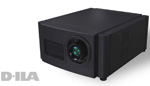 Dubbed the DLA-SH7NLG, JVC's new D-ILA claims 5,000 ANSI lumens, a 10,000:1 contrast ratio and a native resolution of 4096×2400 using a reflective LCD technology. Using dual 330W ultra-high-pressure mercury lamps (they can be operated simultaneously or one at a time), the new D-ILA is aimed at super high-end staging, digital cinema (although JVC is not an approved digital cinema projector vendor), large-venue projection as well as multi-image projection (it's capable of projecting four native 1080p images in a 2×2 grid). Dubbed the DLA-SH7NLG, JVC's new D-ILA claims 5,000 ANSI lumens, a 10,000:1 contrast ratio and a native resolution of 4096×2400 using a reflective LCD technology. Using dual 330W ultra-high-pressure mercury lamps (they can be operated simultaneously or one at a time), the new D-ILA is aimed at super high-end staging, digital cinema (although JVC is not an approved digital cinema projector vendor), large-venue projection as well as multi-image projection (it's capable of projecting four native 1080p images in a 2×2 grid).
It's a power hog though – using 1.1kW or power, it's certainly not a "green" product. But, it's bright. It's priced a little over $150,000. See all the specs at http://pro.jvc.com/prof/attributes/features.jsp?model_id=MDL101793
Back to Top 
Kramer Launches EDID Emulator 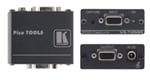 As part of the Kramer TOOLS line, the new VA-1VGAN captures and emulates the EDID data of a display. EDID (Extended Display Identification Data) is a data-structure consisting of 128 pieces of information that a display provides to the graphics card of a connected computer source. The EDID describes the display’s capabilities so that the source can output the best possible signal for that display. The source and the display exchange this information over the Display Data Channel 2 (DDC2) using pins 12 and 15 of a standard 15-pin HD computer graphics video signal connector. As part of the Kramer TOOLS line, the new VA-1VGAN captures and emulates the EDID data of a display. EDID (Extended Display Identification Data) is a data-structure consisting of 128 pieces of information that a display provides to the graphics card of a connected computer source. The EDID describes the display’s capabilities so that the source can output the best possible signal for that display. The source and the display exchange this information over the Display Data Channel 2 (DDC2) using pins 12 and 15 of a standard 15-pin HD computer graphics video signal connector.
According to Kramer, the VA-1VGAN ensures that if a display is turned off, temporarily disconnected or is out of communication with the source, the source continues to output the best possible signal resolution. The VA-1VGAN makes the source think that the display is still directly connected even when the EDID information is unavailable.
For complete specs, go here: http://www.kramer-us.com/products/model.asp?pid=1597&sf=220
Back to Top
Slow Retraction for Elite  Elite Screens is introducing a new line of manually operated projection screens that have a Slow Retraction Mechanism (SRM) that permits the screen to retract slowly back into its casing without being assisted by the presenter. Elite Screens is introducing a new line of manually operated projection screens that have a Slow Retraction Mechanism (SRM) that permits the screen to retract slowly back into its casing without being assisted by the presenter.
Traditional manual projection screens are spring-loaded so they retract so quickly that the force of its return may actually knock the entire unit off of its installation if not properly secured. This risk is eliminated with the added SRM safety feature.
Additional features include its auto-locking mechanism for variable height settings, black masking borders, MaxWhite (1.1 gain matte white material) with wide diffusion uniformity, lanyard for convenient operation and a versatile end cap design that accommodates both wall and ceiling installations.
Manual SRM Screen sizes are available from 85" to 120" with your choice of 1:1 and 4:3 NTSC aspect ratios.
Want all the specs? Go here: http://www.elitescreens.com/index.php?option=com_content&view=article&id=381&catid=2&Itemid=15&lang=en
Back to Top 
Extron Launches New Control Associate Certification Program  Extron Electronics launched the new Extron Control Associate certification program designed to provide recognition for individuals who understand the best practices for planning, design, and implementation of a complete configurable control system. Available to anyone who has already earned the Extron A/V Associate designation, Extron Control Associate certification is earned through successful completion of an online or instructor-led training course and an Extron-proctored exam. Classroom instruction and exams will be conducted at Extron's training facilities in Anaheim, CA and Raleigh, NC, as well as other locations throughout the United States. Extron Electronics launched the new Extron Control Associate certification program designed to provide recognition for individuals who understand the best practices for planning, design, and implementation of a complete configurable control system. Available to anyone who has already earned the Extron A/V Associate designation, Extron Control Associate certification is earned through successful completion of an online or instructor-led training course and an Extron-proctored exam. Classroom instruction and exams will be conducted at Extron's training facilities in Anaheim, CA and Raleigh, NC, as well as other locations throughout the United States.
The Extron Control Associate certification program is ideal for individuals who are required to install, configure, operate, and troubleshoot A/V control systems, including design engineers, system integrator installers, system integrator project managers, control system programmers, and sales professionals. Detailed information on all of Extron's certifications is available at http://www.extron.com/certified
Back to Top 
Polycom Intros Open Collaboration for AV Integrators  Last week Polycom launched what they are calling the Open Collaboration Network, a new initiative that aims to improve productivity through seamless voice and video communications. Last week Polycom launched what they are calling the Open Collaboration Network, a new initiative that aims to improve productivity through seamless voice and video communications.
What is it? Bringing together AT&T, Avaya/Nortel, BroadSoft, British Telecom, IBM, Juniper, HP, Microsoft, and Siemens, the program seeks to encourage interoperability and connectivity so partners can deliver fully integrated, end-to-end solutions. Instead of trying to explain it all here, go listed to this podcast from Jim Kruger, Polycom VP of Solution Product Marketing, on how it works (skip the hokey music and intro): http://www.polycomondemand.com/podcasts/index.php/2010/03/03/53-polycom-open-collaboration-network
Back to Top 
Attention InfoComm Exhibitors: NEC's Best of InfoComm Award Entry Deadline Approaching  For the 2nd year in a row, NEC is stepping up to bring the Best Award at InfoComm – it will be given to an InfoComm Exhibitor that submits “the best” product or service launched at the show. All submissions will be judged by an agnostic panel of industry experts (including rAVe founder, Gary Kayye) and one winner will be selected as The Best of InfoComm. For the 2nd year in a row, NEC is stepping up to bring the Best Award at InfoComm – it will be given to an InfoComm Exhibitor that submits “the best” product or service launched at the show. All submissions will be judged by an agnostic panel of industry experts (including rAVe founder, Gary Kayye) and one winner will be selected as The Best of InfoComm.
The prize? Well, a giant trophy and NEC will award The Best of InfoComm winner with $25,000 to the charity of their choice!
Want to enter? Go to: http://www.necdisplay.com/best/register/
Back to Top
NSCA Seeks Presenters at 2011 Business and Leadership Conference  The National Systems Contractors Association (NSCA) is now accepting proposals from individuals willing to provide industry business owners and managers with success strategies and tactics for recovery as a presenter at its 13th annual Business & Leadership Conference to be held February 2011 on the West Coast. The National Systems Contractors Association (NSCA) is now accepting proposals from individuals willing to provide industry business owners and managers with success strategies and tactics for recovery as a presenter at its 13th annual Business & Leadership Conference to be held February 2011 on the West Coast.
More than 150 integration company owners, executives, managers and sponsors attended the two-day conference in 2010 that featured business-building strategies, human resources, and real-life tools and resources. For 2011, this industry-specific conference is an excellent opportunity to engage with peers and take home ideas for immediate implementation.
All proposals must be based on timely topics, not sales-oriented, and engage the audience. Proposed content must be independent of any association with products or services and should be approximately one to two hours in length. Submissions must include:
- Title of Presentation/Topic
- Speaker (if known)
- Summary/Outline of Presentation
- Estimated Length of Presentation
- Benefits to Audience
Proposals are due by April 23 to Norah Hammond, NSCA Senior Director of Professional Development, at [email protected] or by fax at 319.366.4164. Back to Top
Alan Brawn to Teach ISF Calibration Course at InfoComm  ISF-Commercial teaches the art and science of color, light, the human eye, specifications, signals, display technologies, illumination, screen technology and human factors — as well as color space and calibration as these factors interact with the environment in which the display is installed. ISF-Commercial teaches the art and science of color, light, the human eye, specifications, signals, display technologies, illumination, screen technology and human factors — as well as color space and calibration as these factors interact with the environment in which the display is installed.
The ISF Commercial Calibration and Certification Course takes a full day to complete. The course provides an understanding of why technicians do what they do in display calibration. It is possible to teach attendees how to “turn the knobs” or “adjust a display” in a few hours, but if a person does not know why they are being “turned” and what effect this will have, then they will not be able to use all of their cognitive skills to attain the perfect picture on screen understanding why it looks the way it does.
The course begins with a tutorial on the science of light, color and the human eye. It covers display specifications and what they really mean in terms of the picture on screen in an installed system. This section is an in-depth analysis concentrating on brightness, contrast and grayscale, dynamic range, resolution and visual acuity.
The course covers the basics of signals, compression and scaling, which culminates in an advanced analysis of each display type and technology beginning with the “holy grail” of 35mm film and progressing through CRT, LCD, DLP, Plasma, LCoS and OLED. A section on illumination and lamp technologies is included, which illustrates how this critical element affects display calibration. This is followed by a look at screens, screen specifications, room design and human factors.
To sign up, go to: http://www.infocommshow.org/infocomm2010/public/Content.aspx?ID=1061&sortMenu=105007
Back to Top 
News from DuoCom Canada, Stewart, Liberty Wire & Cable… DuoCom Canada Inc. is celebrating its 35th anniversary this year… Liberty Wire & Cable has been selected as an official HTSA vendor for A/V connectivity solutions… Stewart Filmscreen has received the GREENGUARD Children & Schools Certification for framing systems and materials… HaiVision has appointed Tom Pfeuffer as vice president of medical markets… Digital Projection has hired Phil Laney as director of simulation and visualization… Envivio has hired Arnaud Perrier as vice president of solutions… Elite Screens has launched its 2010-2011 Product Guide, which you can download here: http://www.elitescreens.com/index.php?option=com_content&view=section&layout=blog&id=3&Itemid=88&lang=en Back to Top 
For all you REGULAR readers of rAVe ProAV Edition out there, hopefully you enjoyed another opinion-packed issue! For those of you NEW to rAVe, you just read how we are — we are 100% opinionated. We not only report the news and new product stories of the ProAV industry, but we stuff the articles full of our opinions. That may include (but is not limited to) whether or not the product is even worth looking at, challenging the manufacturers on their specifications, calling a marketing-spec bluff and suggesting ways integrators market their products better. But, one thing is for sure, we are NOT a trade publication that gets paid for running editorial or product stories. Traditional trade publications get paid to run product stories — that's why you see what you see in most of the pubs out there. We are different: we run what we want to run and NO ONE is going to pay us to write anything good (or bad). Don't like us, then go away — unsubscribe! Just use the link below. To send me feedback, don't reply to this newsletter – instead, write directly to me at [email protected] or for editorial ideas: Editor-in-Chief Sara Abrons at [email protected] A little about me: I graduated from Journalism School at the University of North Carolina at Chapel Hill (where I am adjunct faculty). I've been in the AV-industry since 1987 where I started with Extron and eventually moved to AMX. So, I guess I am an industry veteran (although I don't think I am that old). I have been an opinionated columnist for a number of industry publications and in the late 1990s I started the widely read KNews eNewsletter (the first in the AV market) and also created the model for and was co-founder of AV Avenue – which is now known as InfoComm IQ. rAVe Publications has been around since 2003, when we launched our original newsletter, rAVe ProAV Edition. Everything we publish is Opt-in — we spam NO ONE! rAVe ProAV Edition is our flagship ePublication with what we believe is a reach of virtually everyone in the ProAV market. rAVe HomeAV Edition, co-published with CEDIA and launched in February 2004, is, by far, the largest ePub in the HomeAV market (we blow away ANY other Publication in the high-end home AV market. We added rAVe Rental [and Staging] in November 2007, rAVe ED [Education] in May 2008 and then rAVe DS [Digital Signage] in January 2009. You can subscribe to any of those publication or see ALL our archives by going to: https://www.ravepubs.com To read more about my background, our team, and what we do, go to https://www.ravepubs.com Back to Top
Copyright 2010 – rAVe [Publications] – All rights reserved – All rights reserved. For reprint policies, contact rAVe [Publications], 210 Old Barn Ln. – Chapel Hill, NC 27517 – (919) 969-7501. Email:[email protected]
rAVe contains the opinions of the author only and does not necessarily reflect the opinions of other persons or companies or its sponsors. |
|