

The focus of this series “Power of Content” is to help people with content strategies and how they relate to digital screen media.
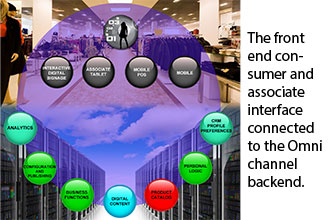

So what has changed? Not too many years ago, the sales process was linear. The shopper would view an ad, probably on TV or in a magazine, go to the store, compare options, choose the best option and buy the item. Now, the sales process is non-linear and cross-channel, creating the phenomenon of “Web-first” for many shoppers. But this has resulted in a chaotic landscape of inter-connected channels. And today’s empowered consumer demands a seamless brand experience across all channels. They will only shop where they find it. This is causing a major business disruption for retailers, brand marketers and agencies alike and the rapid transition to omnichannel retailing.
The challenge now is to create a technologically enabled, compelling shopping moments that culminate in lasting, consumer-brand relationships.
To accomplish this, the brand and the retailer must develop an integrated plan built around a deep view of the customer at all stages of interaction. This is omni-channel retailing and includes:
- Mobile POS — A recent RIS survey found that 87 percent of retailer’s plan to deploy POS on a tablet over the next few years
- Save the Sale transactions when products are not in stock or not carried in the store
- Clienteling for uninterrupted relationship-building and on-going exchange with the customer
- Business Analytics to allow associates to inform the shopper in-store of their purchase history, order status and product specs
Most retailers and brands are still driven by the 4 P’s — Product, Price, Promotion and Place. Today, they must shift from the 4 P’s to the 4 C’s in the new omni-channel world:
- Connections: In an omni-channel world, retailers need to connect very early in the consumer journey, when they first start researching online. And the shopper expects to continue that connection in-store.
- Choice: Store-based retailers must connect their virtual shelf to the store shelf to enable “seamless” shopping.
- Convenience: Today’s time-starved consumers are expecting the convenience of shopping online in-store. Also, they demand the convenience of ship to home, pickup in store or even pickup at another location.
- Conversation: Shoppers are looking for conversation and connection with brands they value. Continuing the conversation AFTER the initial sale is critical for today’s brands and retailers.
Studies show that sales opportunities are lost when the consumer can’t get assistance or find a product. Products out-of-stock, products in-stock but not found, or items not carried in the store can reduce store sales by as much as 20 percent. Lack of sales associate availability can reduce store sales by up to six percent.
The best way to overcome these issues is through in-store gaming digital destinations. This shifts the store’s focus away from simply making a sale to cultivating an immersive brand experience. It also connects physical space to the digital shoppers and brings a level of discovery, fun and education to the in-store experience.
Next article we will dig into the emotional connection of gamification.