

Beyond Automation: APAC’s Rise of Control as Experience


By Adam Merlino
Vice President and General Manager, Asia Pacific, ADI Global Distribution
Whole-home automation and control have evolved from a basic command layer into the central experience through which people engage with technology in homes, workplaces and public spaces. As systems grow more sophisticated, value increasingly depends on how intuitive, responsive and adaptive that control layer feels.
In APAC, where digital-first habits and mixed-use developments are common, this transition is accelerating. Users measure control systems against the best consumer apps they use daily, expecting consistent, frictionless experiences across devices and contexts.
Recent developments across residential and commercial control environments reinforce this direction. Next-generation interface updates and cloud-backed service architectures point to a wider shift toward systems that function as evolving ecosystems rather than static installations. Modern platforms increasingly pair refined user interfaces with service layers that manage security, compatibility and performance tuning, ensuring the experience continues to improve long after the system goes live.
Designing for Cohesive Experiences
As interconnected technology becomes embedded in daily routines, users judge solutions based on the experience — how quickly actions register, how consistently the interface behaves across apps, touch screens and voice assistants, and how naturally the system blends into everyday habits.
Even powerful installations can feel clumsy if the interface is dated, while a clean, responsive UI can make a complex, multi-device ecosystem feel seamless.
This is where ecosystem cohesion becomes critical. Users expect lighting, climate, shading, audio, security, access control, sensors and AV systems to function as a unified environment rather than a collection of loosely integrated products. For integrators, this raises the importance of platforms and distribution partners capable of supporting cross-category alignment.
Across APAC, integrators increasingly rely on ecosystems that unify surveillance, networking, access control, AV distribution and smart home automation. The value lies not only in product availability but in the confidence that these categories can be engineered, supported and maintained as a cohesive whole.
The result is reduced friction: fewer compatibility concerns, more consistent system behavior and a unified experience that remains modern throughout the system’s life.
Software-Led Spaces
While hardware remains important, software determines longevity, security posture, integration readiness and update cadence. Cloud-driven service layers now handle OS updates, security patches, device interoperability, remote diagnostics and feature releases — tasks that previously required manual, on-site support.
In APAC’s fast-moving, mobile-first markets, this architecture is essential. Users expect systems to remain current for years, not just at installation. For integrators, a platform’s update reliability and ability to evolve unobtrusively are now central to the user experience itself. Platforms that pair modern UI design with predictable background maintenance increasingly set the benchmark for the region.
Personalization at Scale
Personalization is becoming a defining expectation in APAC, shaped by diverse living arrangements and varied commercial use cases. Multi-generational households, domestic staff, vertical housing and flexible working environments all require granular access control and contextual automation that adapts to who is using the space and how.
In residential settings, scenes, lighting and ambience adjust to occupant preferences, with profiles shifting automatically throughout the day. Outside the home, meeting rooms prepare for scheduled sessions, classrooms adapt to teaching formats and hospitality venues adjust atmosphere, content and environmental controls as activity changes.
Across these contexts, value lies in how cohesively the environment responds — the difference between a system that feels genuinely intelligent and one that behaves like a static set of commands. Modern platforms unify user profiles, space awareness and device coordination to make that adaptability not just possible but expected.
From Commands to Context
Voice interfaces are growing across APAC, though usage varies due to linguistic diversity and regional preferences. The next phase moves beyond simple command replication toward genuine intent recognition, enabling interactions that feel more conversational than procedural.
At the same time, gesture interfaces, presence sensing and passive automation are maturing, reducing manual touch points while preserving user agency. More advanced processing architectures capable of handling richer sensor data and faster contextual decision-making are accelerating this shift.
Increasingly, the interactions users value most are the ones they barely notice, where the environment responds automatically yet predictably, enhancing comfort without adding complexity.
Designing Across Project Types
APAC is seeing increasing convergence between residential and commercial expectations, from high-end homes to hotel-residence hybrids and multi-dwelling developments. Residential simplicity now informs commercial UI design, while commercial-grade resilience is increasingly expected in premium residential environments. Control architectures that scale cleanly between these worlds are becoming foundational to mixed-use projects.
Integrator Priorities
For integrators, designing for experience requires understanding user behavior, context and lifecycle expectations rather than focusing solely on initial system performance. Network design, power stability and cybersecurity are foundational. As platforms incorporate more AI-driven logic, data awareness and automation, digital privacy and system trust become equally central.
This includes leveraging in-house large language models within the surveillance sector to enable smarter system insights and more intuitive operation, while deliberately evolving these AI capabilities across the broader home and building environment. At the same time, privacy-by-design principles are embedded into modern control platforms with enterprise-grade security, encrypted communications and reliance on EB-compliant and certified third-party integrations to ensure data integrity and user confidence.
Ongoing firmware updates, OS improvements, security patches and remote diagnostics are no longer optional but central to the value proposition. Customers are increasingly comfortable with service plans that guarantee ongoing performance, and integrators who adopt proactive service models can deepen client trust while building recurring revenue.
What Comes Next
The future of control is adaptive. Users expect environments that respond intelligently and predictively while still allowing manual control. Platforms that succeed will combine AI-enabled software foundations with intuitive interfaces, ensuring innovation does not compromise trust.
In APAC’s rapidly evolving, digital-first markets, control has become the experience. Rather than simply responding to global trends, projects across the region illustrate how responsive software foundations and thoughtfully designed interfaces can elevate connected environments beyond basic functionality. For integrators, manufacturers and technology partners, APAC provides a practical view of the industry’s future and the next generation of intelligent environments.
About ADI
ADI is a leading distributor and solution provider of security, AV and smart living products, serving more than 110,000 customers worldwide. The company offers access to an extensive portfolio of more than 500,000 products from more than 1,000 brands, along with exclusive brands including Control4, WattBox, OvrC and Triad.
With an omnichannel shopping experience, customers can shop ADI online, through its mobile app or at one of more than 200 stocking locations globally.
ADI delivers more products, more services, more shopping convenience, more local expertise and more investment in innovation, empowering professionals to design and deliver complete solutions.
Learn more at adiglobal.com.



More Stories Like This

ADI Debuts Episode Ryff-Enabled 4-Zone Streaming Preamp
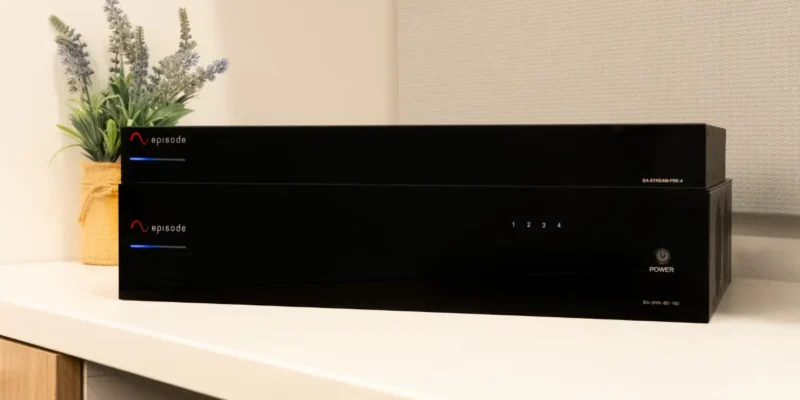
ADI is launching the Episode 4-Zone Streaming Preamp (EA-STREAM-PRE-4), a high-resolution, installed audio solution designed to operate as a stand-alone streamer or integrate with a Control4 system. The new preamp is Episode’s first Ryff-enabled streaming product, built to run the Ryff streaming platform. According to ADI, the Episode Ryff-enabled 4-zone streaming preamp is designed to […]

The Atrophy of Manuals

The old saying goes, “The devil is in the details.” Except that’s not always true. Sometimes the devil is in the lack of details. Recently, I loaned a demo portable LED projector to a dealer client for evaluation. They liked it, but they had one complaint — and it was a big one: They couldn’t […]

Are Dedicated Computers Going Away?

I am on a mail list that has recently had a thread about whether dedicated computers are still necessary. There are several arguments for and against this, although in this particular thread most of the arguments seemed to be for removing the dedicated computers. For some background, higher education has a long history of providing […]