

AV Industry Faces Growing E-Waste Challenge as Sustainability Efforts Expand

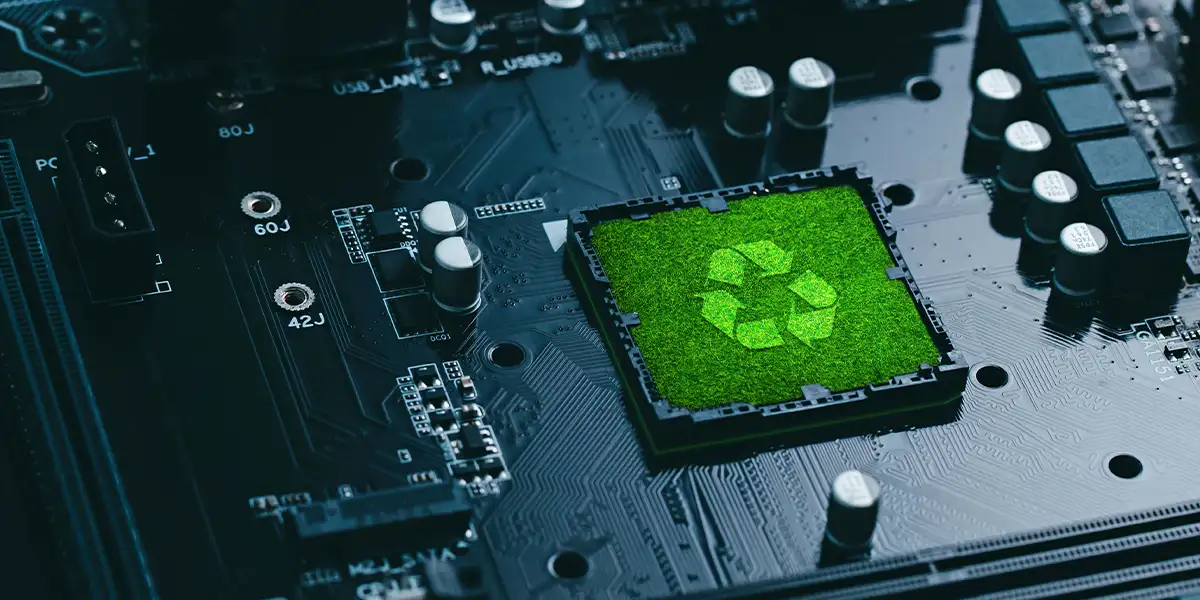
As global e-waste continues to grow by millions of tons each year, the AV industry is under mounting pressure to reduce its environmental impact through improved product design, lifecycle management and industry-wide sustainability initiatives.
According to the United Nations Institute for Training and Research, global e-waste generation is increasing by 2.6 million tons annually. Sustainability in AV (SAVe), a nonprofit organization focused on environmental initiatives in the AV sector, estimates the industry contributes between 1.5 million and 2 million metric tons of e-waste each year.
This waste carries significant environmental and health risks, said Oladele Ogunseitan, a public health researcher at the University of California, Irvine, who studies electronic waste.
“Electronic waste is hazardous because it typically contains a wide range of materials that are known to be toxic to humans, animals, and ecosystems,” Ogunseitan said. “Among the early recognition of dangers posed by e-waste is that electronic products used to be manufactured with tin-lead (Sn-Pb) solders … Lead is a notorious neurotoxicant that is particularly dangerous for children.”
Ogunseitan co-chairs Apple’s Green Chemistry Advisory Board and has received research funding from Microsoft to develop nontoxic, biobased materials for electronics manufacturing. He said industry progress has been limited by a lack of transparency and collaboration.
“The electronics industry has shown some evidence of voluntary initiatives, but because it is a fiercely competitive industry, transparency and innovation sharing is not conducive to volunteerism,” he said. “Stronger policy is needed to guide regulation and voluntary initiatives. They work best together, rather than independently.”
He added that improving end-of-life product management remains one of the most actionable opportunities.
“Consumers have to be better stewards of their electronic products … advocating for cities, counties, and states to establish responsible and accessible e-waste collection centers is probably the most important achievable goal,” Ogunseitan said.
In the AV industry, efforts to address end-of-life challenges are increasingly tied to extending the usable life of equipment. SAVe, a nonprofit launched in 2022, was created to help align the industry with the United Nations’ 2030 Sustainable Development Goals — including those focused on responsible consumption, waste reduction and sustainable production. Through initiatives such as its “SAVe A Second Life” program, the organization is working to keep AV equipment in use longer and out of the waste stream.
“The only way to achieve sustainability … is for all of us … to do our part,” said Christina De Bono, president and co-founder of SAVe.
De Bono said the industry is beginning to adopt more sustainable practices.
“We’re seeing a greater embrace of used or refurbished AV gear … and more integrators are adopting internal sustainability goals,” she said.
Manufacturers are participating too. Crestron, one of SAVe’s manufacturer sponsors, focuses its sustainability efforts on lifecycle design, reducing package waste and incorporating more sustainable materials.
“E-waste continues to be the fastest-growing waste stream globally, and our industry holds a significant responsibility to change how we design products,” said Michael Rogers, senior sustainability program manager for Crestron. “We’ve been hyperfocused on … product lifecycle areas that help reduce our impact on the planet.”
Rogers said the company is prioritizing data-driven sustainability decisions to improve resilience and reduce long-term environmental impact.
“It has been inspiring to watch the AV industry unite around sustainability, driven by … organizations like SAVe and AVIXA,” he said. “We have a significant opportunity to elevate educational capacity … with a focus on the circular economy and e-waste management.”
While efforts to address e-waste and product lifecycle challenges are growing, more work remains to be done across the industry and beyond, as global e-waste grows faster than current recycling efforts.
“Make no mistake, we have a long way to go,” De Bono said. “But real progress is being made.”


More Stories Like This
Jetbuilt’s Tom Peters Retires After More than 45 Years in the AV Industry

Jetbuilt announced that Tom Peters, chief operating officer, retired from the company after more than 45 years in the AV industry. The company said that Peters intends to devote more time to family and travel while continuing his industry involvement through Sustainability in AV (SAVe). “Tom’s contributions to the industry span systems integration, business operations […]

SAVe 2026 Keynotes to Address Sustainability Across Global AV Industry
SAVe (Sustainability in AV) announced Michael Blackman, Oladele “Dele” Ogunseitan and Diran Apelian as keynote speakers for the SAVe 2026 Global Conference, scheduled for Oct. 13-14 in Los Angeles. The speakers will examine sustainability issues affecting the global AV industry, including technology innovation, electronic waste, responsible manufacturing and the availability and recovery of critical materials. […]
Shure Announces SAVe Certification
Shure officially announced it has earned certification for Sustainability in AV (SAVe). Shure said that this reinforces its commitment to sustainability. Twenty-one Shure Associates, representing a broad cross-section of company operations, participated in the SAVe Certification process, which involves an educational program, workshop, and planning session. The company said the certification program is designed to […]