CAMP-NY Turns 25 — And Why Networking Still Matters More Than Ever

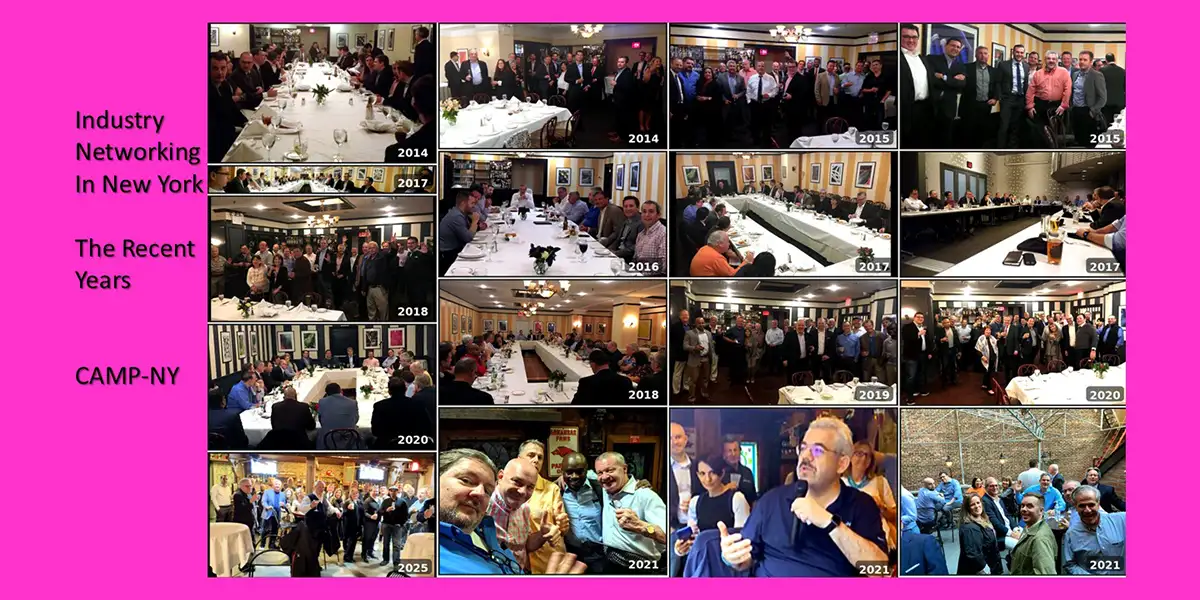
I’ve been coordinating and hosting industry networking events in Manhattan after work hours for 24 years now. Next year is the 25th anniversary, which is both mildly terrifying and also kind of wonderful — mostly because it means these gatherings have stayed useful for a quarter-century in an industry that reinvents itself every five minutes.
The whole idea started when I was invited to a similar gathering in the broadcasting world. Picture about 30 people around one big square table, talking through whatever the “topic du jour” was at the time. No keynote. No sponsor pitch. No stage lighting. Everyone simply paid their own way for drinks and dinner, then got down to the real point: conversation.
I left that night thinking: If this works for broadcasting, why wouldn’t it work for my industry?
So I ran the first one in early 2002 and kept going — roughly quarterly — ever since. We called it CAMP-NY, short for Corporate and Academia Multimedia Professionals. At this point, nobody breaks down the acronym anymore. Most people assume “CAMP” is a joke about summer camp, which is fine by me. (Yes, my invites often start with “Greetings CAMPers.” I regret nothing.)
Back when I started, a sit-down dinner plus an hour of cocktails beforehand was in the $50–$60 range. Those days are gone, of course. Today it can be two or three times that depending on the venue. And yet, for a great meal, an open bar and the kind of conversation you can’t get in a noisy booth at a trade show, people rarely object.
Over the years, I’ve tweaked the mechanics to keep it fair and keep it sane. In the beginning, everyone showed up and paid their own check. That sounds simple until you get hit with no-shows and a restaurant manager staring at an empty private room wondering why they said yes to you.
So now attendees pay in advance through an online service. If someone tells me ahead of time they can’t make it, I refund them. But once I’ve paid the venue, we’re done — showing up is on them. There’s a small service fee involved, which I hate in principle, but it saves me and the wait staff a lot of grief in practice.
And just to be crystal clear: I don’t make a dime off any of this.
Sure, there are businesses that have copied this model and run paid industry networking events — and do quite well. That’s not what CAMP-NY is. This industry is a community, and communities only work when people actually spend time together.
InfoComm used to do more of these “roundtables” years ago, but its focus has shifted — a lot more toward selling certifications. So I’ve happily played organizer. Not because I’m a saint, but because I felt somebody has to keep the campfire going.
I’ve also taken photos over the years. Looking back at them hits harder than I expect. There are faces I’ve known for most of my career. There are people I miss dearly — lost to COVID-19, cancer and other unfair turns. I’d give anything to have one more dinner with a few of them.
But I’m grateful we had those nights, those laughs, those toasts while they were here — and the tributes after they weren’t.
There’s a formula to these events, and I’ve learned it the hard way.


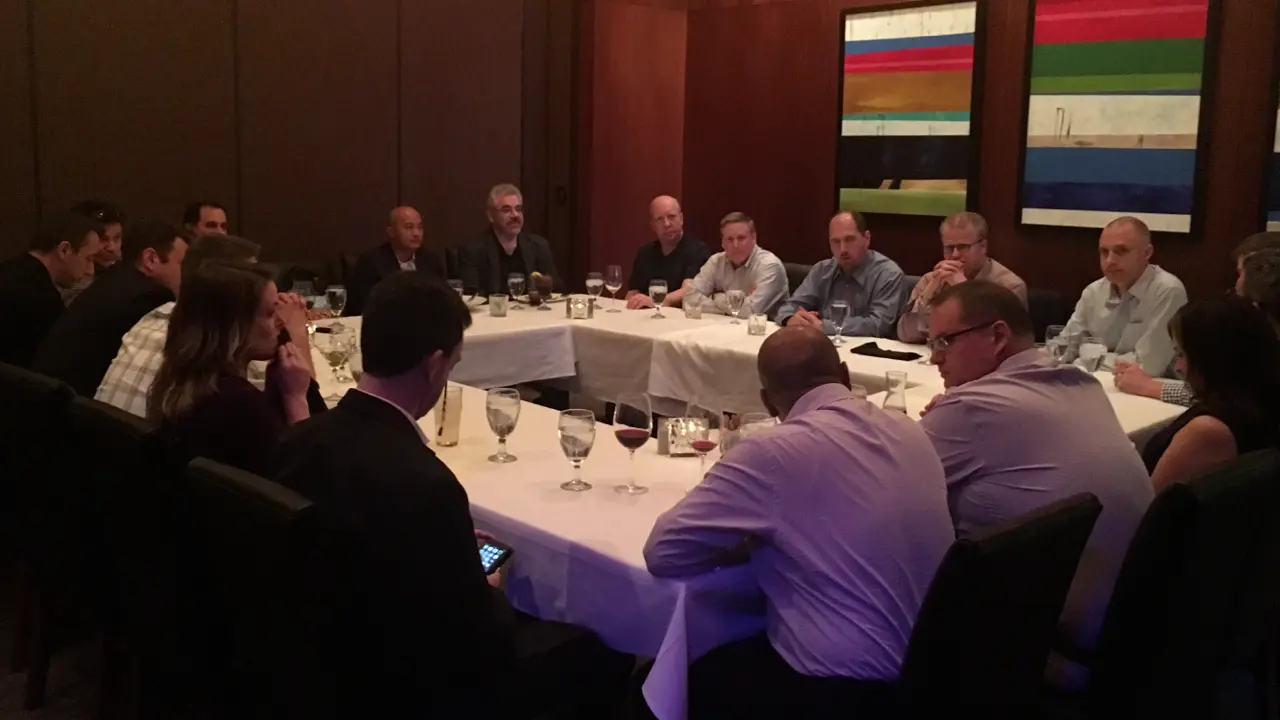
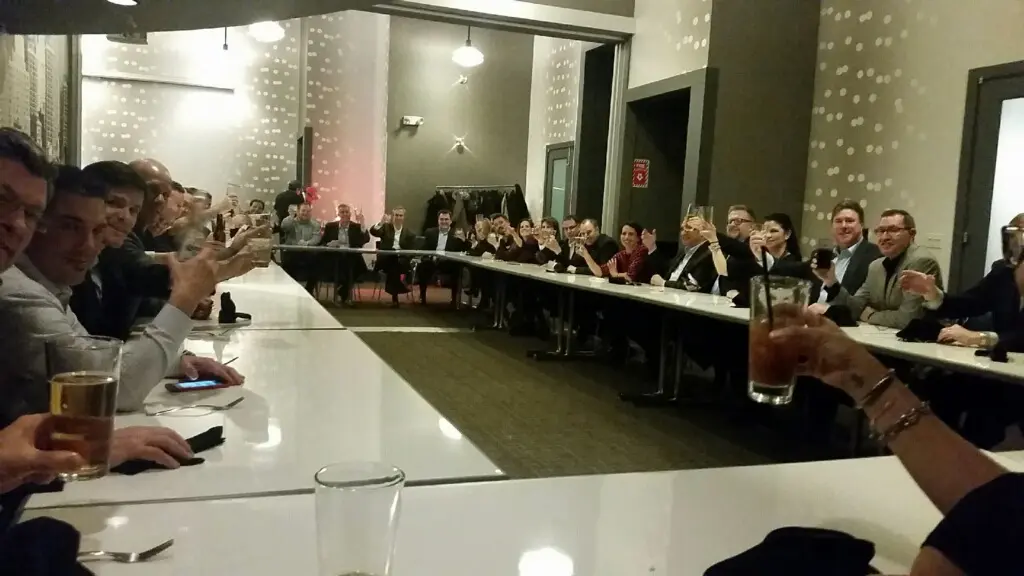
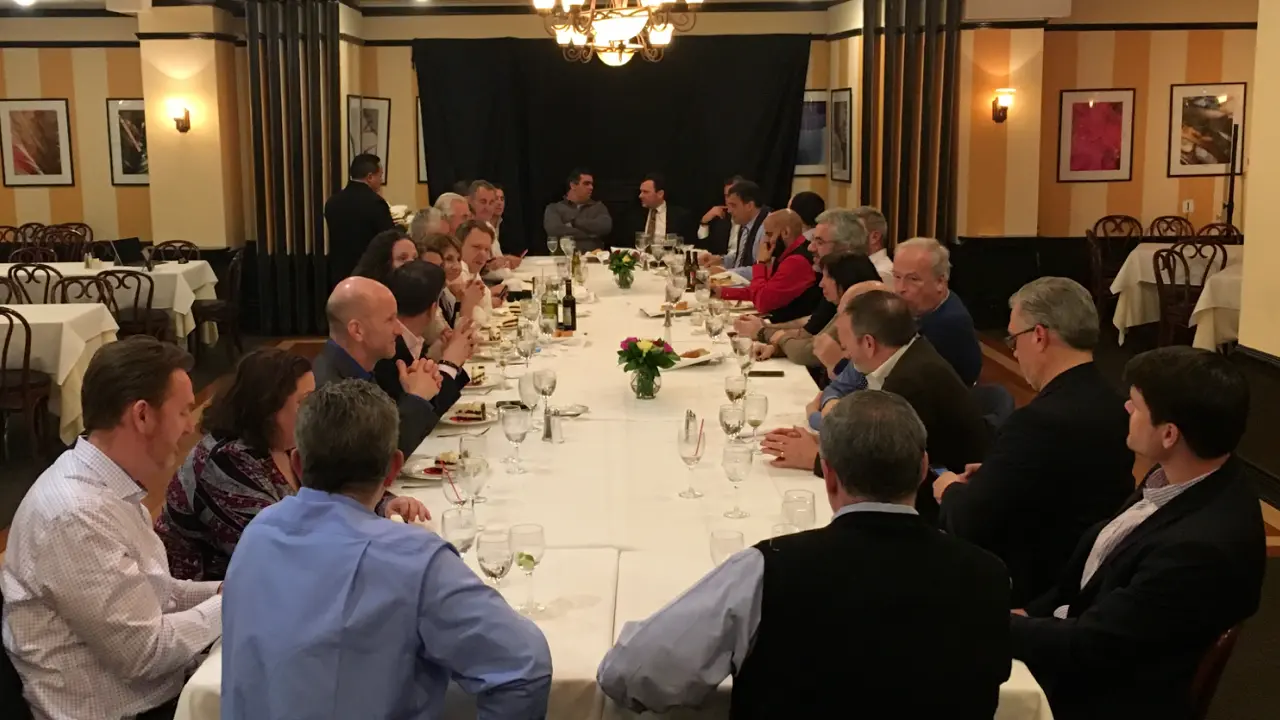

First, it has to be one big square table in a private room. No separate tables. No background music. No trying to shout over the restaurant “ambience” that always sounds like an aircraft cabin at cruising altitude. If you can’t hear each other, you don’t get depth — you get chatter.
Second, you need a moderator. That’s me. Sometimes I’m actively teeing up topics and pulling quieter people into the discussion. Other times the group is so locked in that my job is basically traffic cop, making sure we don’t have three smart people talking at the same time and nobody hearing any of them.
Third, the mix matters.
CAMP-NY works because it brings together integrators, manufacturers, service providers, consultants and end users — all in the same room. The only “requirements” are that you’re part of the industry, you asked to be on the invite list and you promise that conversations at CAMP stay private.
Over the years, no matter who I worked for at the time, everyone was welcome — even competitors. Especially competitors. I’ve always felt a responsibility to be an equitable steward of the gathering, not a gatekeeper.
Most years we’ll do three sit-down dinner conversations and one that’s more cocktails and networking — just mingling, no structured roundtable. Each model has pluses and minuses, which is exactly why the 3-to-1 ratio works. The sit-down format gives you substance. The open-format night gives you more one-on-one opportunities and chances to initiate or even close deals. You need both.
The dinner-and-conversation model has worked so well that I’ve also done versions of it for sponsors at big conferences like ISE and InfoComm. And I can’t begin to tell you how many people have said afterward that it was the best part of the event — not the booths, not the sessions, not the product launches, but the chance to talk candidly with peers about things they rarely get to say out loud.
Great food. Great drinks. Real conversation.
The sponsor comes out looking like the hero. And here’s the part that still makes me smile: they didn’t have to make a single sales pitch to pull it off.
That’s the backdrop. Here’s the point.
This is career advice disguised as a dinner update around the anniversary.
The time to network isn’t when you need a job. It’s always. Now. Every chance you get.
From a professional standpoint, having peers tell you where the potholes are — the mistakes they already made, the landmines they stepped on, the internal politics they wish they’d understood earlier — that’s priceless. It can save you months. Sometimes it can save your reputation.
Really.
One evil boss many years ago tried to call in vendors and trash me personally, and to a person they all told him, “That’s not who he is.” Imagine my crisis if some of them had believed him.
From a human standpoint, these get-togethers are also just … nice.
We spend so much time reducing one another to job titles and email signatures. Then you sit at a table for two hours and discover the person you’ve known for a decade is also a parent, a coach, a world traveler, a caretaker, a mentor, a survivor — or all of the above.
It changes how you see them. It changes how you see your industry.
So yes, if you want to be added to the CAMP-NY invitation list, reach out. I’m always happy to expand the circle with people who actually want to participate. No rules other than the ones above.
But if you’re not in the New York area, here’s the bigger suggestion: Start one where you are.
Keep it simple. Keep it honest. Pick a format that forces real conversation.
You’ll be surprised how many people will show up — even if they have to pay their own way — because what they’re really buying isn’t dinner.
They’re buying community.



More Stories Like This

InfoComm: A Love Letter

Dear AV Industry, Mid-June is one of my favorite times of year. And every time someone asks, “What does InfoComm mean to you?” I stumble — because honestly, it means so much that I never quite know where to start. So, before I begin my ninth InfoComm, I wanted to reflect on a few of […]

Preview of DSE 2024: Why You Should Attend
Hey, everyone! If you’re as excited as I am for DSE 2024, then you’ll love the preview we got from Steph and Gary (via the LAVNCH platform), who gave us a glimpse into one of the biggest gatherings for digital signage experts and enthusiasts. Whether you’re an integrator, end user, or just curious about the […]

Networking: Everybody Knows Somebody

When I first moved to Alberta in high school, a girl I met here told me “Edmonton is a town of six hundred.” Actually, at the time it was a small city of about 700,000 people, but right away I picked up what she really meant: Everyone knows everyone else. And she was right. Later […]