

What CEDIA Expo 2026 Taught Us About the Future of Residential AV

By Steph Beckett and Cory Knapp
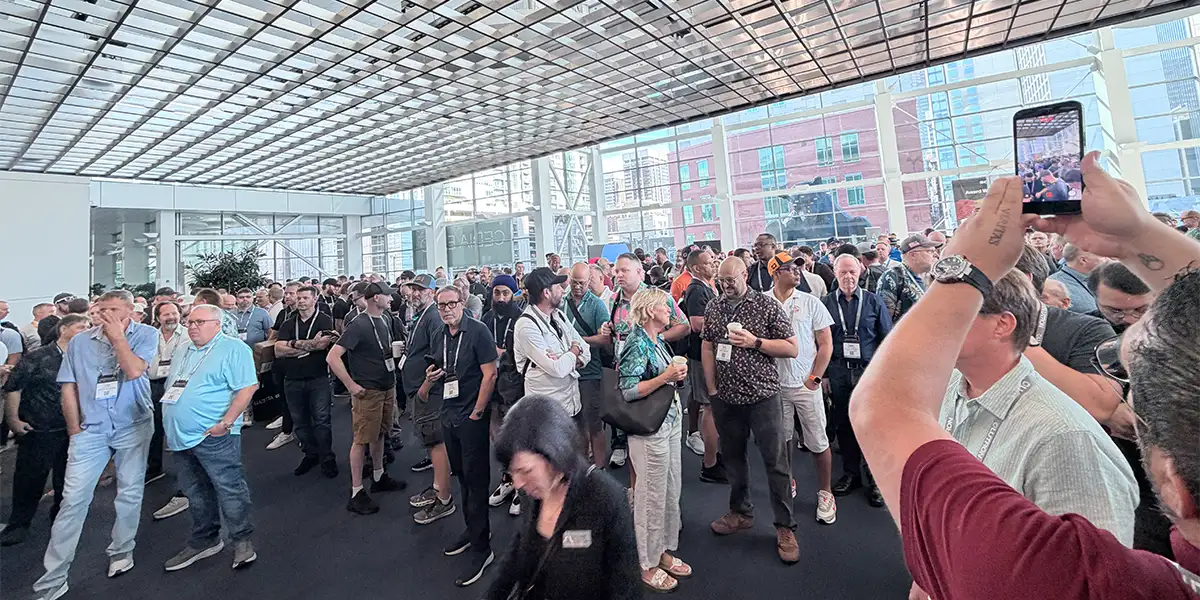
This year marked my sixth CEDIA Expo. I’ve attended every year since 2021, and every year I look forward to seeing what’s new in residential AV. This year, I brought along our content specialist, Cory Knapp, for his first-ever CEDIA Expo. We thought that gave us an excellent reason to write this wrap-up together from two completely different perspectives.
But we went in with a couple of the same questions: What can CEDIA Expo tell us about where residential AV is headed? And what might the ProAV side learn from the technology at this show? From walking the show floor to networking and attending industry luncheons, here are our takeaways.
The Big Picture (Steph)
This is my favorite show to wander. I always make sure I have time to walk around and check out what’s new.
While there weren’t many technologies that felt groundbreaking or like something that would catapult us into the future, it was cool to check out demos in which things just worked really well. When I am checking out a HomeAV demo that an exhibitor claims is extremely user-friendly, I always think, “Yeah, but would my Memaw be able to do it?” For most of the things I saw this year, I think she would.
For instance, here’s a demo I got to check out from Crestron:
Sure, there are things you need to learn about this multiview experience, but for the most part, the everyday user can figure out how to get where they want to go without understanding everything happening behind the scenes.
And that may have been the bigger story at CEDIA Expo this year. The technology itself wasn’t necessarily revolutionary; instead, I saw a lot of sophisticated technology getting better at simply doing what it’s supposed to do.
That continued push toward an easier user experience is probably the biggest trend I noticed — and something I want to see continue to trickle over to the ProAV side.
Technology Designer Luncheon (Cory)

The Technology Designer Luncheon on the first day of the show focused on the story of the Phoenix House, a home that rose from the ashes of its predecessor, which was destroyed in a fire in British Columbia, Canada. Doug Weinstein, editor-in-chief of “Technology Designer Magazine,” moderated the panel discussion, which included members of the team behind the home’s design and construction.
What I found most interesting was hearing the panelists discuss how closely they collaborated to ensure the house could function as two separate homes in one. The multigenerational home needed to meet the needs of the homeowners, an aging parent who had suffered a stroke, the couple’s teenage son and a relative with an adult son.
The panelists said future-proofing was key to the project, with the home designed so it could be altered as those needs changed. One of my biggest takeaways from the discussion was the importance of establishing trust early in the process. The panelists said that foundation allowed them to openly discuss issues as they arose and work together to find solutions — something that becomes especially important when technology, architecture, construction and the needs of the people who will actually live in the home all have to work together.
Women in Consumer Technology (Steph)

My turn to attend a luncheon! On the second day of the show, I attended the Women in Consumer Technology Luncheon. I’ve attended it nearly every year, and I’m always grateful to get an invitation.
This year, I got to see many trailblazing women honored with awards, and I was particularly excited to see Wendy Feldstein from Crestron receive the Technical Excellence Award. She’s become a friend to me, and I’ve enjoyed watching her push for the things she believes in and knows to be good, and helping make those things foundational at Crestron. We need more VPs like that.
But it’s not all fun and games and patting one another on the back. For me, it’s an opportunity to learn about what other women are doing — and have done — for the industry so women like me can continue in their footsteps. That’s the most important thing about this luncheon.
Seeing it All Come Together at Home (Cory)

Before CEDIA Expo officially kicked off, ADI hosted us for a tour of a custom-built home in South Denver, where Daisy served as the integrator. Daisy helped take us through the home and show us what happens when many of the technologies we see individually at CEDIA Expo are actually integrated into one residential experience.
The three-story home, designed by Studio Shelter and built by Devex, featured smart-home technology throughout. In the living room, woven wood shades from Hunter Douglas were integrated with the Control4 system, while the color temperature of the lighting helped highlight the artwork throughout the space. Episode Radiance speakers extended the audio experience into the backyard, while Lux lighting in the basement entertainment area could even bring in Denver Broncos colors. Other installations included Leon audio paired with a Samsung display in the downstairs guest bedroom, Sonos audio in the basement workout room and a Luma surveillance system integrated into the home’s control experience.
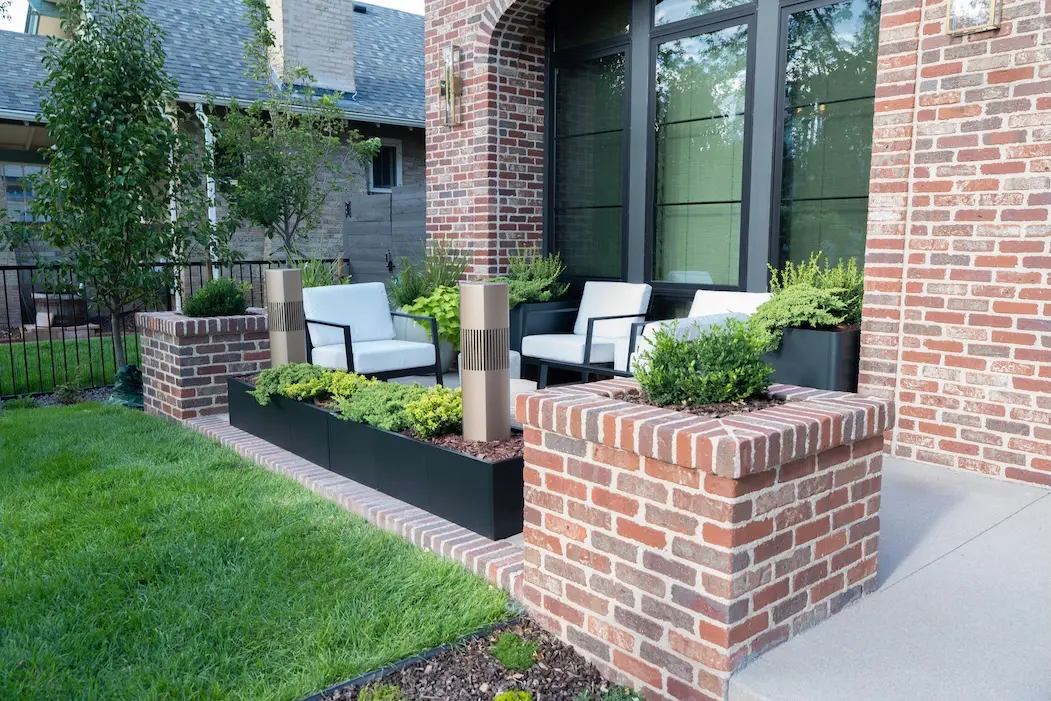
What surprised me most wasn’t any one of those products. It was how well everything worked together without making the home feel overwhelmed by technology. There was a lot happening behind the scenes, but walking through the house, I never got a sense of technology overload. Each element — from lighting and shading to audio, video and security — played a role in the experience without constantly calling attention to itself.
Seeing these products working together in an actual home showed me something I couldn’t have experienced on the show floor: Good integration isn’t necessarily about making the technology more noticeable. Sometimes, it’s about making it disappear.
One Thing That Stuck With Cory
The thing that stuck with me was not a flashy projector or a solar-powered awning, but a product tucked away in a booth in the back of the convention center. I’m talking about Homebot One’s KOKO robot.
With roughly one in six Americans age 65 or older, home care will continue to be an emerging need in the years and decades to come. KOKO is a home companion robot designed to help aging loved ones who aren’t ready to move into an adult care facility. It is designed to play games, find misplaced items, help with daily chores like watering plants and alert emergency services if there’s a problem.
Given our aging population, I expect to see more technology like KOKO deployed in the home in the future — and it was a good reminder that the future of smart-home technology may be about more than entertainment and convenience.
One Thing That Stuck With Steph
I think the one thing that stuck with me wasn’t necessarily a product or a trend. It was how desperately we still need trade shows.
The trade show market — at least in our industry — has been interesting since COVID. Many average integrators, CIs and the like don’t attend the big trade shows anymore. But as AV becomes increasingly experiential, there is only so much you can learn about a technology from a spec sheet, case study or video.
The best thing about our industry is seeing how things work. For me, I need to do that in person. I could look at case studies all day, but I want to see the installations myself! I know it’s my job to find out about these new things and report back to you all, but that still means you have to take my word for stuff.
The people yearn to get their hands on technology! And the best way to experience a whole lot of it in one place is still a trade show.
What’s Next (Steph)
After spending time at CEDIA Expo, I feel confident saying that simpler, more intuitive user experiences and interfaces will be among the biggest trends moving forward. Of course, it’s complicated to walk that line between simple and customizable, and I expect we’re going to see plenty of manufacturers trying.
I can also confidently say that DIY is not going to take over everything. In fact, there is an interesting paradox here: The simpler we want the experience to be for the end user, the more expertise we may need behind the scenes to make it happen.
Sure, we can configure our smart outlets and Alexas ourselves. But for those who want excellent sound systems, wonderfully integrated smart-home experiences and technology that simply works together without constantly demanding attention, that’s not necessarily a job for the everyday tinkerer.
If anything, I think the channel will become even more important for small- to medium-sized projects that people might previously have attempted to tackle themselves.
What do you think? I guess I won’t be able to confidently see the results until CEDIA Expo 2027. We’ll report back then.
P.S. If you like our coverage you can see the rest of it — including all the videos we shot — here.



More Stories Like This
Rants & rAVes — Episode 1548: Sonos Explains How New Hardware and Software Are Strengthening the Whole-Home Experience

CEDIA Expo 2026 was a busy one for Sonos. Alongside the introductions of Beam Ultra, Ace Ultra and Amp Multi, the company also unveiled Sonos 27 and a collection of new software features designed to make the entire Sonos ecosystem more connected and intuitive. In this episode of Rants & rAVes, I sat down with […]

IC Realtime Launches Bunker Edge-AI Intelligence Platform
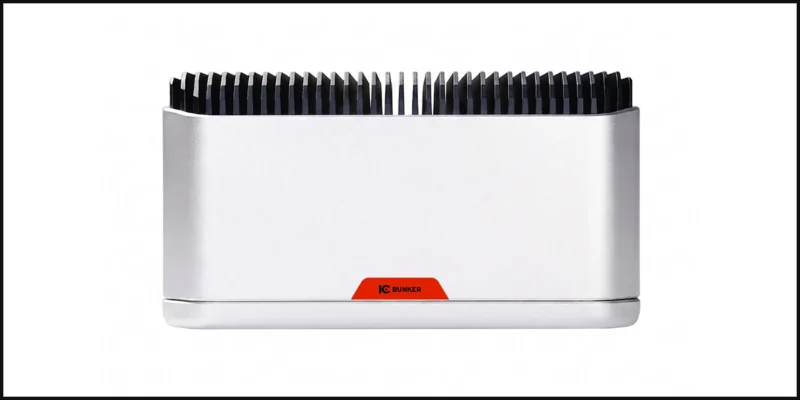
IC Realtime officially launched Bunker, an edge-AI platform that aims to deliver security intelligence for residential spaces. Bunker is powered by NVIDIA Jetson edge computing technology, and processes visual information, identifies activity that departs from established patterns and learns the recurring rhythms of a specific home or property over time. Bunker’s open, device-agnostic architecture works […]
Dirac Launches New LXR-11 AV Receiver and LXP-16 Surround Processor
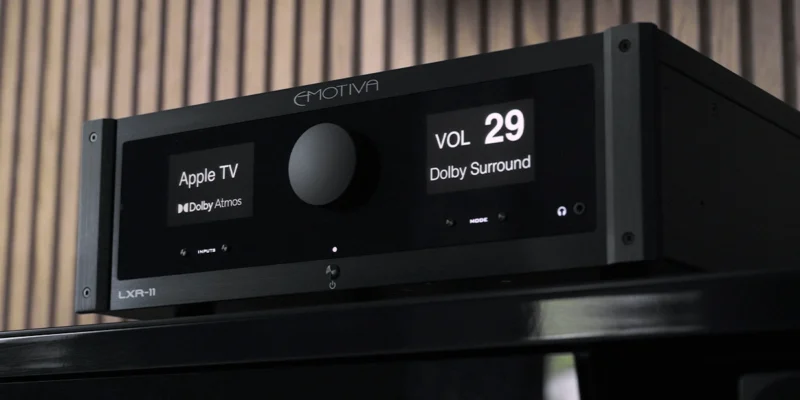
Dirac officially announced that Emotiva’s new LXR-11 AV receiver and LXP-16 surround processor will launch with Dirac Live Room Correction, Dirac Live Bass Control, and Dirac Live Active Room Treatment included and ready to use out of the box, with no additional license purchase required. The company said that the launch marks a major update […]