

Why Projection Is Powering the Next Era of Active Learning

THIS IS A PROMOTED POST

At most universities, lecture halls and classrooms include rows of seats, a podium, a screen at the front of the room, and an implicit assumption that one person will talk while everyone else listens. That model made sense when information was scarce. Today, every student walks in with access to more knowledge than any professor had before the Internet. The job isn’t to deliver information anymore. It’s to create an environment where students actually do something with it.
And that’s where most classrooms break down.
Active learning isn’t quiet. It isn’t neat. It doesn’t involve everyone sitting politely while slides advance. It’s messy, loud, collaborative and physical. Students stand up. They debate. They Google things in real time. They sketch ideas, revise them, scrap them, build on each other’s work. When it clicks, the room feels more like a startup war room than a lecture. But try doing that in a space designed for passive viewing, and you immediately feel the friction.
Technology can either amplify that energy or shut it down.
A lot of institutions are trying to modernize default to flat panels because that’s the familiar playbook. Put a screen at the front, maybe a few around the room, call it “collaborative.” But small-format displays are fundamentally built for consumption. You sit. You watch. Maybe you tap a few buttons. In large learning spaces, they actually shrink the experience. Students cluster around them. Visibility drops. Half the room can’t see what the other half is doing. Attention splinters into little islands.
And collaboration doesn’t scale when nobody can see each other’s thinking.
In active learning studios, the magic happens when ideas are visible to everyone. When a group works through a problem and the rest of the room can react, challenge, or build on it. Visibility creates accountability. It also creates energy — students lean in because the work feels public, shared, consequential. Small screens can’t deliver that at room scale, no matter how many you add. You just end up with more hardware, more switching, more points of failure, and a lot of complexity nobody asked for.
Projection changes the conversation entirely.
Instead of asking, “Where do we put the screen?” you start asking, “What can we turn into a workspace?” A wall suddenly isn’t just a surface to hang things on — it’s a canvas. Modern projection can create digital spaces big enough for an entire class to engage with at once, annotate, revise, and interact with together. Students don’t huddle; they spread out. They stand. They move. They treat the room like a collaborative environment instead of a theater.
And that shift is huge.
Because projection doesn’t just show content — it invites participation. It says, “Come up here and help solve this.” In my classes, the moment students leave their seats and start working on the wall, the dynamic changes instantly. They stop performing for the instructor and start thinking with one another. That’s when learning actually happens.
From a practical standpoint, it solves a lot of institutional headaches too. You activate existing wall space instead of adding more devices. You reduce hardware sprawl. You simplify the technology stack. IT teams don’t inherit a maze of endpoints to manage. Facilities planners get flexibility across disciplines. And when campuses replicate rooms at scale, projection is simply easier to standardize.
But honestly, the biggest impact isn’t technical — it’s psychological.
Students don’t care what technology is installed. They care whether the room supports the way they learn. They want to collaborate without friction. They want to see and be seen. They want to contribute, not just consume. When the front wall becomes a shared creation surface instead of a passive display, the message is clear: this is a place where ideas are built, not delivered.
Higher education keeps talking about engagement, retention, and student success. Those things aren’t just about curriculum; they’re about environment. Space shapes behavior. Behavior shapes outcomes. If you design a room for participation, you get participation.
That’s why I believe projection is quietly becoming one of the most important technologies in the future of education. Not because it’s trendy — it isn’t. Not because it’s new — it definitely isn’t. But because it aligns with how learning is actually evolving.
Education isn’t moving toward more passive consumption. It’s moving toward collaboration, inquiry, experimentation, and shared problem solving. In large learning spaces, that requires large, flexible, inclusive surfaces.
Active learning needs active space. And, this is what we did at the University of North Carolina, where I teach.

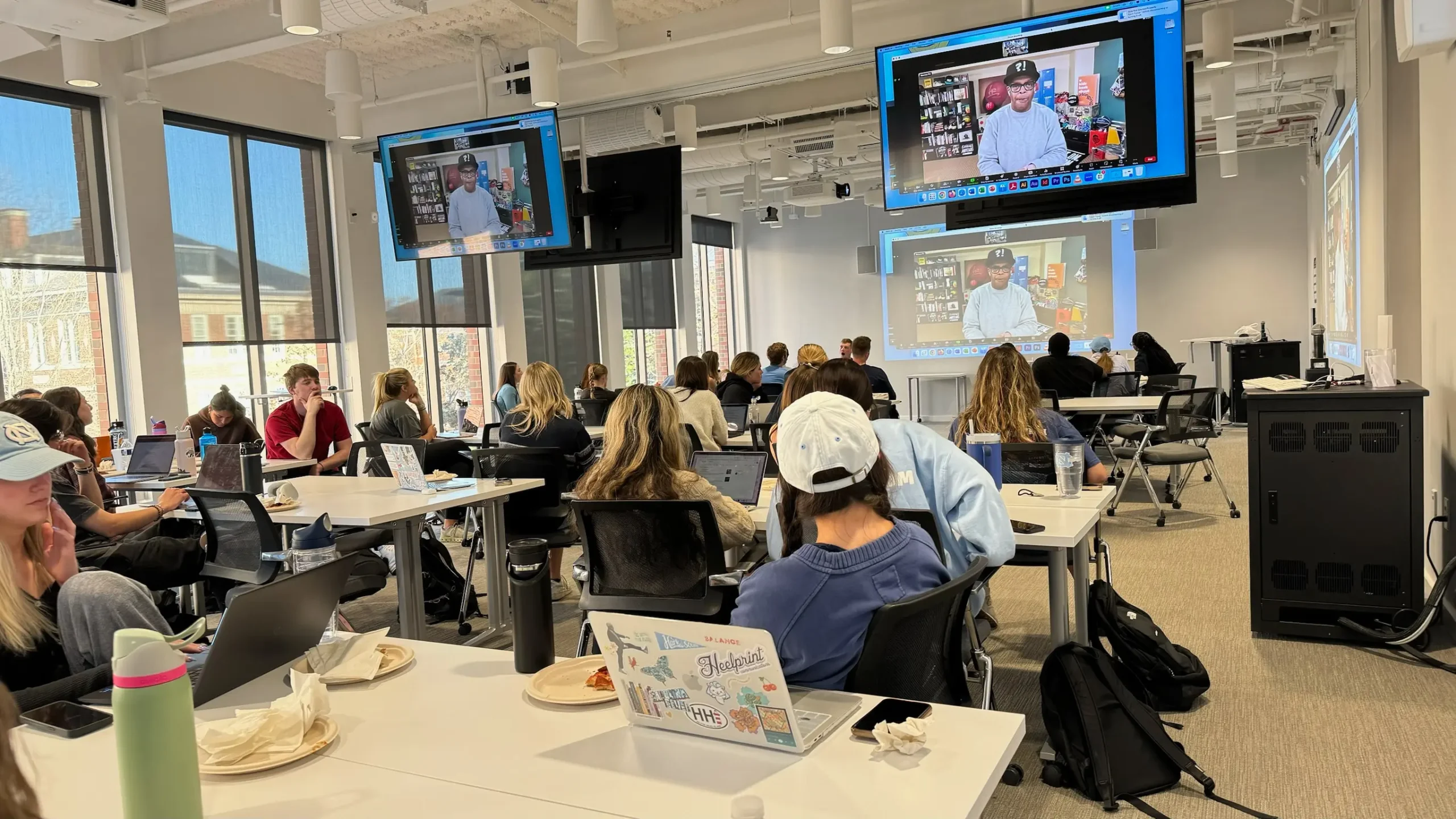


And increasingly, the wall is where that happens.
By the way, I sat down with Epson’s Gavin Downey to talk about exactly how Epson is thinking about this evolution — what they’re seeing across campuses, how institutions are redesigning large learning spaces, and where projection fits into the next phase of active learning. If you care about the future of classroom design, that’s one you’ll want to check out.



More Stories Like This

Epson Adds EH-LS6000 and EH-LS7500 4K Laser Projectors in Australia

Epson launched two AI-powered 4K home theater laser projectors in Australia, the EH-LS6000 and EH-LS7500, completing the company’s EH-LS Series home cinema lineup. Both models combine Epson’s 3LCD three-chip engine with 4K enhancement technology to produce 8.3 million pixels on screen. The projectors use solid-state laser light sources rated for up to 20,000 hours of […]

Epson launches LifeStudio Series of Smart Mini Projectors in Australia
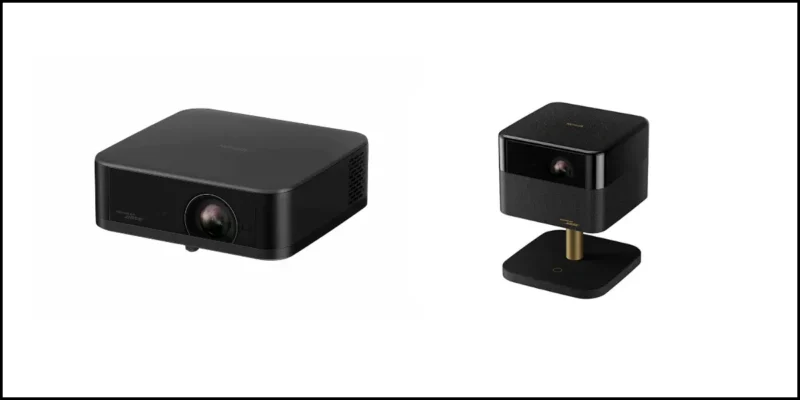
Epson has announced the launch of LifeStudio Series of smart mini projectors in Australia. The company said the new range is designed for modern living, combining premium entertainment, sophisticated styling and intelligent projection in a way that reimagines what a projector can be in a home. Both the Epson LifeStudio Pop (EF-62B) and Epson LifeStudio […]

Epson LE-C1 Series Now Available

Epson officially announced the availability of its first all-in-one dvLED displays, the LE-C1 Series. The series is powered by chip-on-board technology and aims to provide an expansive viewing experience with bright, high contrast images, even in high ambient light environments. The company said the all-in-one dvLED displays aim to deliver a complete, ready-to-deploy solution that […]