

How to Choose the Right Transport for the Application


By Brandon White, Director of Product Development, Vanco International
AV-over-IP has become the norm for ProAV transport and distribution, and for good reason: it offers powerful flexibility, scale and routing options that other transport approaches cannot match. But that does not mean it is automatically the right transport for every job.
AV-over-IP solves a lot of problems, but it can also introduce a lot of complexity. Rather than treating it — or any distribution method — as a default, it’s better to start with two critical questions: What does this application actually require today, and what is it realistically likely to require tomorrow?
The right answer may be an HDMI matrix. It may be extension over category cable or fiber. Sometimes, it is absolutely AV-over-IP. The key is to choose transport by application.
Start With the Client
A static “one source to a handful of displays” install is a very different problem from a large switching environment where any input may need to go to any output.
Make sure you understand the user’s expectations and priorities. Is this meant to be a flexible, frequently reconfigured environment or a simple, fixed-use system? Some clients want deep routing power. Others want something that just works and never changes. That distinction should inform the architecture choice from the beginning.
First Decision: Traditional Matrix or AV-over-IP?
On any matrix project, the first thing I look at is overall size, potential size and scope. What exists now? What is likely to be added later? Is this really a fixed one-to-many distribution problem, or is it the start of something larger and more flexible?
As a rule of thumb, once your matrixing needs exceed 8×8, it is worth looking very seriously at AV-over-IP — especially if you know expansion is likely. At that point, going with a traditional matrix runs the risk of boxing the client into a solution that will limit future utility and expansion options.
If the job needs large-scale switching, room for growth or the ability to transport more than just audio, video and control — such as USB, KVM or return audio — AV-over-IP becomes much more compelling. Those capabilities are often built into the AV-over-IP platform rather than added through layers of extra hardware. Similarly, if the application requires independent routing for audio, video and USB or KVM signals, the flexibility of AV-over-IP architecture will substantially simplify the overall system design.
However, if the job is small, static and unlikely to change, AV-over-IP can be more system than the client actually needs. That does not mean it will fail; in fact, the customer may still be perfectly happy with it. But it may mean the customer is paying for flexibility, features and network complexity that will never be used. In those cases, a traditional HDMI matrix or splitter can still be the better answer for cost, deployment speed and ease of support.
What Physical Transport Makes Sense?
Architecture and physical transport should be evaluated together, not one after the other. Deciding that a job is AV-over-IP does not tell you what cable to use any more than deciding on a traditional matrix does. In either case, you still need to know how far you’re going, what signal you need to preserve and what infrastructure the environment can realistically support.
Distance is still the first filter. Short, simple runs may support passive HDMI. As distance or signal demands increase, you move to active or hybrid HDMI, extension over category cable or fiber. That is true whether the system is a point-to-point design or an AV-over-IP deployment.
For category cable runs, the specification matters in both architectures. Cat5e may suffice for some standard HD applications over moderate distances, but higher resolutions, longer runs or bandwidth-intensive AV-over-IP systems typically require Cat6 or Cat6A. Shielded cable becomes important in electrically noisy environments, but it adds cost and must be properly grounded to deliver the intended benefit. On the AV-over-IP side, the practical decision is usually between Cat6 and Cat6A and whether the installation environment justifies shielding.
Fiber is also not exclusive to one architecture. It can be the right answer for either traditional AV extension or AV-over-IP when distance is extreme, when electrical isolation matters or when the project spans buildings or campus environments. Multimode fiber is often sufficient for AV applications and is more cost-effective. Single-mode fiber makes more sense when very long runs or long-term infrastructure value justify it.
In other words, the decision tree is not “traditional AV equals one kind of cabling, AVoIP equals another.” The real question is which physical transport best supports the architecture, distance and performance requirements of the application.
Validate Features Against Architecture Before You Finalize
Before locking in your architecture and physical transport choices, pressure-test every aspect of your design against the project’s feature requirements. If your application depends on optional HDMI capabilities like HDR, eARC, VRR or UHD resolutions, those requirements must be mapped against every link in the signal chain.
Keep in mind that HDMI certification doesn’t guarantee a specific feature set. HDR, VRR, eARC and other capabilities are optional in the specification, so even devices labeled “HDMI 2.1” can have totally different capabilities. Every extender, repeater, switcher or transport device in the path is a potential gap in feature support, metadata passthrough, EDID handling and more.
The integrator needs to ask: Does my chosen architecture support the specific features this application requires end to end? Either an AV-over-IP platform or a traditional AV matrix can deliver HDMI 2.1 features if — and only if — it is specified correctly.
Never rely on the device label. Verify support end to end, bench-test before installation and pay attention to how any extender, repeater or transport device handles metadata, scaling, compression and EDID behavior.
If any device in the signal path cannot support the required features, the weakest link will define the entire experience.
What This Means for Integrators
Appropriate transport selection means aligning the transport layer with the job’s real requirements, the client’s real expectations and the system’s real support burden.
In practice, that usually means going simple whenever simple will do the job well. That lowers cost, reduces commissioning time, minimizes troubleshooting variables and makes life easier for the installer, the service team and the client.
When the application truly calls for AV-over-IP, integrators can then deploy it for the reasons that matter: scale, flexibility and richer routing. That thoughtful approach is the difference between a system that merely works on day one and one that still makes sense years later



More Stories Like This

Vanco Expands Beale Street Audio Lineup
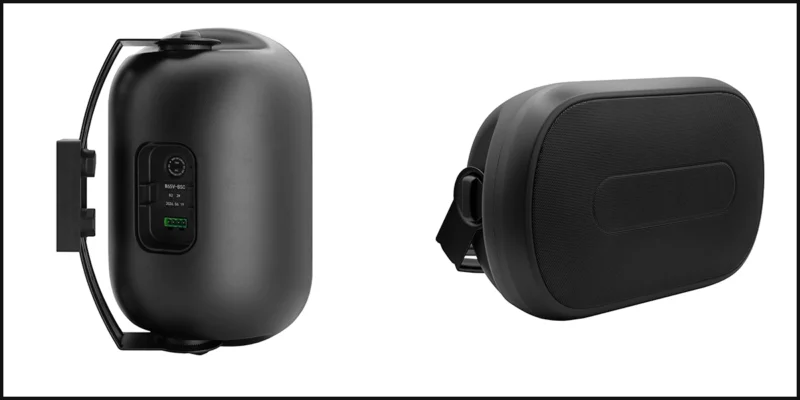
Vanco International LLC announced that it has expanded the Beale Street Audio lineup with two new indoor/outdoor surface-mount speakers. The 6.5-inch W65V-BSC and 8-inch W80V-BSC feature a weatherproof design with flexible power configurations in an effort to provide integrators with a versatile solution for commercial and residential spaces. The new speakers feature an IP66-rated enclosure […]
Korbyt Appoints TJ Waldorf Senior Vice President of Marketing

Korbyt officially announced the appointment of TJ Waldorf as senior vice president of marketing. The company said that Waldorf brings more than two decades of experience in leading market strategy for high-growth SaaS organizations, including leadership roles with several private equity-backed enterprise SaaS companies. “TJ has repeatedly demonstrated the ability to build brands and scale […]

Raising the dvLED Bar at InfoComm 2026

If you attended InfoComm26, you no doubt noticed the number of companies on the floor that make Direct-View LED (dvLED) products. From well-known brands to emerging market contenders, the breadth of cabinet-based, curved and custom dvLED offerings at pixel pitches from 5mm down to 0.7mm is downright daunting, to say the least. It would be […]