

The ‘Meeting Tax’: The Hidden Cost of Outdated Office Technology


By Frank Weishaupt
CEO, Owl Labs
In 2025, the return-to-office debate continued to shape corporate boardrooms and employee sentiment alike. Companies from JPMorgan Chase to Instagram issued five-day RTO directives, with some, including Amazon, even tying office attendance to career advancement. This trend is likely to persist into 2026 as businesses push for a “return to normal” while employees continue to experience burnout and a growing need for better work-life balance.
Amid these debates over where work happens, one critical operational issue has been overlooked: whether companies’ existing technology infrastructure can effectively support a hybrid future. Despite stricter RTO mandates, employees still rank flexibility as a top workplace priority. In Owl Labs’ State of Hybrid Work 2025 report, which surveyed 2,000 full-time U.S. workers, 83% said flexible hours were important, and nearly eight in 10 (79%) valued flexibility in work location. As some employees return to the office while colleagues and clients remain remote, outdated conferencing systems are buckling under a workplace dynamic they were never designed to support.
This infrastructure gap has created what many employees experience as a “meeting tax,” where valuable time is lost to aging office technology that no longer meets modern needs. It is a hidden cost of RTO mandates that often goes unacknowledged, as companies bring workers back to offices poorly equipped for hybrid meetings.
According to the State of Hybrid Work report, the meeting tax is real. Seventy-seven percent of workers report losing time to technical difficulties in hybrid meetings. The average employee wastes more than six minutes simply getting meetings started, with more than a quarter losing over 10 minutes per meeting. Worse, 67% say they have given up trying to connect altogether because the setup was too complex or the technology failed.
The challenges do not end once the call begins. In hybrid meetings, participants report difficulty hearing others (75%), seeing faces clearly enough to read visual cues (75%), viewing presentations (66%), and contributing effectively to discussions (68%). These are not minor inconveniences; they are foundational elements of productive collaboration. With these barriers in place, it is unsurprising that 70% of employees in hybrid meetings report feeling disengaged.
Many employers underestimate the impact of these issues on the employee experience. Eighty-five percent of employees say technology directly affects their job satisfaction, making it nearly as critical as compensation and benefits. Across thousands of meetings, small technical delays compound into days or even weeks of lost productivity. Employers have a significant opportunity to improve both productivity and employee satisfaction by investing in better workplace technology.
If employers want the office to enhance collaboration, improve morale, and strengthen company culture, they must stop treating “technical difficulties” as inevitable. Organizations need to invest in intuitive technology that is simple to use and easy for understaffed IT teams to deploy, allowing employees to reclaim lost time and focus on work that drives the business forward.
Flexibility and portability will also be essential. Not every workplace has dedicated conference rooms, and not every meeting involves dozens of participants. Employees should be able to launch a hybrid meeting seamlessly from any space, at any time, with every participant fully engaged and able to contribute meaningfully. Despite RTO mandates, hybrid work is here to stay, and workplace technology must rise to meet that reality.
The bottom line: If 2025 was the year of RTO mandates, 2026 must be the year of investing in the reliable, robust meeting technology required to support them. Otherwise, companies risk winning the battle to bring employees back to the office while losing the war for productivity, satisfaction and retention.
Frank Weishaupt is the CEO of Owl Labs, the first company to build 360-degree videoconferencing solutions for hybrid organizations, including the Meeting Owl 4+ and Owl Bar. Nearly 250,000 organizations — from small businesses and educational institutions to 92 Fortune 100 companies — have used Owl Labs products to support millions of hybrid work experiences.
Previously, Weishaupt served as senior vice president of sales at CarGurus, where he played a key role in the company’s growth leading up to its IPO. He was also chief operating officer at Jumptap, which was later acquired by Millennial Media and AOL, and has held executive roles at Yahoo and Criteo. He holds a degree in engineering from Northeastern University and is based in Boston.


More Stories Like This

Spark Announces Expansion for 2027 Event Following 2026 Debut

Spark 2026, powered by Samsung, made its official debut at ISE as a new event designed to connect the creative and production communities shaping the future of content and immersive experiences. Creators, brands, broadcasters, agencies, in-house teams and production innovators gathered to explore creative practices and the design and production of modern content across live, […]
Owl Labs Launches Owl 360 Services with Three Subscription Tiers

Owl Labs officially introduced Owl 360 Services, its first subscription service built to meet the needs of IT administrators. The company offers three subscription tiers to provide dedicated support, centralized device management, proactive insights and warranty coverage scaled to the size of any deployment. The company said that the Enterprise tier is now available through […]
Digital Signage Summit 2026 Celebrated 20th Anniversary with Industry Discussions
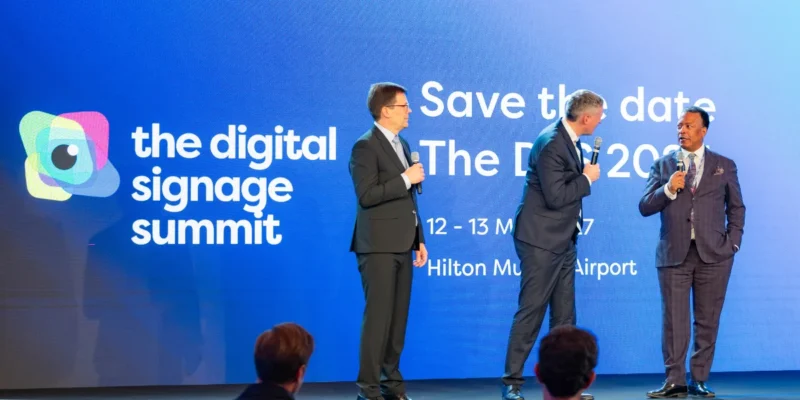
Integrated Systems Events (ISE) reflected on this year’s Digital Signage Summit (DSS), which examined the forces actively reshaping how digital signage and DOOH networks are built, managed and scaled. DSS 2026 marked its 20th year anniversary, highlighting how rapidly the industry is evolving, and why leadership dialogue is more important than ever. The event lasted […]