

New GLP Nexus provides beating heart of Greek archaeological excavation

The site of the fabled city of Tenea in ancient Corinthia is the location for an
archaeological dig, that has excavated a number of important findings and artefacts from
the Archaic and Bronze Ages, and Hellenistic to Roman periods. Having started in 2013,
the dig takes place over five weeks in September and October each year.
Known today as Chiliomodi, the village also happens to be the birthplace of architect,
performance designer and cultural advisor, Andreas Skourtis, who has been working with
the excavation team at the Greek Ministry of Culture, under the direction of Dr. Elena
Korka. Based in London, he specializes in performance-led spatial strategy, and he is
also program leader Performance Design at the Royal Central School of Speech and
Drama — University of London.
The excavation site is associated with mystical healings and digs on Andreas Skourtis’
own plot have yielded ritual structures, underground cisterns, hordes of rare coins and
workshop complexes.
This year he partnered with lighting designer, Sofia Alexiadou, a long-term associate,
who is also the Program Director for the BA (Hons) Creative Lighting Control and the MA
Light in Performance at Rose Bruford College. To seamlessly bring the various pits to
life, particularly during the sunset period, she found an ingenious solution in GLP’s new
Nexus range of lighting.
First introduced to these by Nexus Lights Division Manager, Manuel Paulus, on the GLP
booth at 2025 Prolight+Sound Show in Frankfurt last year, she could immediately see
how this battery-powered and app-controlled, wireless IP65 lighting solution —
purposefully designed for demanding applications such as this — would not only provide
creative freedom, but also provide 24 hours of runtime before needing rapid recharge.
Containing 48 RGBW LEDs, the vivid, powerful color palette provided her with numerous
options.
Reflecting on her use of Nexus, Sofia admits, “I just fell in love with them and their
flexibility, and as a designer immediately started thinking about how I could use it. When I
was invited to the archaeological project, I said, ‘I might have something that is
absolutely perfect for the space.’
“We started playing around with the 10 different units, moving them around and using
different colors,” she explained, “but the most important thing was to follow the
architecture of the space.”
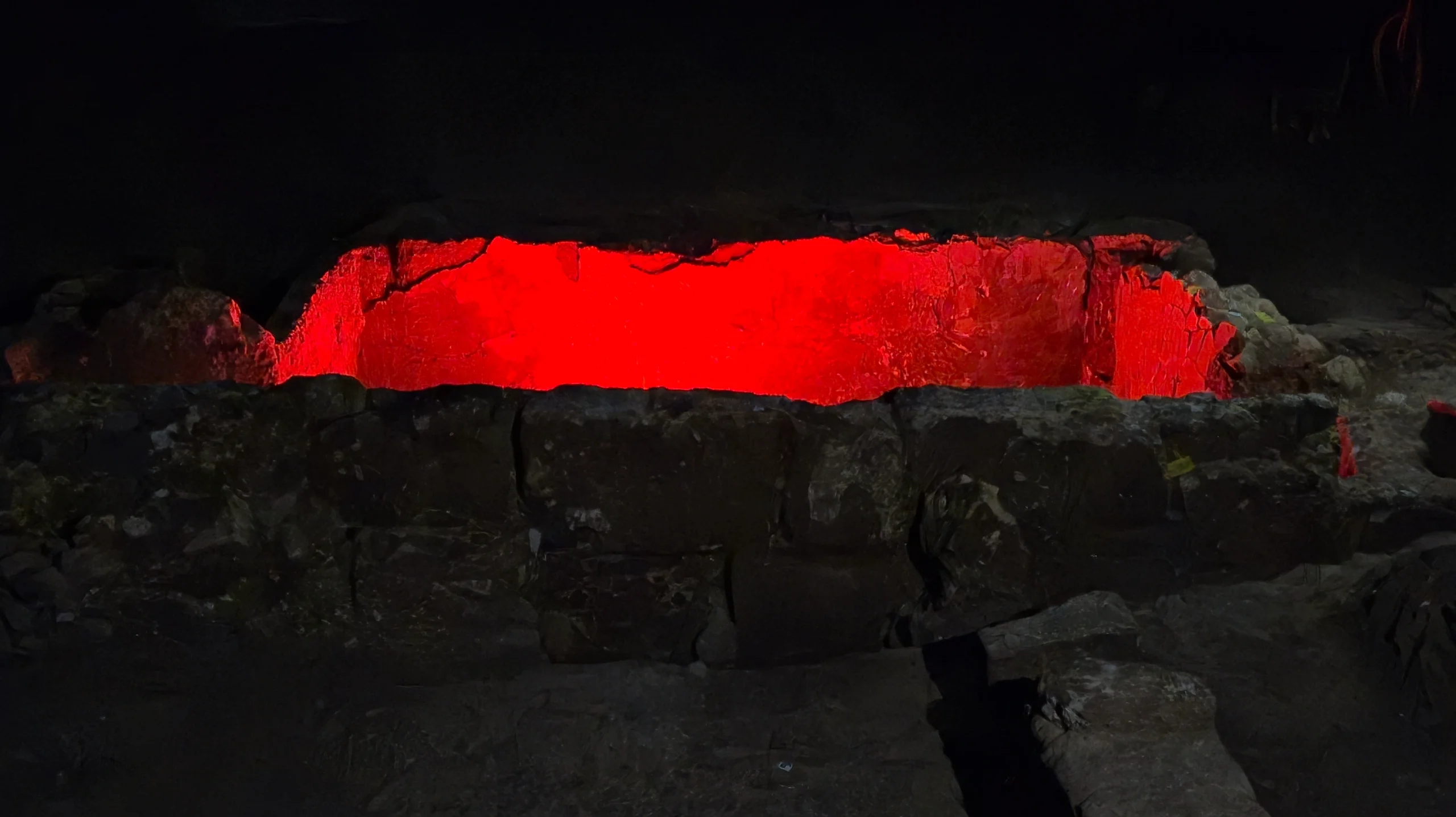
Andreas elaborated: “We wanted to create a spatial, scenographic improvisation of the
site, and Sofia and I were able to use these wonderful Nexus lights to underline these
elements; what we ended up doing was lighting a part of the excavation as if it was the
beating heart of the space.
“We tried different colors and different volumes of light … and the brilliant property of
these lights was that they were just so easy to install and play with and explore.”
For Sofia Alexiadou a highlight was how the artificial light took over as the sun was
setting: “Mixing the natural light of the landscape at sunset … and as it faded watching
Nexus take over.
“We were literally in the middle of nowhere, so being able to carry these lights and run
them off the app was incredible. As they are battery powered, there was minimum
interruption — touching areas that had been covered for centuries. We could play around
with the intensity, using all the colors and create something via this new light in an area
that had been buried. And because they are so light and flexible, we could place them in
areas where we knew they would cause no damage.
She said the entire installation had been 100% successful. “They were clearly created for
performing arts, which is why I wanted to take them out of context — and it worked well.
“For me as a lighting designer it was an interesting experiment to test the quality of
Nexus and examine all the fine hues and saturation that we could achieve against the
natural light. It’s extremely flexible, and color-wise, GLP has created a light that answers
every question.
“It’s certainly given us a vision for the future, should we wish to do a more permanent
light installation there — and I know I will be using them again.”
The final word, however, comes from Andreas Skourtis: “It was an opportunity to map the
site — and do something improvisational, which enabled us to learn something about
how lighting can be used to underline a narrative and create atmospheres in a live
archaeological excavation. It’s really rare to be able to do that.”
Moreover, it has enabled them to research light within a live archaeological excavation,
and to present work as part of the annual site-specific performance-installation event,
Performing Ancient Tenea: Fragments, curated and invited by Andreas each October
since 2024, as part of his wider practice research project, in partnership with the
archaeological team.



More Stories Like This

GLP’s X5 Dot Wash Makes Theatrical Debut at Richard O’Brien’s The Rocky Horror Show

GLP’s X5 Dot Wash technology officially made its theatrical debut at Richard O’Brien’s The Rocky Horror Show, a production that was nominated for nine different Tony Awards in 2026, including Best Lighting Design of a Musical. Lighting designer Jane Cox deployed 30 units as part of a 140-fixture GLP rig. The company said that the […]
GLP Launches TWYN Dual-Face Moving Head
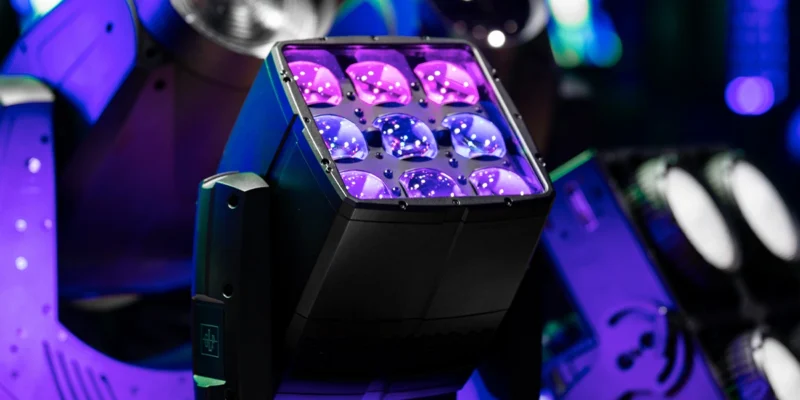
GLP officially launched TWYN, a new dual-face moving head that brings together the capabilities of two of the company’s platforms, the Creos and the JDC Burst 1, in a single motorized system. The solution combines a high-output RGBL wash with a hybrid strobe, aiming to offer a new approach to light design and reduce the […]
Nexus 21 Next-Generation Motorized Mount Aims to Complement Look and Feel of Art TVs

Nexus 21 announced that it has reengineered its Apex Motorized Wall Mount to better match the look and feel of art TVs. The company said that the solution is designed to conceal most of the mounting hardware and allows TVs up to 83 inches to sit just under ¾ inch from the surface for a […]