

What Home Security Solutions are Genuinely Valuable vs. What’s More Marketing Hype


By Matt Sailor, CEO of IC Realtime
Home security has become one of the most common topics homeowners bring up when working with HomeAV and CI professionals. Clients who once focused on audio, video and networking now expect integrators to guide them on cameras, AI analytics, remote monitoring and deterrence features. As this shift accelerates, integrators are being asked to separate what genuinely improves safety from what is simply marketing noise. The security market is crowded, competitive and full of bold claims. Some of those claims represent real innovation, while others are little more than buzzwords. For integrators, the responsibility is clear: Help clients understand what actually matters and design systems that deliver meaningful protection rather than hype.
The most valuable security solutions still begin with clear and reliable imaging. Resolution alone does not guarantee usable footage. What matters is whether the camera can maintain detail in the conditions that matter most, including low light, backlighting, motion and weather. A camera that looks great on a spec sheet may fail in a dim driveway or a bright entryway. Integrators should prioritize strong low-light performance that does not rely entirely on infrared, wide dynamic range that preserves detail in mixed lighting, and sensors and lenses designed to capture motion clearly. These fundamentals consistently outperform the megapixel race that dominates consumer marketing.
Artificial intelligence is another area where value and hype often collide. AI is the most overused term in the security industry, but when implemented correctly, it can dramatically improve the homeowner experience. The real value of AI is not in futuristic classifications or complex labeling. It is in reducing false alerts and helping users quickly find the moments that matter. The most meaningful AI capabilities include accurate person and vehicle detection that filters out wind, shadows and pets, fast search tools that allow users to jump directly to relevant events, and on-device analytics that protect privacy and improve speed. Homeowners do not want more notifications. They want the right notifications.
Another area where security delivers real value is active deterrence. Homeowners increasingly want systems that help prevent incidents rather than simply record them. Effective deterrence tools include motion-activated lighting, audible warnings, two-way audio and visible presence that signals the home is protected. Most residential crime is opportunistic. If a system can introduce doubt or discomfort for a potential intruder, it provides real protection.
Remote access is also a critical component of modern security. Homeowners expect to check in on their property from anywhere, but this only adds value if the experience is simple and fast. The most important capabilities include quick loading of live and recorded video, secure cloud connectivity without complicated setup, intuitive mobile apps and optional professional monitoring for clients who want an added layer of assurance. Integrators should look for platforms that make remote access feel natural rather than technical.
Scalability is another factor that separates valuable systems from short-lived solutions. Homeowners often become frustrated when they invest in a platform that cannot grow with their needs. A strong security ecosystem should allow additional cameras without requiring a full system replacement, support both wired and wireless devices, integrate with broader smart home systems and receive long-term software support. Scalability protects the homeowner’s investment and reduces future service calls for integrators.
On the other side of the equation are the areas where hype outpaces reality. Many products promote advanced AI features such as facial recognition or emotion detection. In real-world residential environments, these features often struggle to perform consistently, introduce privacy concerns and add complexity without improving safety. For most homeowners, simple and accurate object detection is far more valuable than futuristic AI claims.
Cloud-only architectures are another area where marketing often oversells the benefits. While cloud services offer convenience, relying exclusively on the cloud can introduce latency, subscription fatigue, vulnerability to outages and limited local control. A balanced approach that combines local recording with optional cloud features typically serves homeowners better.
Consumer-grade cameras marketed as professional solutions also create challenges. The line between consumer and professional equipment has blurred, but the differences still matter. Consumer devices often lack long-term support, robust cybersecurity, reliable low-light performance, and integration flexibility. Integrators should be cautious about products that look sleek but are not built for long-term deployment.
There are also features that sound impressive but do not solve real problems. These include extremely high megapixel counts, overly complex automations, proprietary ecosystems that limit future flexibility and smart alerts that do not meaningfully improve awareness. If a feature does not improve clarity, reduce false alerts, or enhance deterrence, it is likely more hype than value. Integrators play a critical role in guiding clients through this landscape. Homeowners are not looking for a technical deep dive. They are looking for clarity and confidence. Integrators can add tremendous value by asking what the client truly wants to protect, prioritizing reliability over novelty, explaining the difference between consumer and professional systems, designing solutions that balance privacy, performance and ease of use, and providing ongoing support so the system remains effective over time. The most successful integrators are not selling cameras. They are delivering peace of mind.
Matt Sailor, CEO of IC Realtime, a professional-grade video surveillance and smart security platform designed for residential, commercial and enterprise environments — built to deliver real security outcomes, not just video footage.



More Stories Like This

IC Realtime Launches Bunker Edge-AI Intelligence Platform
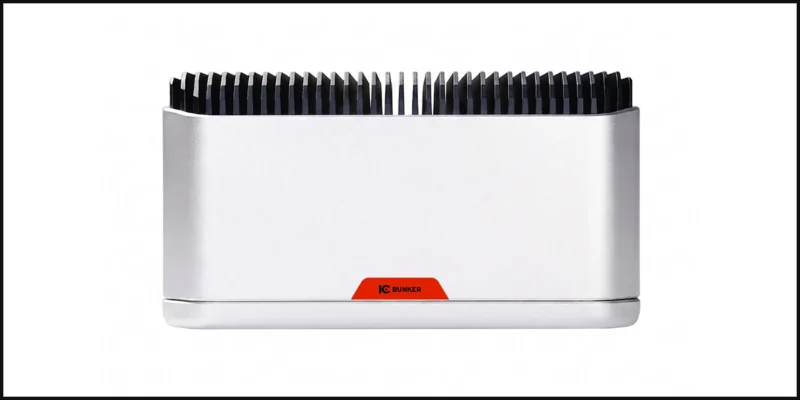
IC Realtime officially launched Bunker, an edge-AI platform that aims to deliver security intelligence for residential spaces. Bunker is powered by NVIDIA Jetson edge computing technology, and processes visual information, identifies activity that departs from established patterns and learns the recurring rhythms of a specific home or property over time. Bunker’s open, device-agnostic architecture works […]
IC Realtime TV Launches on Apple TV

IC Realtime officially launched IC Realtime TV, a proprietary, generational-lead native Apple TV application that integrates live security camera monitoring directly into the streaming environment. The app is now available for download on Apple TV 4K and Apple TV HD devices. IC said that Realtime TV aims to bridge the gap between security and smart […]

rAVe May 2026 Temperature Check Survey — Now CLOSED

This survey is now closed. Keep an eye out for next month’s Temperature Check survey! We’re halfway through 2026, and it’s a good time to check in on how the year is actually shaping up. Which trends are gaining traction, which ones are falling flat, and what’s really driving AV projects right now? This month’s […]