

Matrox Video Integrates Matrox ORIGIN with NVIDIA Holoscan for Media

 Matrox Video has announced an integration between Matrox ORIGIN and NVIDIA Holoscan for Media that allows Matrox ORIGIN media services to be provisioned, configured and deployed within NVIDIA Holoscan for Media using Kubernetes.
The integration will be demonstrated at IBC 2026 as part of the European Broadcasting Union’s Dynamic Media Facility (DMF) showcase.
According to Matrox Video, a Kubernetes-native operator developed by the company extends the Kubernetes control plane to manage Matrox ORIGIN resources. The operator automatically deploys the required pods when new resources are added and supports the provisioning, configuration and placement of media functions with resource limits and isolation.
The integration combines the Kubernetes-native deployment capabilities of NVIDIA Holoscan for Media with Matrox ORIGIN. Matrox said the ORIGIN SDK provides a framework for building media functions, allowing developers to focus on their core competencies while developing software-defined live media applications.
“Developers shouldn’t have to solve the underlying complexities of live media processing every time they build a new application,” said Daniel Robinson, product manager at Matrox Video.
“Matrox ORIGIN provides the media foundation so they can focus on what differentiates their applications. Bringing those capabilities into NVIDIA Holoscan for Media extends that developer experience into a Kubernetes-based environment for software-defined production.”
NVIDIA Holoscan for Media is an open reference architecture and developer toolkit for developing AI-powered media applications for software-defined live production on NVIDIA-accelerated infrastructure.
The integration being demonstrated at IBC includes Matrox ORIGIN media processing services such as color correction, media playback, audio shuffling and Ograf graphics.
These services connect to the wider DMF deployment through the Media eXchange Layer (MXL). The integration also supports NMOS BCP-007-03, allowing MXL I/O services to register using IS-04 and receivers to be switched using IS-05.


More Stories Like This

Autoscript Launches Voice Controller for WinPlus-IP
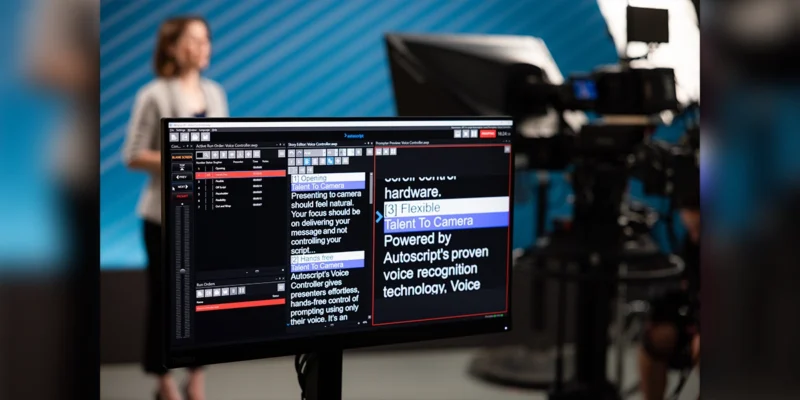
Autoscript today launched Voice Controller for WinPlus-IP, a new voice-controlled prompting solution that enables presenters to control the movement of their script by speaking. Voice Controller is powered by the speech recognition technology behind the fully automated Autoscript Voice solution and integrated with WinPlus-IP prompting software. The solution allows the prompt to respond to the […]
Grass Valley Launches AVORA All-in-One Live Production Platform
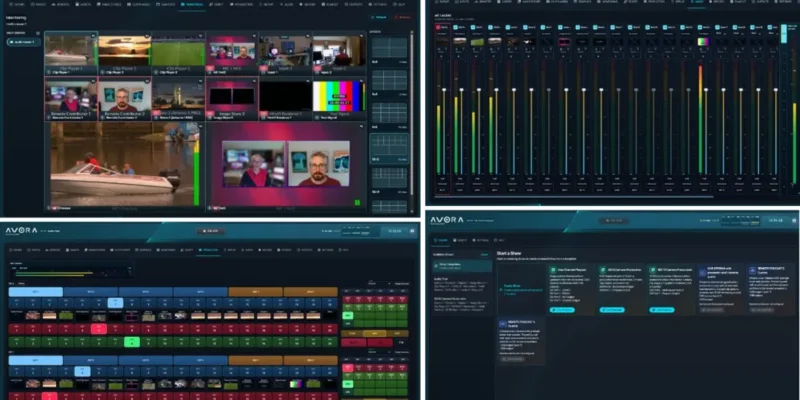
Grass Valley announced the launch of AVORA, a new standalone, all-in-one live production solution designed to bring the tools needed to create and deliver live shows together in one streamlined system. According to Grass Valley, AVORA, which launched at IBC2026, gives production teams a complete environment to prepare, produce and deliver live content, from switching […]
Shure Launches WAVETOOL 4 Ahead of IBC 2026
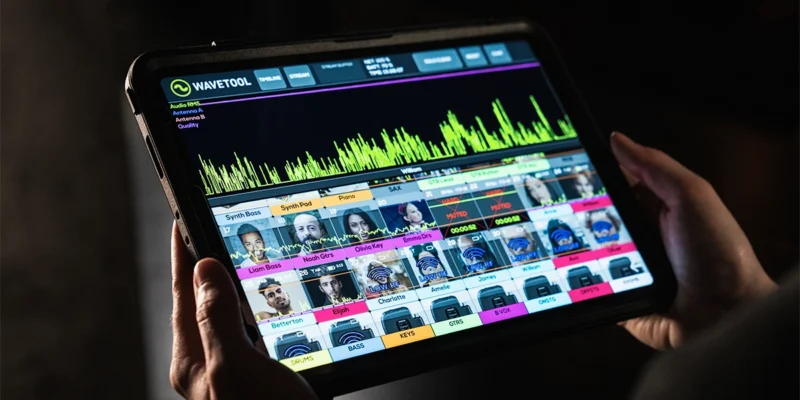
Shure launched WAVETOOL 4, the latest evolution of its professional audio monitoring and listening software. The software was designed for theater, live sound, broadcast and houses of worship. By combining direct listening, instant replay and team collaboration, WAVETOOL 4 aims to provide engineers with greater confidence to troubleshoot issues faster and keep productions running smoothly. […]