

So Far, Everyone Is Wrong About the Sony-TCL Partnership. Here’s Why.

Last week, Sony and TCL announced a strategic partnership focused on home entertainment manufacturing and operations. Since then, speculation has spread faster than facts. Let’s start with something simple: Sony remains one of the strongest names in display technology because of its video processing and scaling — not because of who physically builds the panels. That reputation is so strong that even people who work for competing TV brands often end up buying Sony sets for their own living rooms. I won’t name names, but I’ve been in enough homes to notice the pattern.
This partnership caught many people by surprise, largely because Sony did not spend months publicly telegraphing the move. The initial announcement was straightforward and operational in nature. It focused on manufacturing collaboration and efficiency, not on exiting product categories or selling off business units.
Yet somehow, that nuance got lost.
Let’s clear a few things up.
- Sony is not exiting the TV or professional display market.
- Sony is not being “bought” by TCL.
- This is not another Sharp-NEC situation.
- BRAVIA is not suddenly becoming a budget brand.
What Sony is actually doing is restructuring how it builds and scales hardware.
Sony’s competitive advantage has never been the physical panel. It is the company’s image processing, scaling technology and tuning expertise. Sony already sources OLED panels from LG Display, QD-OLED panels from Samsung Display and LCD components from multiple suppliers. Contract manufacturing has been part of Sony’s hardware strategy for years.
This partnership simply tightens that model.
In fact, the partnership goes well beyond a simple manufacturing collaboration. Sony and TCL are expected to form a new joint venture entity, with TCL holding a 51% controlling stake and Sony retaining 49%. That company is expected to begin operations around 2027, although an official name has not yet been announced.
Under this structure, TCL would manage manufacturing, logistics and large-scale operational execution for Sony’s TV, monitor and audio product lines globally, while Sony contributes its brand equity, core display technologies, processing IP and go-to-market expertise.
And that last part matters most.
BRAVIA does not become a TCL product. It remains a Sony product — built on Sony’s processing, tuning standards and brand positioning — with TCL supplying the industrial scale behind it.
Sony brings the brand. TCL brings the factory.
That is the model.
Why does this matter? Look at how Sony operates today. Like most major electronics brands, Sony relies on multiple third-party component suppliers and contract manufacturers across both consumer and professional product lines. That means managing separate procurement pipelines, logistics partners and production schedules just to keep TVs, digital signage displays, audio products and accessories moving to market.
Consolidating manufacturing under a single large-scale partner simplifies that entire process. Fewer supply chain touchpoints mean faster production cycles, tighter quality control and improved time-to-market. It also gives Sony greater operational leverage without sacrificing control over its technology or product direction.
While Sony’s announcement focused on consumer home entertainment, I do not believe this stops there. In my opinion, this manufacturing alignment will eventually extend into Sony’s professional display and LED categories as well. The production lines, component sourcing and logistics pipelines already overlap heavily between consumer and ProAV products. From a business standpoint, it would be inefficient not to leverage that scale.
That does not mean Sony is abandoning its professional market identity. It means Sony is optimizing how those products are built while maintaining control over the processing, firmware stability, color science and integration ecosystems that differentiate professional displays from consumer TVs.
Sony is a brand company. Always has been.
Sony Pictures, PlayStation, Sony Music and its broadcast and cinema camera divisions all operate under the same philosophy: control the ecosystem, control the experience and let manufacturing scale support the platform rather than define it.
If this approach sounds familiar, it should.
Apple does not manufacture most of its own hardware either. Foxconn and other partners handle production at scale. Apple controls the software, the user experience and the brand positioning. Manufacturing outsourcing did not weaken Apple’s market power. It amplified it.
The same principle applies here.
Sony becomes leaner. Faster to market. More cost-efficient. More flexible in supply chain planning. And better positioned to compete with Samsung and LG without sacrificing differentiation.
The loudest reactions online have focused on optics. Sony’s competitors are likely focused on impact.
Because a more efficient Sony with stronger operational leverage and the same premium brand positioning is not a problem for consumers.
It is a problem for competitors.
And that is the part of this story most people are missing.


More Stories Like This

CEDIA Announces Winners of 2026 Smart Home Awards Americas
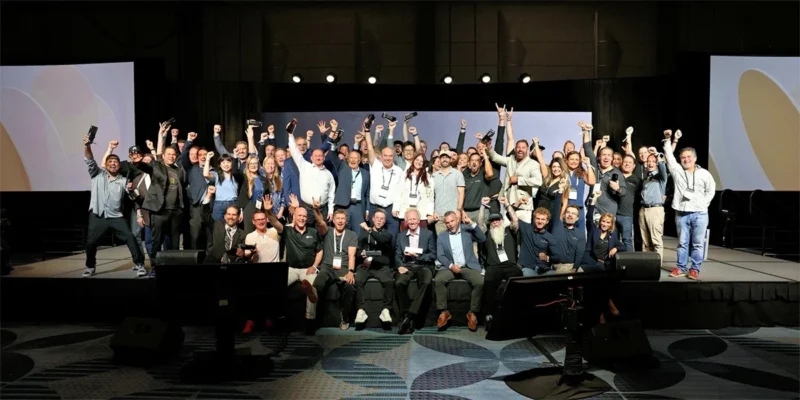
CEDIA officially announced the winners of the 2026 CEDIA Smart Home Awards Americas. The organization said that the year’s theme, “Beyond What You See” captured the outstanding achievements in innovation, technical excellence and design. The winners were revealed at CEDIA Expo in Denver, supported by headline sponsor Lutron, category sponsor AVPro Global and sponsors DMF […]

Want to Simplify Digital Signage at Scale? See How Sony and Carousel Approach It
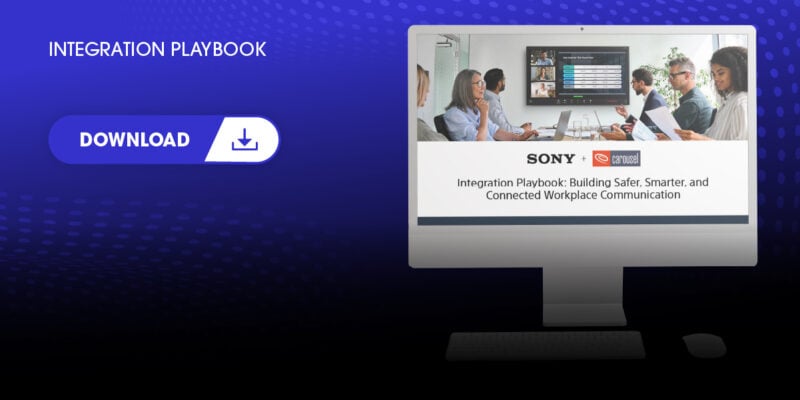
THIS IS A PROMOTED POST Digital screens are no longer vessels for rotating announcements. They’re critical communication systems. But that expanded role comes with a challenge. If displays now wear many hats: internal communications, operational information, wayfinding, safety messaging and more, how do you keep them from becoming overcomplicated? I.e., How do you keep them […]
Kaleidescape to Celebrate 25th Anniversary at CEDIA Expo 2026
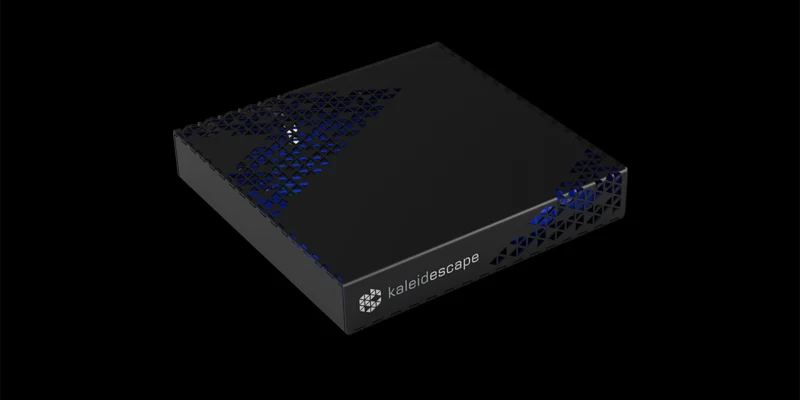
Kaleidescape announced that it will celebrate its 25th anniversary at CEDIA Expo 2026 with the debut of its Strato K movie player and conversations shaping the future of premium home entertainment. The company previously launched Strato K – the world’s first 8K-certified movie player featuring the company’s new 4K Cinematic movie format. Kaleidescape will feature […]